Why Progressive Community Events Matter for Your Life (and Your Love Life)
Progressive dating isn’t just about finding someone who checks the “shares my values” box on a profile. It’s about actually living those values—equity, inclusion, climate justice, racial justice, LGBTQ+ liberation, disability justice, and more—and connecting with people who care about the same things. One of the most powerful ways to do that is by getting involved in progressive community events, both online and in person.
Whether you’re looking to make new friends, deepen your activism, or maybe meet someone special who also knows what “mutual aid” means, community spaces are where values become real. They’re also where we practice listening, accountability, and care—skills that make all relationships stronger.
Types of Progressive Community Events to Explore
Progressive spaces are diverse and constantly evolving. You don’t need to be a “capital A Activist” to participate; there’s something for every energy level, comfort level, and schedule.
-
Mutual Aid and Community Care
These events focus on redistributing resources and building solidarity. Examples include:- Community fridges and free stores
- Food and supply drives
- Rent or bill support organizing
- Childcare swaps or community caregiving circles
Mutual aid spaces are often less hierarchical and more relationship-centered, which can feel more welcoming than traditional nonprofits.
-
Issue-Based Organizing and Campaigns
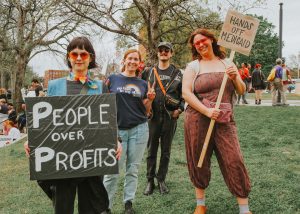
If you’re drawn to systemic change, look for events focused on:- Climate and environmental justice
- Racial justice and abolitionist organizing
- LGBTQ+ and trans liberation
- Disability justice and accessibility advocacy
- Housing justice and tenant unions
- Reproductive justice and bodily autonomy
These often include strategy meetings, canvassing, phone or text banking, and trainings.
-
Educational Spaces and Skill-Building
Learning together is a powerful way to build community. Look for:- Workshops on anti-racism, consent, and transformative justice
- Book clubs focused on social justice texts
- Teach-ins about local policy issues
- Skill shares (e.g., bystander intervention, digital security, community care practices)
-
Creative, Cultural, and Joy-Centered Events
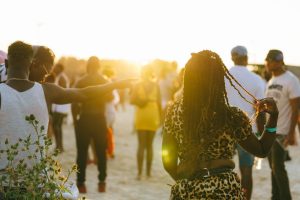
Progressive spaces aren’t only about struggle—they’re also about joy, art, and celebration. You might find:- Queer dance parties, sober socials, and arts nights
- Open mics, poetry slams, and storytelling events
- Community festivals and cultural celebrations
- Craft circles and zine-making workshops with a political lens
These can be great low-pressure spaces to meet people and feel the energy of a community.
-
Support Groups and Healing Spaces
Progressive communities also prioritize mental health and healing from oppression. Examples include:- Affinity groups (e.g., BIPOC-only, trans-only, disabled-only spaces)
- Grief circles, somatic healing workshops, and trauma-informed spaces
- Peer-led mental health support groups
These spaces often have clear guidelines to protect participants’ privacy and safety.
How to Find Progressive Events and Resources Near You
There’s no single directory for all progressive events, but a mix of platforms and local networks can help you plug in. Try a few of these and see what resonates.
-
Event Platforms
- Meetup: Search keywords like “social justice,” “mutual aid,” “queer community,” “climate justice,” or “progressive politics.” Filter by online vs. in-person.
- Eventbrite: Browse local events with tags like “activism,” “LGBTQ+,” “racial justice,” “community organizing,” or “nonprofit.”
- Facebook Events: Many grassroots groups still use Facebook to organize. Follow local organizations and check their events tab.
-
Local Organizations and Community Hubs
- Visit websites and social media pages for:
- Local mutual aid networks and community fridges
- Tenant unions and housing justice coalitions
- Environmental justice or climate groups
- LGBTQ+ centers and queer youth organizations
- Black, Indigenous, and people of color–led orgs
- Disability justice collectives and advocacy groups
- Check community bulletin boards at:
- Independent bookstores and coffee shops
- Community centers and libraries
- Campus centers (gender and sexuality centers, cultural centers, student org offices)
- Visit websites and social media pages for:
-
Online Communities and Social Media
- Search hashtags on platforms like Instagram, TikTok, or X (Twitter) using your city + keywords (e.g., “#MutualAid + [your city],” “#QueerEvents + [your city]”).
- Join Discord servers or Slack spaces for local progressive groups—many list them on their websites.
- Look for online workshops and webinars hosted by national organizations; they often have breakout rooms or follow-up groups you can join.
-
Ask People and Signal Your Interests
- If you’re using a progressive dating app, mention the kinds of causes you care about in your profile—this can lead to shared-event suggestions in chats.
- Ask friends, coworkers, or classmates where they volunteer or organize; personal invitations are still one of the most common ways people get involved.
The Power of Community Building (Beyond Swipes and DMs)
Diving into community spaces isn’t just good for the world; it’s good for you and your relationships. Here’s why it matters.
-
Shared Values Become Shared Practice
It’s one thing to say you care about justice; it’s another to show up. Participating in events turns “progressive” from an identity label into a lived practice. When you meet people in those spaces, you already know you share more than a hashtag—you share a commitment to action. -
Community Is an Antidote to Isolation
Many people feel lonely, even when they’re constantly online. Progressive events create spaces where you can be more fully yourself—especially if you’re queer, trans, disabled, BIPOC, neurodivergent, or otherwise marginalized. Being seen and supported in community can make romantic relationships feel less like your only source of connection. -
Practicing Communication and Care
Organizing meetings, mutual aid projects, and support groups all require skills like consent, boundary-setting, conflict resolution, and accountability. These are the same skills that sustain healthy romantic and platonic relationships. -
Building Networks of Support
Community events connect you to people who can show up for you in real ways—sharing resources, offering emotional support, or collaborating on projects. That web of care makes it easier to navigate everything from breakups to burnout.
Tips for First-Timers: Showing Up with Care and Confidence
If you’re new to progressive spaces, it’s normal to feel nervous or worry about “saying the wrong thing.” You don’t have to be perfectly informed or hyper-confident to get involved. These tips can help you get started with care.
-
Start with Your Capacity
Be honest about how much time, energy, and emotional bandwidth you have. It’s okay to start small:- Attend one event a month or a low-commitment online workshop.
- Join a book club or discussion group before jumping into intensive organizing.
- Offer skills you already have—like graphic design, translation, or rides—rather than overextending yourself.
-
Read the Event Description and Guidelines
Many progressive spaces have community agreements or accessibility notes. Take a moment to:- Check if the event is masked, hybrid, or online-only.
- Notice if it’s an affinity space (e.g., BIPOC-only, trans-only) and respect those boundaries.
- See if there’s a suggested donation, sliding scale, or no-cost option.
-
Arrive Curious, Not Performative
You don’t need to prove how “woke” you are. Instead:- Listen more than you speak, especially if you’re new to the issue or not part of the most impacted community.
- Ask respectful questions when appropriate, and do your own follow-up research afterward.
- Be open to feedback and unlearning; everyone is still learning.
-
Take Care of Your Safety and Comfort
Especially at in-person events:- Go with a friend if that helps you feel safer.
- Let someone you trust know where you’re going and when you expect to be back.
- Set boundaries around sharing personal information or contact details; it’s okay to say no.
-
Connect Intentionally (Without Treating Events Like a Dating Pool)
It’s fine to hope you’ll meet someone romantically, but remember the primary purpose of most events is community or organizing, not dating. You can:- Introduce yourself to a few people and ask what brought them there.
- Follow up by connecting on social media or joining the group’s email list or Discord.
- If you’re interested in someone, respect their boundaries and the context; consider connecting first around shared work and seeing what unfolds over time.
-
Reflect Afterward
After an event, ask yourself:- What felt good? What felt uncomfortable—and why?
- Is this a space you want to return to, or do you want to try something different next time?
- What did you learn about yourself, your values, or your needs in community?
Finding Your People, Building Your Future
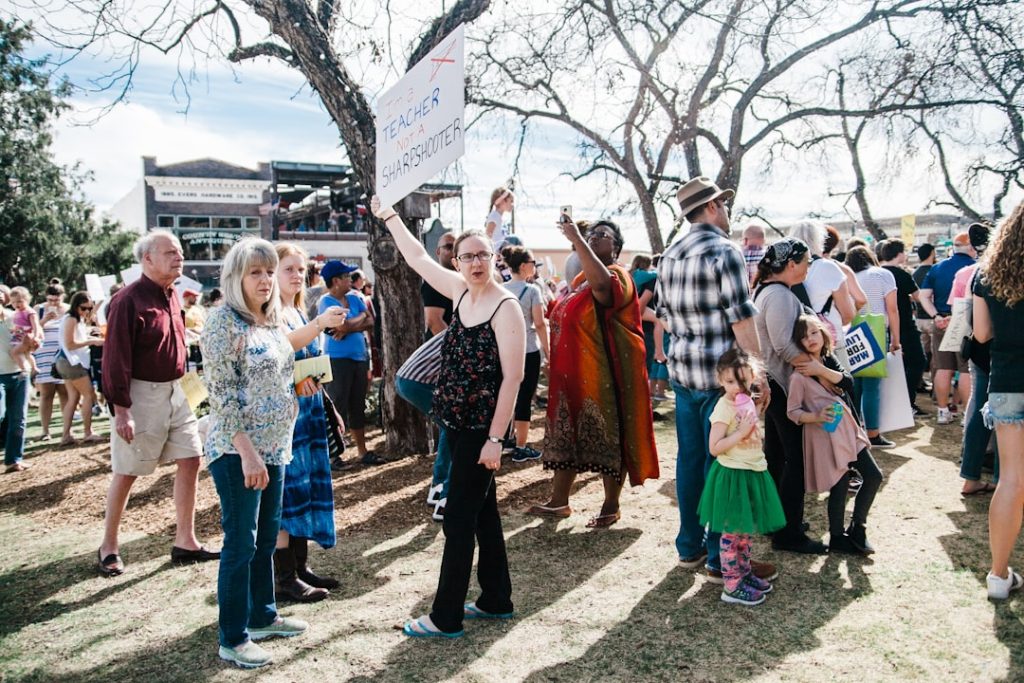
Progressive community events are about more than showing up for a single march or meeting. They’re about weaving yourself into a fabric of people who care about each other and the world you’re building together. Whether you’re attending a queer poetry night, joining a tenant union meeting on Zoom, or stocking a community fridge on a Sunday, you’re practicing the kind of care and accountability that makes relationships—romantic and otherwise—possible.
You don’t have to be an expert, an extrovert, or endlessly available. You just have to be willing to start. Pick one event that feels doable, find it through a platform like Meetup or Eventbrite or a local org’s website, and give yourself permission to be new. Your future friends, collaborators, and maybe even partners are out there, doing the work and dreaming of something better. You’re invited.
Photo by Heather Mount on Unsplash
Stay Connected with Flamr
Don’t forget to follow Flamr on social media!
Relacionado
Discover more from Fyra - Dating App for Progressives
Subscribe to get the latest posts sent to your email.