Democracy Now! at 30: Why Independent Media Still Matters More Than Ever
When a daily news program celebrates its 30th anniversary, that’s news in itself. But when that program is Democracy Now!—a cornerstone of independent, movement-oriented journalism—and the celebration brings together Angela Davis, Bruce Springsteen, Patti Smith, Michael Stipe, Mosab Abu Toha, Hurray for the Riff Raff and more at New York’s historic Riverside Church, it becomes something bigger: a snapshot of the progressive movement’s past, present and future.
In a moment of rising authoritarianism, climate catastrophe, permanent war and deepening inequality, the fact that Democracy Now! is still here—still daily, still independent, still unapologetically grounded in social movements—is a story about survival, resistance and possibility. The 30th anniversary broadcast is not just a victory lap; it’s a reminder that the struggle for a more just world depends on media that refuses to be captured by corporate power or party politics.
—
1. Why This Celebration Matters Now
Democracy Now!’s anniversary special, recorded at the Riverside Church, matters for at least three reasons:
1. It marks three decades of independent, ad-free journalism that has consistently centered the voices of those most impacted by war, racism, economic exploitation and environmental destruction.
2. It gathers artists, activists and journalists in one space, affirming that culture and politics are inseparable in progressive movements. When Bruce Springsteen or Patti Smith share a stage with Angela Davis and Mosab Abu Toha, they’re not just performing—they’re aligning their cultural capital with struggles for justice.
3. It arrives at a critical historical juncture, where mainstream media is increasingly consolidated, algorithm-driven disinformation distorts reality, and public trust in institutions is collapsing. In that environment, spaces like Democracy Now! become lifelines.
This isn’t nostalgia. It’s about whether we will have media able—and willing—to tell the truth about power in the years ahead.
—
2. Background: 30 Years of a Different Kind of News
Democracy Now! launched in 1996 as a daily election show on Pacifica Radio. Co-founded and anchored by Amy Goodman, it quickly evolved into a unique hybrid: part grassroots newsroom, part movement archive, part global dispatch from the frontlines of struggle.
Some key features of Democracy Now!’s model:
– Independent funding: No corporate sponsors, no ads, no underwriting from fossil fuel companies or weapons manufacturers. The show is supported by viewers, listeners and independent foundations.
– Movement-centered coverage: Instead of giving equal time to corporate lobbyists and climate deniers, Democracy Now! features frontline organizers, whistleblowers, scholars and ordinary people resisting extraordinary injustice.
– Global scope: From Iraq to Standing Rock, Gaza to Ferguson, the show has consistently treated struggles abroad and at home as interconnected.
– Long-form interviews: In a media landscape of soundbites, they offer extended conversations—time to explain history, context and stakes.
The 30th anniversary event at Riverside Church is symbolically powerful. This is the same church where Dr. Martin Luther King Jr. delivered his historic “Beyond Vietnam” speech in 1967, denouncing U.S. militarism and capitalism at great personal and political cost. By choosing this venue, Democracy Now! aligns itself with that tradition of prophetic dissent.
The lineup underscores that lineage:
– Angela Davis, longtime abolitionist and scholar, whose life bridges Black liberation, feminist, queer and prison-abolition movements.
– Patti Smith, punk poet and activist, whose work has long intertwined art and resistance.
– Mosab Abu Toha, Palestinian poet and educator, bearing witness to life under siege.
– Michael Stipe, former R.E.M. frontman, known for decades of political engagement.
– Hurray for the Riff Raff (Alynda Segarra), whose music centers queer, Latinx and working-class narratives.
– Bruce Springsteen, whose surprise appearance is more than star power: his songs about deindustrialization, war and working-class struggle have soundtracked generations of dissent.
– And of course, Democracy Now! co-hosts Amy Goodman, Juan González and Nermeen Shaikh, who have shaped the show’s voice and politics.
This is not a random assortment of celebrities. It’s a cross-section of cultural and political figures who understand that storytelling—through songs, poems, interviews or investigative reporting—is a terrain of struggle.
—
3. A Progressive Analysis: Media as a Site of Power
From a progressive perspective, Democracy Now!’s 30th anniversary is not just a feel-good milestone; it’s a case study in how power operates—and how it can be challenged.
Corporate media and the limits of “objectivity”
Mainstream “objective” journalism often means:
– Treating climate catastrophe as a debate between scientists and fossil fuel lobbyists.
– Covering war primarily from the perspective of Pentagon briefings and official statements.
– Elevating right-wing talking points in the name of “balance,” while marginalizing grassroots movements as “activists” or “special interests.”
Democracy Now! has always rejected that framework. It doesn’t pretend that all perspectives are equally valid. Its editorial stance is explicit: it sides with those most harmed by systems of oppression. That’s not bias; it’s a moral and political position, rooted in human rights and social justice.
The role of culture in movements
The presence of artists like Springsteen, Smith, Stipe and Segarra highlights something progressives sometimes overlook: culture shapes what people believe is possible. A song, a poem or a performance can:
– Humanize distant struggles.
– Sustain people emotionally when politics feels bleak.
– Help build shared identities and narratives.
By integrating music and poetry into a news broadcast, Democracy Now! insists that facts alone are not enough. We need stories, symbols and emotions that help people see themselves as part of a larger struggle.
Intersectionality in practice
The range of voices at Riverside Church reflects an intersectional understanding of power:
– Angela Davis connects prisons, policing, racism, capitalism and patriarchy.
– Mosab Abu Toha brings the reality of Palestinian life into a U.S. context shaped by Islamophobia and militarism.
– Hurray for the Riff Raff and Michael Stipe connect queer and working-class experiences to broader fights over land, labor and identity.
– Juan González has long documented how U.S. imperialism and corporate power shape Latin America and the Caribbean, and how that, in turn, shapes migration.
This is intersectionality not as a buzzword, but as a practice of telling stories that reveal how systems of domination overlap—and how struggles for liberation are linked.
—
4. Why This Matters for Social Justice and Progressive Values
Progressive movements live or die based on whether people can see the truth about their world and imagine something different. Democracy Now! contributes to both.
Challenging manufactured consent
In an era of “manufactured consent,” where corporate media often normalizes war, austerity and surveillance, independent outlets are crucial for:
– Exposing the human cost of policy decisions.
– Highlighting resistance that would otherwise be invisible.
– Questioning the inevitability of the status quo.
When Democracy Now! covers a strike, a land defense camp, a mutual aid network or a courtroom challenge, it signals: this is not just a local story; it’s part of a larger struggle for justice.
Building historical memory
Social movements are frequently fragmented and forgotten. Democracy Now!’s archives—thousands of hours of interviews, on-the-ground reports and cultural performances—function as a living memory of resistance.
That matters for:
– New organizers who need to know they’re not starting from scratch.
– Communities whose experiences are erased or distorted by mainstream narratives.
– Future historians trying to understand how ordinary people responded to extraordinary crises.
Defending democracy in more than name
Democracy is not just about elections; it’s about whether people have the information and tools they need to hold power accountable. An independent press is a core democratic institution. But in the U.S., “press freedom” is hollow if most of the media ecosystem is controlled by a handful of corporations.
By surviving—and thriving—outside that system, Democracy Now! offers a concrete example of what democratic media can look like: accountable to its audience, transparent about its funding, and aligned with the public good rather than shareholder interests.
—
5. What You Can Do and How to Stay Informed
If you care about social justice, climate justice, racial justice, gender justice, labor rights or peace, independent media is not optional—it’s infrastructure. Here are ways to engage:
1. Watch, listen, read
– Visit Democracy Now!’s website or YouTube channel.
– Subscribe to the podcast so you can listen on your commute or while doing other tasks.
– Share segments that move you with friends, family or co-workers—especially those who may only get news from corporate outlets.
2. Support independent media financially
– If you’re able, become a recurring donor to Democracy Now! even at a small level.
– Support other independent outlets—especially local or community-based media, and outlets led by Black, Indigenous, immigrant, queer and disabled communities.
3. Use media critically
– Ask: Who owns this outlet? Who funds it? Whose voices are missing?
– Cross-check stories between mainstream and independent sources.
– Teach media literacy in your community—through classrooms, workshops or informal conversations.
4. Connect media to organizing
– Use Democracy Now! coverage as a tool in organizing meetings, study groups or political education sessions.
– Invite local independent journalists to speak at community events.
– When your community is in struggle (a strike, a protest, a campaign), reach out to independent outlets to help tell your story.
5. Honor the link between culture and politics
– Support artists who align their work with movements for justice.
– Attend events—like this 30th anniversary celebration—where art and politics meet.
– Create your own cultural work: zines, podcasts, songs, visual art. Storytelling is not just for professionals.
—
Democracy Now!’s 30th anniversary is a reminder that another kind of media—and another kind of politics—is not only possible, it already exists. The challenge is whether enough of us will sustain and expand it in time to meet the crises we face.
You can read the original Democracy Now! article and watch the full anniversary broadcast here:
http://www.democracynow.org/2026/9/7/democracy_now_marks_30_years_with
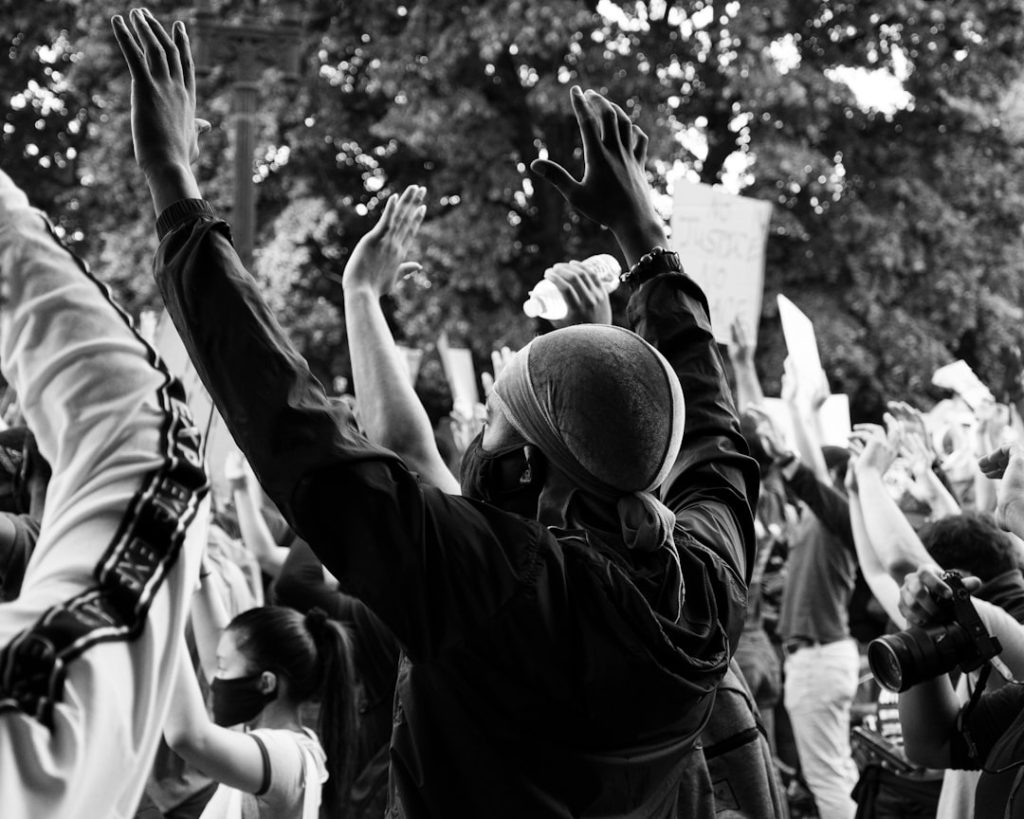
Photo by Koshu Kunii on Unsplash
Relacionado
Discover more from Fyra - Dating App for Progressives
Subscribe to get the latest posts sent to your email.