Monsters ‘R Us: What Rev. Nalwamba’s Ordeal Reveals About Trump 2 and the Soul of U.S. Immigration Policy
When a 79-year-old pro-democracy priest is carried out of U.S. immigration detention in a wheelchair after entering custody healthy, something is fundamentally broken—morally, politically, and structurally. The story of Rev. Edward Nalwamba, a Ugandan priest who spent over a year in ICE detention under the Trump 2 regime, is not a bureaucratic mishap or an unfortunate exception. It is a window into a system that has normalized cruelty as a governing strategy.
This matters not only because an elderly man was abused and neglected by a government that claims to stand for freedom and human rights. It matters because his story exposes what happens when a country decides that certain people—immigrants, asylum seekers, Black and brown migrants—are disposable. It shows how quickly the language of “law and order” morphs into permission for abuse. And it challenges us: Are we willing to accept a system where cruelty is not a bug, but the point?
—
Background: Who Is Rev. Edward Nalwamba and What Happened?
According to the Common Dreams piece “Monsters ‘R Us,” Rev. Edward Nalwamba is a 79-year-old Ugandan priest and pro-democracy advocate. He fled political repression in Uganda and sought safety in the United States—precisely the kind of person U.S. leaders often claim to welcome: a faith leader, an elder, a supporter of democratic values.
Instead of refuge, he found a cell.
Rev. Nalwamba was taken into custody by U.S. Immigration and Customs Enforcement (ICE) and held in detention for over a year. When he entered detention, he was reportedly in good physical condition. By the time he was finally released—after repeated delays, bureaucratic obstacles, and institutional indifference—he was so weakened that fellow detainees had to carry him to a car.
The image is haunting: younger detainees, themselves locked in a system designed to break them, physically carrying an elderly priest whose health deteriorated under U.S. custody. It is a stark indictment of ICE detention conditions and the broader enforcement machinery that Trump’s second administration has doubled down on—more raids, more detention, more punitive policies aimed at deterring migrants through sheer terror.
While the article focuses on Nalwamba’s individual story, his ordeal sits atop a mountain of evidence:
– Long-standing reports of medical neglect and delayed care in ICE facilities
– Documented deaths in detention from treatable conditions
– Use of solitary confinement, excessive restraints, and psychological pressure
– Barriers to legal counsel, language access, and basic due process
In other words, his story is both specific and systemic. It is about one man—and about a policy architecture that makes such stories inevitable.
—
The Progressive Analysis: Cruelty as Policy, Not Accident
From a progressive perspective, Rev. Nalwamba’s case illustrates several truths that those in power would prefer to obscure.
1. The “Deterrence” Model Is Inherently Abusive
Decades of U.S. immigration policy—under both Republican and Democratic administrations—have leaned on “deterrence”: make migration so dangerous, so humiliating, and so painful that people will stop coming.
Trump 2 has taken this to its logical extreme. The message is clear: If you come here seeking safety, we will cage you, neglect you, and break you. That is not a side effect; it is the mechanism.
When the goal is to make an example of people, human rights violations become features, not bugs. Rev. Nalwamba’s suffering is not a failure of the deterrence model. It is its success.
2. “National Security” Is a Cover for Dehumanization
Progressives have long warned that the language of “security” and “border control” is often used to mask racism, xenophobia, and authoritarian impulses. A 79-year-old priest is not a security threat. A pro-democracy activist fleeing repression is not a danger to the United States.
Yet under Trump 2’s framing, anyone without the “right” papers becomes a potential criminal, a suspect, an invader. This framing allows the state to treat people like Nalwamba as less than human—without provoking the moral outrage that would be triggered if the same neglect were inflicted on a U.S. citizen pastor in a nursing home.
The logic is chillingly simple:
If you can label someone “illegal,” you can justify almost anything.
3. The System Is Working as Designed
One of the most dangerous myths about U.S. immigration enforcement is that abuses are isolated incidents—bad apples, rogue officers, or unfortunate oversights. Progressives argue the opposite: the system is working as designed.
– Mandatory detention policies ensure that people like Rev. Nalwamba are jailed rather than offered community-based alternatives.
– Private prison corporations profit from full beds, incentivizing longer detention and harsher conditions.
– Legal barriers and rushed proceedings make it nearly impossible for many asylum seekers to present their cases.
– Oversight is weak, complaints mechanisms are toothless, and accountability for abuse is rare.
When you combine profit motive, racism, and punitive ideology, you get exactly what we see in Nalwamba’s case: an elderly man’s health destroyed in the name of “enforcement.”
4. This Is About Democracy, Not Just Immigration
Rev. Nalwamba is a pro-democracy priest. He spent his life challenging authoritarianism in Uganda. That he ended up imprisoned and debilitated in the United States under Trump 2 is not just ironic; it is deeply symbolic.
Authoritarian leaders worldwide often:
– Demonize migrants and minorities
– Use detention and deportation as tools of fear
– Undermine rule of law while claiming to defend it
– Wrap cruelty in religious or patriotic rhetoric
The treatment of Rev. Nalwamba is a warning: you cannot build a democracy on cages, fear, and racialized violence. A country that normalizes cruelty at its borders will eventually normalize it everywhere.
—
Why This Matters for Social Justice and Progressive Values
Progressive politics is grounded in a few core principles: human dignity, equality, solidarity, and a commitment to dismantling systems of oppression. Nalwamba’s story touches all of them.
Human Dignity
No person—regardless of citizenship, age, or immigration status—should be subjected to neglect that leaves them unable to walk. The idea that dignity is universal, not conditional, is at the heart of progressive ethics. ICE detention, as currently structured, is incompatible with that principle.
Racial Justice
Immigration enforcement in the U.S. is deeply racialized. Black migrants, including Africans like Rev. Nalwamba, face disproportionate harm—less media coverage, more invisibility, and often harsher treatment. His case underscores that the fight for racial justice must include Black migrants, not just citizens.
Solidarity Across Borders
Progressives argue that borders should not be used as moral firewalls. A pro-democracy activist fleeing repression in Uganda is part of the same struggle as those fighting voter suppression, police brutality, and authoritarian drift in the U.S. If the U.S. claims to support global democracy, it cannot torture democracy’s defenders in its detention centers.
The Moral Test of a Society
How a society treats its most vulnerable—elders, refugees, detainees—is the clearest test of its values. By that measure, the treatment of Rev. Nalwamba is an indictment not just of Trump 2, but of any political project that accepts or enables this system.
—
What You Can Do and How to Stay Informed
Stories like this can feel overwhelming, but they are also calls to action. There are concrete ways to respond.
1. Support Organizations on the Front Lines
Many groups work directly with detained migrants, provide legal aid, or campaign for policy change. Consider supporting:
– Local immigrant rights organizations in your city or state
– National groups advocating to end immigration detention and deportation
– Faith-based networks that sponsor asylum seekers and provide community support
Look for organizations that center directly impacted people and adopt abolitionist or transformative approaches, not just “kinder cages.”
2. Push for Policy Change
Call, email, and pressure your local, state, and federal representatives to:
– End mandatory detention and expand community-based alternatives
– Ban the use of private prisons for immigration detention
– Strengthen oversight and accountability for ICE and CBP
– Protect asylum rights and reverse punitive Trump-era policies
Even under hostile administrations, sustained public pressure shapes the political terrain and keeps abuses in the spotlight.
3. Challenge Dehumanizing Narratives
Language matters. When media, politicians, or neighbors talk about “illegals,” “invaders,” or “open borders,” push back. Share stories like Rev. Nalwamba’s to humanize the issue. Remind people that behind every “case” is a person with a name, a past, and a future.
4. Stay Informed and Amplify
Independent outlets like Common Dreams play a crucial role in exposing stories that corporate media often ignore. Support and share their reporting:
– Read the full article on Rev. Nalwamba and share it widely
– Follow immigrant justice journalists, organizers, and lawyers on social media
– Use your platforms—however small—to keep these stories alive
Silence is the soil in which cruelty grows. Visibility is a form of resistance.
—
The story of Rev. Edward Nalwamba is not just a tale of one man’s suffering. It is a mirror held up to the United States in 2026—a country where a 79-year-old pro-democracy priest can be imprisoned, neglected, and nearly broken in the name of “border security.”
For progressives, his story is a moral summons. It demands that we reject a politics that treats cruelty as a legitimate tool of governance, and instead fight for an immigration system—and a broader democracy—rooted in care, justice, and shared humanity.
Read the original article here:
https://www.commondreams.org/further/monsters-r-us
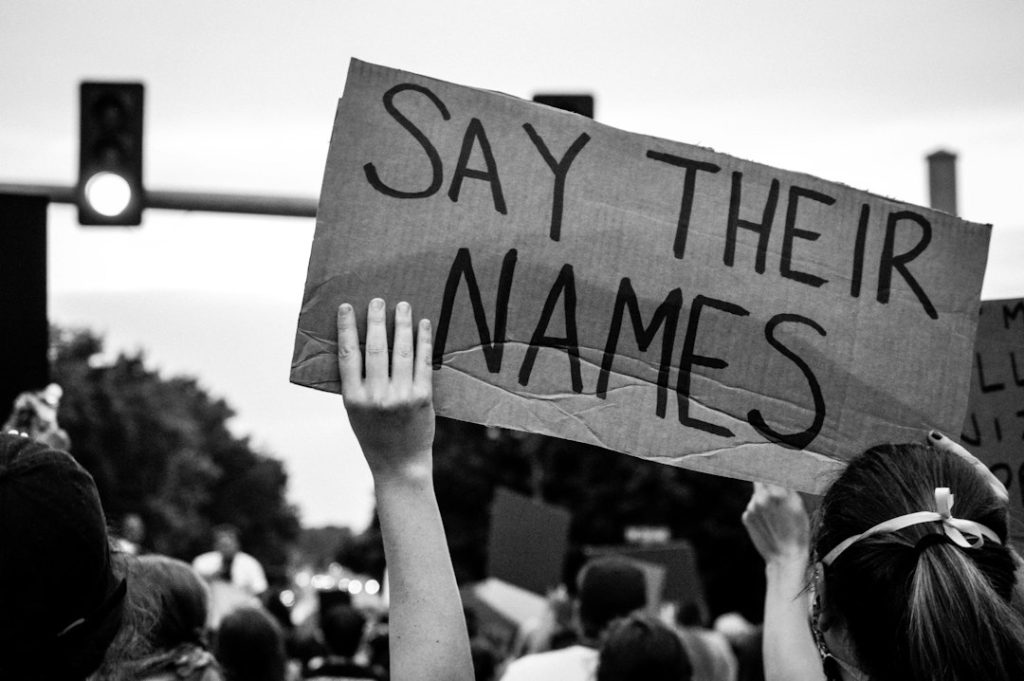
Photo by Kalea Morgan on Unsplash
Relacionado
Discover more from Fyra - Dating App for Progressives
Subscribe to get the latest posts sent to your email.