How Biased Gaza Coverage Warps Our Hearts, Minds, and Dating Lives
Who we love, how we relate, and what we’re willing to fight for are all shaped by the stories we’re told about the world. If you’ve ever ended a situationship over “politics,” or felt an instant spark with someone because they showed up to a ceasefire rally, you already know: media narratives don’t stay on the newsfeed. They seep into our values, our empathy, and ultimately our relationships.
That’s why a recent piece from The Intercept, titled “7 Examples of Gaza Media Coverage That Prove Pro-Israel Bias,” matters far beyond the headlines. It’s not just about journalism; it’s about how power, propaganda, and prejudice affect the way we see each other—especially when it comes to love, sex, and solidarity.
In exposing how U.S. media helped “sell” Israel’s destruction of Gaza to the American public, the article forces a hard question: if the stories we’re fed are this distorted, how do we build honest, compassionate connections with each other? And what does it mean to date—and care—in a world where some lives are consistently framed as less grievable than others?
Read the full article: 7 Examples of Gaza Media Coverage That Prove Pro-Israel Bias (The Intercept)
What The Intercept Exposes About Gaza Coverage
The Intercept’s piece lays out seven concrete examples of how major U.S. outlets framed Israel’s assault on Gaza in ways that obscured Palestinian suffering, normalized state violence, and repeated government talking points as if they were neutral facts.
Key patterns highlighted in the article
While each example is distinct, they share several recurring themes:
- Erasing Palestinian voices: Coverage leaned heavily on Israeli officials, military spokespeople, and U.S. government sources, while Palestinian journalists, doctors, and civilians were sidelined or treated as less credible.
- Passive language for Palestinian deaths: Headlines often described Palestinians as having “died” or “perished,” avoiding clear attribution of responsibility (e.g., “Israel says…” or “as war rages…”), even when evidence pointed to direct Israeli military action.
- Humanizing Israelis, abstracting Palestinians: Stories about Israeli hostages or victims included names, families, and emotional detail, while Palestinians were reduced to numbers or portrayed as a faceless mass.
- Uncritical repetition of official claims: Early coverage frequently amplified Israeli and U.S. claims—about “human shields,” “precision strikes,” or “terror tunnels”—with little skepticism, even when later investigations contradicted those narratives.
- Framing genocide as “complex conflict”: Instead of naming systemic, asymmetric violence, many outlets leaned on vague language about “cycles of violence,” “clashes,” or “escalations,” which obscured power imbalances and decades of occupation.
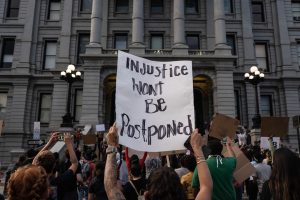
- Marginalizing ceasefire support: Public calls for ceasefire, especially from younger and more diverse Americans, were often portrayed as fringe, extreme, or “divisive,” despite polling that showed broad support.
- Delegitimizing Palestinian solidarity: Coverage of protests, campus encampments, and boycotts frequently centered on alleged “security concerns” or “antisemitism” without seriously engaging the core demands for Palestinian freedom and an end to mass killing.
Collectively, these patterns didn’t just “tilt” the story—they helped justify and normalize a campaign of mass killing and displacement, while casting those who opposed it as naive, radical, or dangerous.
Read the full article: 7 Examples of Gaza Media Coverage That Prove Pro-Israel Bias (The Intercept)
Why This Matters for Progressive Values
For progressives, this isn’t just a media critique; it’s a moral and relational issue. Our movements—and our relationships—are built on shared commitments to justice, consent, and care. Biased coverage of Gaza undermines all three.
Consent and informed choices
Consent isn’t just about sex. It’s about every decision we make with incomplete or distorted information. When media coverage hides the full reality of Palestinian suffering, or launders state violence through euphemistic language, it robs people of the information they need to form ethical positions.
If you supported policies, politicians, or narratives because you trusted mainstream coverage, you were, in a sense, misled. That matters—not to shame people, but to highlight how structural misinformation undermines democratic consent and collective decision-making.
Empathy and whose lives “count”
Media bias doesn’t just shape what we know; it shapes whose pain we feel.
- When Israeli victims are given names, backstories, and photos, it’s easy to empathize.
- When Palestinian victims are reduced to statistics, it’s easier to look away.
Progressive values demand that we resist that hierarchy of grief. Every human life deserves the same dignity, the same attention, and the same outrage when it’s taken. Biased coverage trains us to feel differently—and that’s something we have to actively unlearn.
Intersectionality and solidarity
The Gaza story is not separate from Black liberation, Indigenous sovereignty, migrant justice, or queer and trans liberation. The same systems that justify bombing densely populated civilian areas also justify police brutality, border violence, and carceral punishment at home.
Media narratives that normalize “security” over human rights in Gaza are closely related to narratives that justify over-policing, mass incarceration, and anti-immigrant crackdowns. For progressives, seeing those connections—and refusing to accept “security” as a blank check for state violence—is essential.
How Narratives Shape Who We Date and How We Connect
On a dating app, it might feel like geopolitics is a separate universe from your matches and messages. But the stories we internalize about Gaza and Israel show up in our relationships in subtle and not-so-subtle ways.
Dealbreakers and red flags
Many people now list “ceasefire supporter,” “Free Palestine,” or “anti-genocide” in their bios, or they ask directly about political values before meeting up. That isn’t “being too political”; it’s about aligning on fundamental ethics.
Media bias affects how those conversations go:
- If someone’s entire understanding of Gaza comes from one-sided mainstream coverage, they may genuinely believe they’re “just supporting self-defense.”
- If someone has sought out independent reporting, Palestinian voices, and critical analysis, they’re more likely to see the assault on Gaza as part of a broader pattern of settler colonialism and ethnic cleansing.
When those two people match, they’re not just bringing different facts—they’re bringing different moral universes. That’s not inherently incompatible, but it requires honesty about where their information comes from and whether they’re willing to learn.
Desire, bias, and racialized empathy
Progressive dating spaces often talk about “preferences” versus prejudice: who we find attractive, whose bodies we fetishize, whose we ignore. Media coverage plays a role here too.
When Palestinians are consistently depicted as either terrorists or anonymous victims, it shapes how they’re perceived in everyday life—on apps, in workplaces, in classrooms. The same is true for Arabs, Muslims, and anyone racialized as “Middle Eastern.”
Resisting pro-Israel media bias isn’t only about geopolitics; it’s about challenging the subtle dehumanization that can seep into our attraction patterns, our assumptions, and our willingness to care about people whose stories we rarely hear fully.
Building relationships rooted in solidarity
At its best, progressive dating is about more than finding someone who likes the same bands or brunch spots. It’s about building relationships rooted in mutual care and shared commitments—whether those relationships are romantic, sexual, or something beautifully in-between.
In that context, how someone responds to Gaza coverage is a window into how they respond to injustice in general:
- Do they question official narratives?
- Do they listen to marginalized voices?
- Are they willing to admit when they were wrong or uninformed?
- Do they see distant suffering as relevant to their own ethical life?
These aren’t abstract questions; they’re the foundation of whether someone will show up for you—and for others—when it matters.
Media Bias in Historical and Global Context
The Intercept’s article fits into a long history of media aligning with state power, especially in times of war and crisis.
Echoes of past conflicts
Progressives have seen this pattern before:
- Iraq War: Major U.S. outlets amplified false claims about weapons of mass destruction, helping build support for a catastrophic invasion that killed hundreds of thousands.
- “War on Terror”: Media normalized Islamophobic tropes, backed expansive surveillance, and downplayed civilian casualties from drone strikes.
- Domestic policing: For decades, news coverage repeated police statements as fact, criminalized Black communities, and framed police violence as isolated incidents rather than systemic.
The Gaza coverage isn’t an anomaly; it’s a continuation. Understanding that continuity helps us see why independent journalism, grassroots storytelling, and citizen media are so crucial.
Global solidarity and shifting public opinion
One of the most striking dynamics of the Gaza assault has been the disconnect between official narratives and public sentiment, especially among younger people. While many mainstream outlets echoed government talking points, social media platforms and independent outlets amplified Palestinian voices, on-the-ground footage, and critical analysis.
This tension created a kind of dual reality:
- On TV and in many newspapers: a story of “complex conflict,” “tragic but necessary” strikes, and “difficult choices.”
- On phones and in group chats: videos of bombed hospitals, grieving families, and firsthand testimonies from Gaza’s journalists.
The Intercept’s piece sits squarely in that second reality, documenting how the first one maintained its grip on mainstream discourse. For progressives, this dual reality underscores the importance of media literacy and the need to support independent outlets that center marginalized voices.
Different Perspectives—and Why They Matter
Progressive spaces are not monolithic on Israel-Palestine, and it’s important to acknowledge that
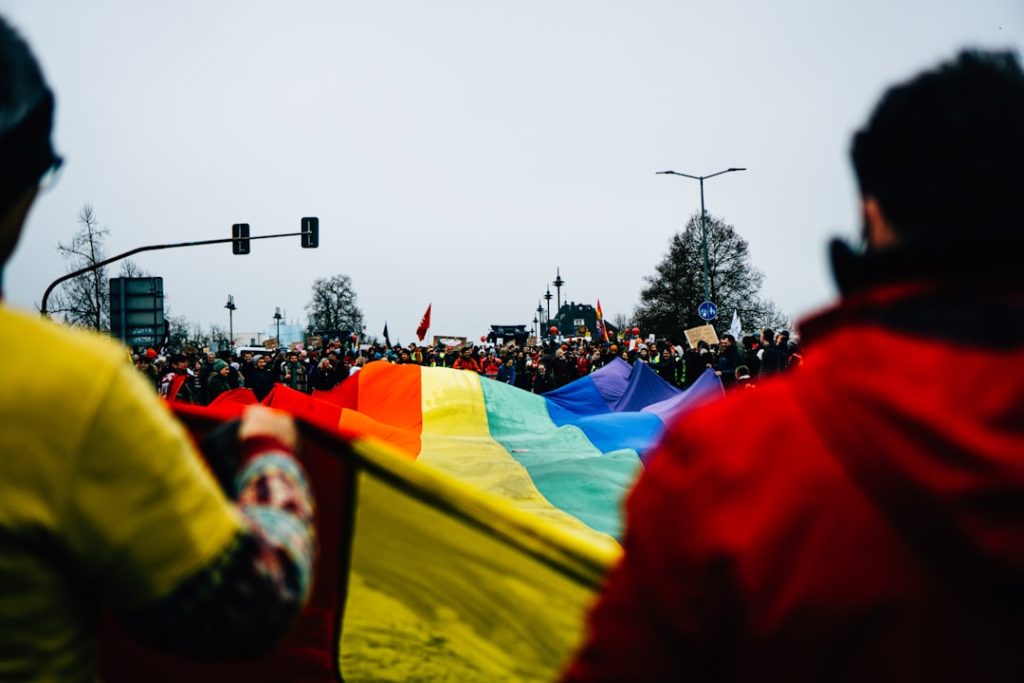
Photo by Christian Lue on Unsplash
Stay Connected with Flamr
Don’t forget to follow Flamr on social media!
Relacionado
Discover more from Fyra - Dating App for Progressives
Subscribe to get the latest posts sent to your email.