Love, Liberation, and the Fight for Trans and Queer Futures
Dating is never just about two people. It’s about the world that makes their connection possible—or impossible. The laws that govern bodies, the stories we’re told about gender and love, the safety of walking down the street holding hands: all of this shapes who we meet, how we love, and whether we get to imagine a future together.
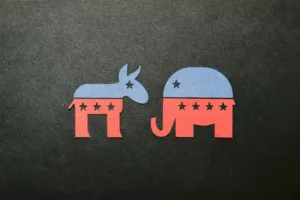
In 2026, LGBTQ+ rights—especially trans and nonbinary rights—sit at a crossroads. We’re living in a time of extraordinary visibility and extraordinary backlash. Pride flags fly over city halls while anti-trans legislation floods statehouses. Queer love is celebrated in media campaigns and criminalized in courtrooms. Dating apps feature pronoun fields and gender-expansive options, yet some users still face harassment just for existing.
For a progressive dating app community, this isn’t abstract. It’s personal. It’s about our friends, our matches, our partners, our chosen family. It’s about whether we can build relationships rooted in authenticity, safety, and joy. It’s about whether love can be a site of liberation, not just survival.
From Criminalization to Visibility: A Brief History of Queer and Trans Resistance
To understand where we are, it helps to remember how we got here. The struggle for LGBTQ+ rights has never been linear; it’s a story of gains and backlash, of quiet resilience and public uprisings.
In the mid-20th century, queer and trans communities faced criminalization and institutional violence. Police raids on bars and bathhouses, psychiatric pathologization, and censorship were routine. Trans and gender-nonconforming people—especially Black and Brown trans women—were often the most vulnerable, and yet also among the most visible in resisting oppression.
Landmark moments like the Stonewall uprising in 1969 and the Compton’s Cafeteria riot in 1966 are often framed as the “beginning” of LGBTQ+ liberation. In reality, they were part of a much longer continuum of resistance: mutual aid networks during the AIDS crisis, underground support groups, community health clinics, and the everyday bravery of people living as themselves in hostile worlds.
The early 2000s brought historic gains: legal recognition of same-sex marriage in many countries, anti-discrimination protections, and broader cultural acceptance. Yet these victories often centered cisgender gay and lesbian narratives, leaving trans, nonbinary, intersex, and asexual people at the margins. The mainstream story was: “We’re just like you,” which sometimes meant downplaying those who didn’t fit a narrow, respectable mold.
Over the last decade, trans and nonbinary visibility has grown. More people are coming out, more youth are naming their genders outside the binary, and more media representations show trans people as complex, fully human. At the same time, this visibility has sparked a coordinated political backlash, with trans bodies and lives turned into talking points in culture wars.
The Current Landscape: Love in an Era of Backlash
In many places, LGBTQ+ people have more formal rights than ever before—and yet feel less safe. Anti-trans and anti-queer legislation has surged, targeting:
- Healthcare access: Bans and restrictions on gender-affirming care, especially for trans youth, but increasingly for adults as well.
- Education and expression: “Don’t say gay/trans” laws, book bans, and policies that erase or punish queer and trans identities in schools.
- Public space and safety: Bathroom bills, restrictions on ID changes, and increased harassment and violence.
- Family and parenting: Attacks on queer and trans parents, custody threats, and attempts to criminalize supportive families of trans youth.
These aren’t just policy debates; they seep into everyday life and dating in profound ways. A trans woman might wonder whether it’s safe to disclose her identity on a dating app. A nonbinary teen might not be allowed to use their name at school, making it harder to explore relationships openly. A queer couple might weigh whether to hold hands in public in certain neighborhoods—or entire states.
At the same time, there are powerful countercurrents. Mutual aid funds help people access gender-affirming care despite legal barriers. Community organizations support trans youth and their families. Grassroots campaigns are pushing back against book bans and anti-trans policies. Many cities, workplaces, and platforms—including dating apps—are adopting more inclusive policies and features.
We’re living in a paradox: more people than ever understand and support LGBTQ+ rights, while a vocal minority uses fear and misinformation to roll back progress. For those of us navigating love and connection, the question becomes: How do we build relationships that resist this backlash and nurture our shared humanity?
Dating as a Site of Liberation: What Inclusive Love Looks Like
Dating might seem like a small, personal act compared to protests, court cases, or policy fights. But who we love, how we love, and whether we show up fully as ourselves are deeply political questions—especially for those whose identities are contested in public discourse.
Inclusive, liberatory dating means more than just checking a box that says “LGBTQ+ ally.” It asks us to rethink our assumptions about gender, bodies, and relationships.
- Expanding our understanding of attraction: Many of us were taught rigid ideas about who we “should” be attracted to based on gender norms. Questioning those assumptions—about gender, bodies, and roles—can open space for more authentic connections.
- Respecting self-determination: Using people’s names and pronouns, honoring their boundaries, and believing them when they share their experiences are foundational acts of care.
- Recognizing intersectionality: Queer and trans people are also Black, disabled, undocumented, neurodivergent, working class, and more. Dating with justice in mind means understanding how multiple forms of oppression shape someone’s safety and access to love.
- Centering consent and communication: In a world that polices bodies and desires, explicit consent, ongoing communication, and mutual respect are not just best practices—they’re acts of resistance.
- Building community, not just coupledom: For many queer and trans people, chosen family and community networks are as vital as romantic partnerships. A liberatory dating culture values these connections instead of centering only monogamous, couple-focused narratives.
Progressive dating platforms can play a tangible role here: offering expansive gender and orientation options, robust safety tools, education on pronouns and consent, and firm policies against harassment and hate. But tools are only as powerful as the culture around them. Each user contributes to that culture—through the profiles we write, the messages we send, the boundaries we respect, and the biases we’re willing to unlearn.
Imagining Queer and Trans Futures: From Survival to Joy
It’s easy to get stuck in a cycle of reacting to attacks and crises. But queer and trans movements have always been about more than survival. They’re about imagining and building worlds where everyone can live, love, and transition—socially, medically, emotionally—without fear.
What might those futures look like?
- Healthcare as a right, not a battleground: Gender-affirming care accessible, evidence-based, and de-politicized; mental health support that affirms queer and trans identities; providers trained in inclusive care.
- Schools as places of safety and exploration: Curricula that include queer and trans histories and literatures; policies that protect students’ names, pronouns, and self-expression; staff trained to support LGBTQ+ youth and families.
- Legal protections with real teeth: Comprehensive anti-discrimination laws covering housing, employment, public accommodations, and digital spaces; strong enforcement and community oversight.
- Cultural narratives that reflect our diversity: Stories that show queer and trans people aging, parenting, thriving, messing up, healing, and building futures—not just coming out or suffering.
- Relationships defined by care, not conformity: A wider acceptance of different relationship structures and timelines; less pressure to fit into heteronormative scripts; more room for experimentation, honest communication, and community accountability.
These futures are not guaranteed. They require organizing, voting, mutual aid, storytelling, and everyday acts of courage. But they are not distant fantasies either. Pieces of these futures already exist in trans-led clinics, queer youth centers, community bail funds, inclusive classrooms, and the quiet, radical act of two people respecting each other’s humanity on a first date.
Where We Go From Here: Love as Practice, Not Just Feeling
Hope without action can feel hollow. Action without reflection can reproduce harm. Building a world where queer and trans people can love and be loved safely means holding both: clear-eyed about the challenges, committed to the work, and grounded in the belief that another world is possible.
If you’re part of this dating app community, you’re already participating in a shared experiment: Can we build a space where people show up as their whole selves and meet one another with care?
Consider some questions for reflection and action:
- How have my ideas about gender and sexuality been shaped by the culture I grew up in? Which of those ideas am I ready to question?
- When I set preferences or make assumptions about who I’m attracted to, are any of those rooted in bias, stereotypes, or fear?
- How do I respond when someone shares their pronouns, boundaries, or experiences of marginalization with me? Do I listen, believe, and adjust?
- What small, concrete steps can I take—online and offline—to support LGBTQ+ rights and especially trans and nonbinary people in my community?
You don’t have to be perfect to be part of this work. You just have to be willing to learn, to repair when you mess up, and to keep choosing solidarity over comfort.
Love, in this sense, isn’t just a feeling between two people. It’s a practice—a daily commitment to seeing each other clearly, honoring each other’s autonomy, and refusing to accept a world where some people’s right to exist is up for debate.
As you swipe, chat, flirt, or fall in love, remember: every interaction is a chance to model the future you want to live in. A future where queer and trans people aren’t just tolerated, or even just protected, but celebrated. A future where dating is not a minefield of fear, but a playground of possibility. A future where liberation is not an abstract slogan, but something you can feel in your body when you walk down the street, hand in hand, unafraid.
The question isn’t whether that future is possible. It’s whether we’re willing to build it—together, one conversation, one policy, one act of courage, and one love story at a time.
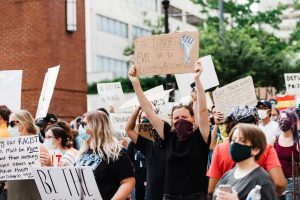
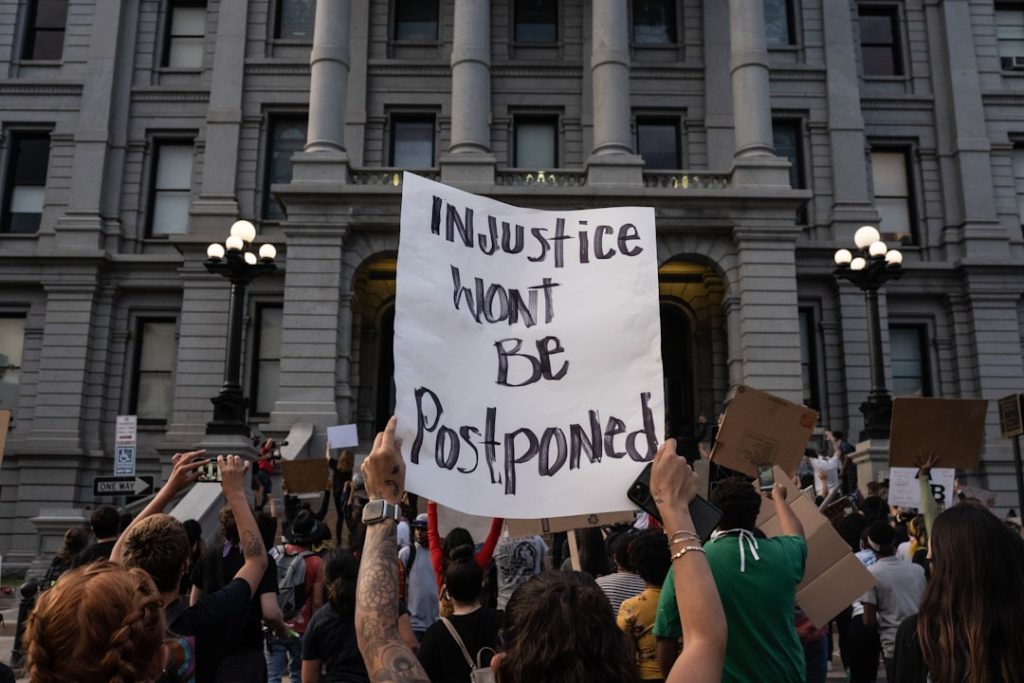
Photo by Taylor Turtle on Unsplash
Stay Connected with Flamr
Don’t forget to follow Flamr on social media!
Relacionado
Discover more from Fyra - Dating App for Progressives
Subscribe to get the latest posts sent to your email.