The algae is brutal, the choice is clear. Even if you haven’t read the Common Dreams piece with that title, you probably feel the metaphor in your bones.
We’re living through a political moment where the public sphere feels like it’s been flooded with toxic sludge: lies, bigotry, conspiracy theories, and an almost gleeful contempt for truth and human dignity. The article from Common Dreams captures that exhaustion—“pretty well wrung dry”—while also insisting that what we do next still matters, profoundly.
This isn’t just another ugly election cycle. It’s a test of whether a multiracial democracy can survive in the face of organized cruelty and weaponized disinformation. And for progressives, it’s a reminder that our fight isn’t only about policy—it’s about whether basic decency and shared reality can hold.
—
1. Why this moment matters
The Common Dreams piece frames the recent campaign as “the most nakedly bigoted American political campaign” in recent memory, driven by “bottom-feeding crooks” who rely on fear, resentment, and outright lies. That’s not hyperbole; it’s a description of a political strategy that sees cruelty as a feature, not a bug.
Why does this matter?
– Because when bigotry is normalized, violence follows.
– Because when lies dominate the public square, democracy erodes.
– Because when people are too exhausted, demoralized, or disgusted to participate, the most authoritarian forces win by default.
The “algae” metaphor is powerful: toxic blooms don’t just appear; they’re the result of long-term neglect and pollution. Likewise, this political moment is the result of decades of underfunded public education, corporate media consolidation, right-wing propaganda, and a political class that too often treats democracy as a spectacle, not a shared responsibility.
The choice, as the article argues, is clear—not because any candidate or party is perfect, but because the stakes are brutally simple: democracy vs. authoritarianism, solidarity vs. scapegoating, shared reality vs. weaponized lies.
—
2. Background: how we got to this toxic political “bloom”
The Common Dreams story situates this campaign in a broader pattern:
– Bigotry as a central campaign tool
Not just dog whistles, but bullhorns: open attacks on immigrants, LGBTQ+ people, Muslims, Black communities, and anyone labeled an “enemy.” This isn’t fringe rhetoric; it’s central to the messaging.
– Disinformation as strategy, not accident
We’ve moved past “spin” into full-on fabrication: fake crime waves, invented conspiracies, lies about elections, climate denial, and demonization of journalists, teachers, and public servants. The goal isn’t persuasion; it’s confusion and demoralization.
– Fearmongering as a governing philosophy
The campaign described in the article doesn’t offer a coherent policy vision. Instead, it offers fear: of “the other,” of social change, of multiracial democracy, of feminism, of trans people, of migrants, of protest movements. Fear is the glue holding together a coalition that otherwise has nothing material to offer most people.
– Corruption and “bottom-feeding crooks”
The article emphasizes that this isn’t just about ugly rhetoric; it’s about who benefits. Deregulation for corporations, tax cuts for the wealthy, attacks on unions and public services, and the funneling of public money into private hands. The cruelty and the corruption are intertwined.
– An exhausted public
The piece captures a feeling many share: being “wrung dry” by the nonstop sludge. That exhaustion is not incidental—it’s part of the strategy. If people give up, the worst actors face less resistance.
In that context, the article insists: despite the fatigue and disgust, the choice in front of us is still stark and unavoidable.
—
3. A progressive analysis: what’s really at stake
From a progressive perspective, this campaign—and the broader political moment—isn’t just about “left vs. right.” It’s about whether we move toward a society rooted in solidarity, or one organized around hierarchy and cruelty.
A few key themes stand out:
Democracy vs. authoritarian creep
The campaign described in the article leans heavily on:
– Attacks on voting rights and election integrity
– Demonization of opponents as enemies of the state
– Calls to criminalize dissent and protest
– Praise for strongman tactics and “law and order” crackdowns
This is textbook authoritarianism: delegitimize elections, attack the press, scapegoat minorities, and cultivate a sense that only one leader or party can “save” the nation. Progressives understand that democracy isn’t just about elections; it’s about whether ordinary people have real power in their workplaces, communities, and institutions. Authoritarian politics is designed to crush that.
Multiracial democracy vs. white nationalist backlash
The “nakedly bigoted” nature of the campaign isn’t incidental; it’s a response to demographic and cultural change. As the U.S. becomes more diverse and more people demand equality, those invested in racial hierarchy double down.
Progressives see this clearly:
– Attacks on voting rights in Black and brown communities
– Anti-immigrant hysteria and border militarization
– “Anti-woke” crusades targeting racial justice education
– Efforts to roll back LGBTQ+ rights and demonize trans people
This isn’t about “culture war” in the abstract; it’s about whether we accept a future where everyone belongs or retreat into a politics that insists some people are more human, more American, more deserving than others.
Public good vs. oligarchic control
The article references a maxim—“not for self but for all”—to frame the moral stakes. That’s the heart of progressive politics: the idea that we organize society around the common good, not private greed.
The opposing vision is clear:
– Deregulation that allows corporations to pollute, exploit, and extract
– Tax systems that favor the wealthy
– Privatization of public goods—schools, healthcare, infrastructure
– Attacks on unions and workers’ rights
Progressives see this as a clash between a society where we pool resources to meet human needs—healthcare, housing, education, climate resilience—and one where everything is a profit opportunity for a small elite.
Truth vs. propaganda
The “relentless lies” described in the article are not just an annoyance; they’re a weapon. When people can’t agree on basic facts, it becomes nearly impossible to build collective power or hold anyone accountable.
For progressives, defending truth isn’t about idealizing institutions that have their own flaws; it’s about:
– Supporting independent, public-interest journalism
– Building alternative media rooted in communities
– Practicing critical thinking without sliding into nihilism
– Refusing to normalize blatant falsehoods in the name of “both sides”
—
4. Why this matters for social justice and progressive values
Social justice movements—from labor and civil rights to feminism, environmental justice, and queer liberation—rely on two things: solidarity and truth. Both are under direct attack in the political climate described by Common Dreams.
This matters because:
– Marginalized communities are the first targets
When campaigns run on bigotry, those already vulnerable—immigrants, Black and brown communities, disabled people, queer and trans people, poor and working-class people—face intensified risk: violence, criminalization, economic precarity, and loss of rights.
– Progressive gains are fragile
Rights can be rolled back. Courts can be stacked. Agencies can be gutted. Movements can be criminalized. What feels “settled” can be undone quickly if authoritarian forces gain more power.
– Climate justice is on the line
The “algae” metaphor echoes ecological crisis. The same forces driving bigotry and deregulation are blocking serious climate action. For frontline communities—often Indigenous, Black, and low-income—this is literally a matter of life and death.
– Solidarity is being deliberately fractured
Fearmongering thrives on division: pitting workers against migrants, cis people against trans people, white people against everyone else, citizens against the poor. Progressive values insist that our struggles are linked—that none of us are free until all of us are.
In that sense, the “choice” isn’t just about a ballot; it’s about whether we commit to a politics of care, shared responsibility, and collective liberation, or surrender to a politics of cruelty and extraction.
—
5. What people can do—and how to stay grounded
The article’s tone—exhausted but clear-eyed—matches where many people are. So what now?
1. Stay engaged, even if you’re tired
– Vote in every election you can—local, state, national.
– Support down-ballot candidates who are aligned with progressive values.
– Pay attention to school boards, city councils, and state legislatures where much of the damage (or progress) happens.
2. Strengthen movement infrastructure
– Join or support organizations doing sustained work: unions, tenant unions, mutual aid groups, racial justice groups, climate organizations, reproductive justice networks.
– Donate if you can; volunteer if you can’t. Movements need people, not just posts.
3. Defend truth and build alternative media
– Support outlets like Common Dreams that provide independent, progressive coverage.
– Share credible reporting and analysis in your networks.
– Learn to recognize disinformation and gently but firmly challenge it when you see it.
4. Practice solidarity in concrete ways
– Show up for targeted communities—at protests, court support, mutual aid efforts.
– Listen to those most directly impacted and follow their lead.
– Reject attempts to divide movements; connect struggles instead.
5. Take care of yourself and each other
– Burnout is real, and it’s being weaponized. Rest is not surrender; it’s maintenance for the long haul.
– Build community offline as well as online.
– Remember that joy, art, humor, and connection are part of resistance, not distractions from it.
The algae is indeed brutal. But toxic blooms can be cleaned up, and polluted systems can be restored—if we’re honest about the damage, clear about the stakes, and committed to acting together.
The choice is clear, and it’s not just about one election: it’s about what kind of society we’re willing to fight for.
Read the original Common Dreams article here:
https://www.commondreams.org/further/the-algae-is-brutal-the-choice-is-clear
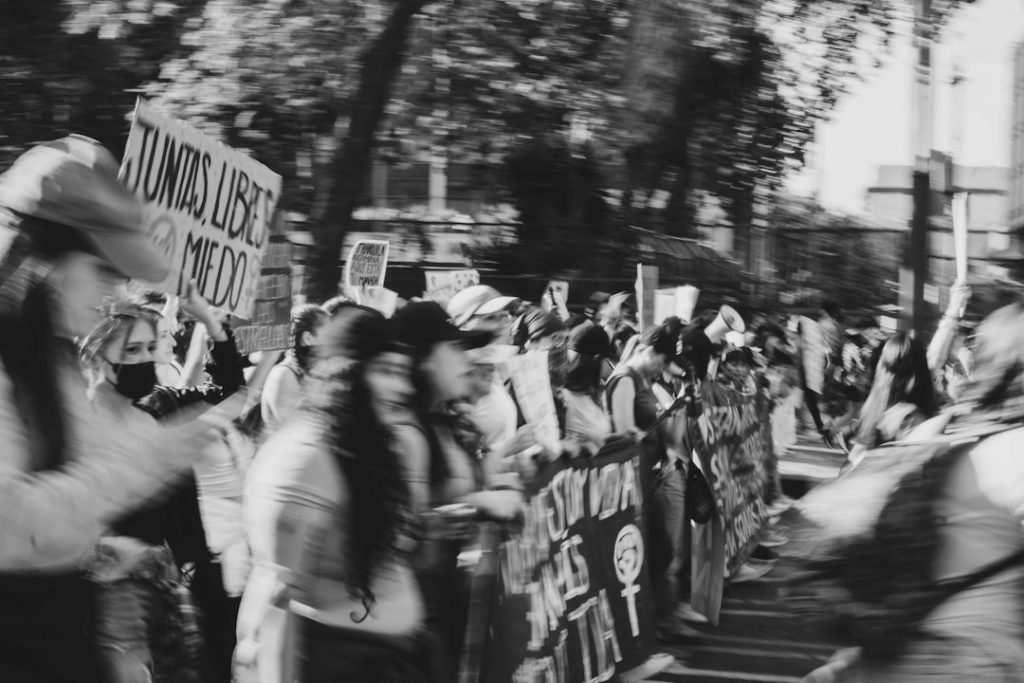
Photo by Daniela Martinez on Unsplash
Relacionado
Discover more from Fyra - Dating App for Progressives
Subscribe to get the latest posts sent to your email.