Why a Hardline Iranian Politician Is a Gift to Authoritarians Everywhere
When we think about love, we don’t usually think about foreign policy. But the world we date in — the headlines shaping our fears, the borders shaping our identities, the wars shaping our families’ stories — is the same world shaped by people like Mahmoud Ahmadinejad, the former president of Iran, and the governments that quietly benefit from his existence.
The Intercept recently published a bombshell report arguing that Ahmadinejad — a hardline, authoritarian figure still looming over Iranian politics — remains terrible for ordinary Iranians, yet remarkably useful for Israel’s leadership and for U.S. hawks. The piece pulls back the curtain on how “enemy” strongmen can actually be politically convenient for other governments, and how the rhetoric of “freedom” and “democracy” often masks a very different set of priorities.
For a progressive dating community that cares about justice, liberation, and the kind of world we’re building with our partners, this story matters. It’s about how power works, how propaganda shapes who we’re told to fear, and how real people — including our future dates, friends, and chosen families — pay the price.
Read the full article: Ahmadinejad Is Still Bad for Iranians — and Still Great for Israel (The Intercept)
What the Intercept Story Says
Who is Mahmoud Ahmadinejad?
Mahmoud Ahmadinejad served as Iran’s president in the mid-to-late 2000s and became globally known for:
- Authoritarian repression inside Iran, including the brutal crackdown on the 2009 Green Movement protests.
- Inflammatory rhetoric about Israel and the Holocaust, which was widely condemned worldwide.
- Hardline positions on Iran’s nuclear program and civil liberties.
Although he’s no longer president, Ahmadinejad remains a political actor and symbol. The Intercept’s piece explains that his continued presence in Iranian politics — and the specter of his possible return — is deeply harmful to ordinary Iranians who want democratic reforms, civil rights, and a future beyond authoritarianism.
The “Perfect Villain” for Israel’s Right Wing
The report argues that while Ahmadinejad is terrible for Iranians, he’s politically useful for Israel’s leadership — especially right-wing governments that rely on fear and militarization to maintain power. Why?
- He embodies the “existential threat” narrative. Ahmadinejad’s history of anti-Israel statements and Holocaust distortion gives Israeli leaders a vivid villain to point to when justifying massive military budgets, aggressive regional policies, and crackdowns on dissent.
- He helps delegitimize any diplomacy with Iran. When a figure like Ahmadinejad looms large, it’s easier to dismiss Iranian civil society, reformists, and protesters as irrelevant and insist that “there’s no partner for peace.”
- He’s a propaganda goldmine. Clips of his speeches, taken out of context or not, can be replayed endlessly to rally domestic support and portray Israel as eternally under siege.
In other words: the worse Iran looks, the easier it is for Israeli hardliners to justify their own authoritarian moves — from military operations to occupation to surveillance and repression at home.
The U.S. Role: Freedom Talk, Power Politics
The Intercept’s report also highlights how U.S. policymakers — especially in the national security establishment — have historically treated Iranian freedom as more of a talking point than a priority.
According to the article, the U.S. and Israel often aligned in practice: they preferred a demonized, isolated Iran led by hardliners over a genuinely democratic Iran that might challenge regional power structures. That meant:
- Using human rights rhetoric selectively, while supporting sanctions and policies that hurt ordinary Iranians more than elites.
- Undermining or sidelining Iranian reformers and grassroots movements in favor of strategies that kept the “enemy” image intact.
- Maintaining a climate of permanent crisis that justifies military spending and entrenched power blocs in Washington and Tel Aviv.
The bottom line: the report argues that neither Israel’s leadership nor the U.S. foreign policy establishment has truly centered the freedom and wellbeing of the Iranian people. Instead, they’ve often treated Iran’s internal politics as a stage on which to rehearse their own narratives of threat, security, and control.
Why This Matters for Progressives
Authoritarian Symbiosis: How Strongmen Feed Each Other
One of the most important progressive takeaways is the concept of “authoritarian symbiosis.” Hardline leaders in different countries love to pretend they’re mortal enemies. But in practice, they often rely on each other to stay in power.
Ahmadinejad’s rhetoric and repression make it easier for Israeli and U.S. leaders to say: “See? We told you they’re monsters. We need more weapons, more surveillance, more emergency powers.” Meanwhile, Israeli and U.S. aggression helps Iranian hardliners say: “See? The West hates us. We need to crack down, militarize, and silence dissent.”
It’s a feedback loop:
- Fear abroad justifies repression at home.
- Repression at home fuels fear abroad.
Progressives have long argued that this dynamic isn’t an accident — it’s a feature of how global power works. When we see Ahmadinejad being framed as a useful villain, we’re reminded that authoritarianism is often transnational, even when it wears different flags.
Human Rights Are Not a Brand
The Intercept story underscores a hard truth: many governments invoke “freedom” and “human rights” selectively. They speak loudly about women’s rights in Iran while ignoring or enabling patriarchal violence and occupation at home. They condemn censorship abroad while surveilling and criminalizing dissent domestically.
For progressives, this is a call to reject “human rights as branding.” If we care about Iranian protesters, Palestinian civilians, Israeli dissidents, and marginalized people everywhere, we can’t accept a world where human rights language is used as a PR strategy while policies do the opposite.
Sanctions, War, and the People in the Middle
The article also connects to a long-standing progressive critique of broad sanctions and militarized foreign policy. When Western governments impose sweeping sanctions or threaten war, the people who pay the highest price are usually:
- Workers and poor communities
- Women and queer people
- Ethnic and religious minorities
- Activists and dissidents already under pressure
Meanwhile, authoritarian elites often adapt, profit, and tighten their grip. Ahmadinejad and those like him can use sanctions and threats as proof that the nation is under siege, demanding “unity” and obedience while crushing opposition.
Progressive movements insist that any strategy claiming to support freedom must be measured by its impact on ordinary people — not its usefulness to powerful governments.
Connecting This to Broader Progressive Values
Intersectionality and Global Solidarity
Intersectional politics means understanding that struggles are connected. The same systems of militarism, patriarchy, racism, and capitalism that shape life in Tehran also shape life in Tel Aviv, in U.S. cities, and in the diaspora communities where many of us live and date.
Ahmadinejad’s Iran is not just “over there.” The policies that keep him relevant — from Israeli military doctrine to U.S. sanctions and war planning — intersect with:
- Islamophobia and anti-Iranian racism in Western countries
- Surveillance and policing of immigrant communities
- Domestic budget priorities (military vs. healthcare, housing, climate action)
- Media narratives that shape who is seen as dangerous, disposable, or less human
For a progressive dating community, this matters because our relationships don’t exist in a vacuum. Many of us are navigating mixed backgrounds, diaspora identities, interfaith partnerships, or trauma shaped by war, sanctions, or displacement. Understanding these power structures is part of practicing care.
Resisting “Clash of Civilizations” Narratives
Authoritarians love the idea of a “clash of civilizations.” It’s a story that says: there are good guys and bad guys, us and them, West and East, democracy and barbarism. Ahmadinejad’s rhetoric feeds that story. So does the rhetoric of some Israeli and U.S. leaders.
Progressives reject this binary. We know:
- There are authoritarians and liberation movements in every country.
- There are feminists, queer activists, workers’ movements, and anti-racist organizers in Iran, Israel, the U.S., and beyond.
- Ordinary people everywhere want dignity, safety, and love — not endless war.
The Intercept story reminds us that when we let powerful leaders define whole nations by their enemies, we erase the people actually fighting for freedom on the ground — including Iranians who risked their lives in the Green Movement and in more recent waves of protest.
Different Perspectives and Tensions
Security Concerns vs. Human Rights
It’s important to acknowledge that many people — especially in Israel and in diaspora communities — genuinely fear Iran’s government, its proxies, and its weapons programs. Those fears aren’t imaginary. Ahmadinejad’s record and rhetoric contribute to them.
Some argue that hardline policies, sanctions, and military threats are necessary to contain regimes like Iran’s. Others, including many progressives, counter that these strategies often backfire, entrenching authoritarianism and increasing the risk of war.
There’s a real tension here between immediate security concerns and long-term visions of justice and peace. The Intercept’s reporting doesn’t deny that tension; it challenges us to ask whether the current approach actually makes anyone safer — or simply stabilizes existing power structures.
Iranian Voices: Between Nationalism and Resistance
Within Iran and the Iranian diaspora, perspectives are diverse. Some see any foreign pressure on the regime as helpful. Others see it as a gift to hardliners. Many feel trapped between a repressive state and external powers that instrumentalize their suffering.
What’s clear is that Iranian activists, feminists, workers, students, and queer communities are not waiting for Western governments or Ahmadinejad-style politicians to save them. They are building their own forms of resistance — and often explicitly rejecting both domestic repression and foreign intervention.
For progressives, centering those voices means resisting the temptation to turn Iranian politics into a backdrop for Western
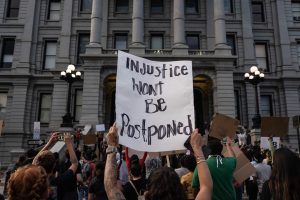
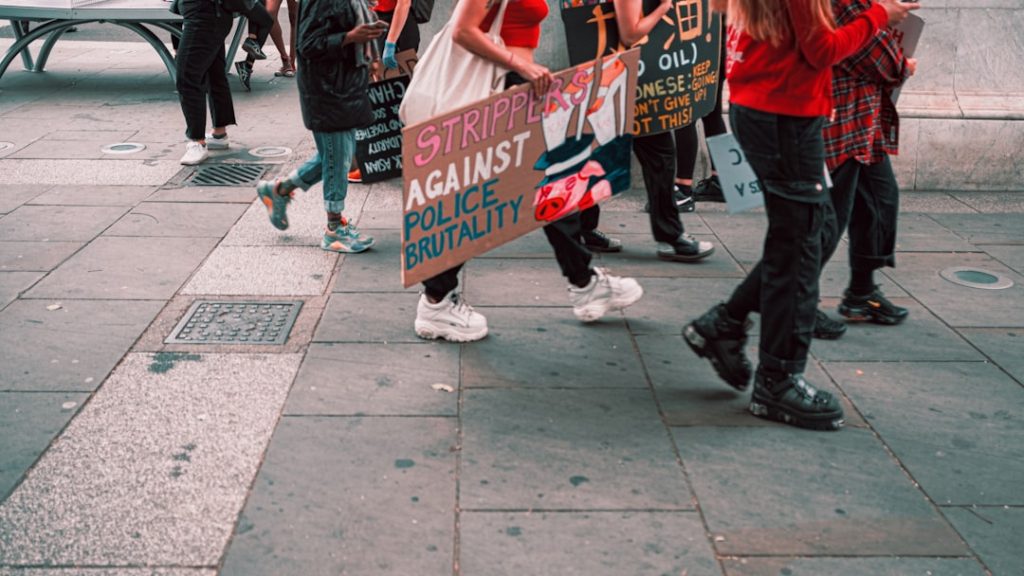
Photo by Samuel Regan-Asante on Unsplash
Stay Connected with Flamr
Don’t forget to follow Flamr on social media!
Relacionado
Discover more from Fyra - Dating App for Progressives
Subscribe to get the latest posts sent to your email.