
Reproductive Rights at a Crossroads: What’s at Stake and How We Can Act
In 2026, reproductive rights in the United States—and in many parts of the world—are in a period of profound upheaval. What once felt like settled law or a steadily expanding set of freedoms has become a patchwork of protections and bans, with people’s access to basic health care now determined largely by their ZIP code, income, and identity.
This moment is not only about abortion. It’s about who has the power to make decisions about their own body, whether people can plan their families and futures, and whether the law treats reproductive health as a fundamental right or a privilege.
Below is an overview of how we got here, what’s happening now, what’s at stake, and how each of us can respond.
—
How We Got Here: A Brief Background
For nearly 50 years, Roe v. Wade (1973) recognized a constitutional right to abortion in the United States. That framework allowed states to regulate abortion but prevented outright bans before fetal viability. Over time, access was chipped away by:
– Mandatory waiting periods
– Parental consent and notification laws
– Restrictions on insurance coverage
– Targeted regulations of abortion providers (TRAP laws)
In June 2022, the U.S. Supreme Court overturned Roe v. Wade in Dobbs v. Jackson Women’s Health Organization. This ruling ended federal constitutional protection for abortion, handing regulation entirely to states.
Within months, many states implemented “trigger laws” or revived pre-Roe bans. Others moved quickly to protect or expand access. By 2024–2026, the country had effectively split into two realities: one where abortion and broader reproductive health care remain accessible, and another where they are severely restricted or criminalized.
Globally, the picture is mixed. Some countries—like Ireland, Mexico, and Argentina—have liberalized abortion laws in recent years, often after major public campaigns. Others have moved in the opposite direction or maintained strict bans, leaving millions without safe options.
—
The Current Landscape: A Patchwork of Rights and Restrictions
Legal Restrictions and Criminalization
As of mid-2026, in the U.S.:
– More than a dozen states have near-total abortion bans or bans at around six weeks of pregnancy—before many people know they’re pregnant.
– Some laws include few or no exceptions for rape, incest, or severe fetal anomalies.
– Prosecutors in several states have pursued cases against people suspected of “self-managing” abortions or against those who helped them, often using child endangerment or drug laws rather than explicit abortion statutes.
According to the Guttmacher Institute, by 2023 abortion bans and severe restrictions had already forced hundreds of thousands of people to travel out of state or seek care later in pregnancy. Clinics in states where abortion remains legal have reported overwhelming demand, longer wait times, and increased strain on staff and resources.
Impact on Maternal Health
Restrictive laws don’t eliminate abortions; they make them less safe and more unequal. The World Health Organization estimates that globally, almost half of all abortions are unsafe, and unsafe abortion is a leading cause of maternal mortality in some regions.
In the U.S., maternal mortality is already higher than in other high-income countries. The Centers for Disease Control and Prevention (CDC) reported that in 2021, the U.S. maternal mortality rate was 32.9 deaths per 100,000 live births—more than double the rate of many peer nations. Black women face particularly stark disparities, dying from pregnancy-related causes at nearly three times the rate of white women.
Restricting abortion and reproductive care in states that already have poor maternal health outcomes and limited health infrastructure increases the risks of:
– Forced continuation of dangerous pregnancies
– Delayed treatment for miscarriages and ectopic pregnancies
– Worsening chronic health conditions when pregnancy care is denied or delayed
Doctors and nurses in restricted states report confusion and fear about what care they are legally allowed to provide, leading some hospitals to delay lifesaving treatment until patients are at the brink of sepsis or organ failure.
Intersection with Race, Class, and Geography
Reproductive restrictions fall hardest on those who already face systemic barriers:
– Low-income people: Travel, time off work, childcare, and lodging can make out-of-state care impossible.
– Black, Indigenous, and other people of color: Already facing discrimination in health care, they are more likely to live in states with restrictive laws and less likely to have access to comprehensive reproductive care.
– Rural communities: Even in states where abortion is legal, clinic closures and hospital consolidations have created “maternity care deserts.”
– Immigrants and undocumented people: Fear of law enforcement, language barriers, and lack of insurance can make accessing care especially dangerous.
Reproductive justice advocates—particularly Black women and queer organizers—have long emphasized that reproductive rights are not just about abortion, but about the right to have children, not have children, and raise children in safe, healthy communities. This broader framework connects reproductive rights to housing, wages, racism, environmental justice, and more.
—
Beyond Abortion: Contraception, IVF, and Privacy
The current debate extends beyond abortion to other aspects of reproductive health and autonomy.
Contraception and Emergency Contraception
Some lawmakers and courts have signaled interest in restricting certain forms of contraception, especially emergency contraception and IUDs, by framing them as “abortifacients” despite scientific consensus that they prevent pregnancy rather than terminate it. Advocates warn that attacks on contraception access could follow the rollback of abortion rights, threatening one of the most effective tools for reducing unintended pregnancies.
IVF and Assisted Reproduction
In 2024, an Alabama Supreme Court ruling that embryos created for in vitro fertilization (IVF) could be treated as “children” under state law sparked national alarm. Clinics paused services, and families undergoing IVF were left in limbo. While some legislative fixes followed, the case highlighted how “personhood” interpretations can endanger fertility treatments and other forms of reproductive care.
Data Privacy and Surveillance
Digital footprints—period tracking apps, search histories, text messages, and location data—are increasingly relevant. In prosecutions related to pregnancy outcomes, law enforcement has used digital records as evidence. Privacy advocates warn that without strong data protections, people seeking information about abortion or pregnancy loss may be exposed to legal risk.
—
What’s at Stake
At its core, the struggle over reproductive rights is about:
– Bodily autonomy: Who has the ultimate authority over a person’s body—individuals or the state?
– Gender equality: When people cannot control if and when they have children, their ability to pursue education, careers, and financial stability is constrained.
– Health and life: Restrictive laws increase health risks, especially for marginalized communities.
– Democracy and precedent: The reasoning used to overturn Roe has raised concerns about the future of other rights grounded in privacy and liberty, including contraception and same-sex marriage.
Internationally, the stakes include whether global progress on reproductive health—such as declining maternal mortality and expanding access to safe, legal abortion—will continue, stall, or reverse.
—
How People Can Take Action
Reproductive rights can feel like an overwhelming issue, especially when laws change quickly and court decisions seem distant from everyday life. But there are concrete ways to engage at multiple levels.
1. Stay Informed and Share Accurate Information
– Use reputable sources such as the Guttmacher Institute, World Health Organization (WHO), and major medical organizations (e.g., American College of Obstetricians and Gynecologists).
– Be cautious about sharing unverified claims online; misinformation can put people at risk.
– Learn the current laws in your state or region; organizations like the Center for Reproductive Rights maintain up-to-date maps and summaries.
2. Support Practical Access
– Donate to local abortion funds and practical support organizations that help people pay for travel, lodging, and procedures.
– Volunteer with hotlines, clinic escort programs, or mutual aid networks if it is safe and feasible for you.
– Support comprehensive sexual and reproductive health clinics that provide contraception, STI testing, prenatal care, and more.
3. Engage Politically—Locally and Nationally
– Vote in local, state, and national elections; many key decisions are made by governors, state legislators, judges, and prosecutors.
– Contact your representatives to support policies that expand access to reproductive health care, protect privacy, and address maternal health disparities.
– Pay attention to ballot initiatives and constitutional amendments related to reproductive rights; in several states, voters have directly protected or restricted access through referenda.
4. Center Reproductive Justice
– Support organizations led by Black, Indigenous, and other people of color, as well as LGBTQ+ and disability justice groups, who often have the deepest experience addressing intersecting forms of oppression.
– Advocate for policies that link reproductive rights to broader issues: paid family leave, living wages, affordable childcare, environmental health, and racial justice in health care.
5. Build Supportive Communities
– Have honest, respectful conversations with friends, family, and colleagues. Personal stories and empathetic dialogue can shift perspectives more effectively than arguments alone.
– Create or join community spaces—book clubs, discussion groups, faith communities—that engage with reproductive justice in thoughtful, nuanced ways.
– Support people in your life who are pregnant, parenting, or navigating reproductive decisions, without judgment.
—
Moving Forward: From Crisis to Collective Action
Reproductive rights in 2026 are at a critical juncture. Laws and court decisions matter, but so do the daily choices communities make—whether to believe people when they describe their needs, whether to respect their autonomy, and whether to stand with those most affected by restrictions.
The path ahead will not be linear. There will be setbacks and victories, contradictions and complexity. But history shows that sustained, organized, and inclusive movements can transform what once seemed impossible into new norms.
Defending and expanding reproductive rights is not just about one procedure or one court case. It is about the kind of society we want: one where people can make informed decisions about their bodies and lives, where health care is accessible and dignified, and where justice is not reserved for the privileged few.
Each action—learning, voting, donating, organizing, having a difficult conversation—adds up. When we treat reproductive rights as a shared responsibility, rather than a private issue, we move closer to a world where everyone has the power to decide their future.
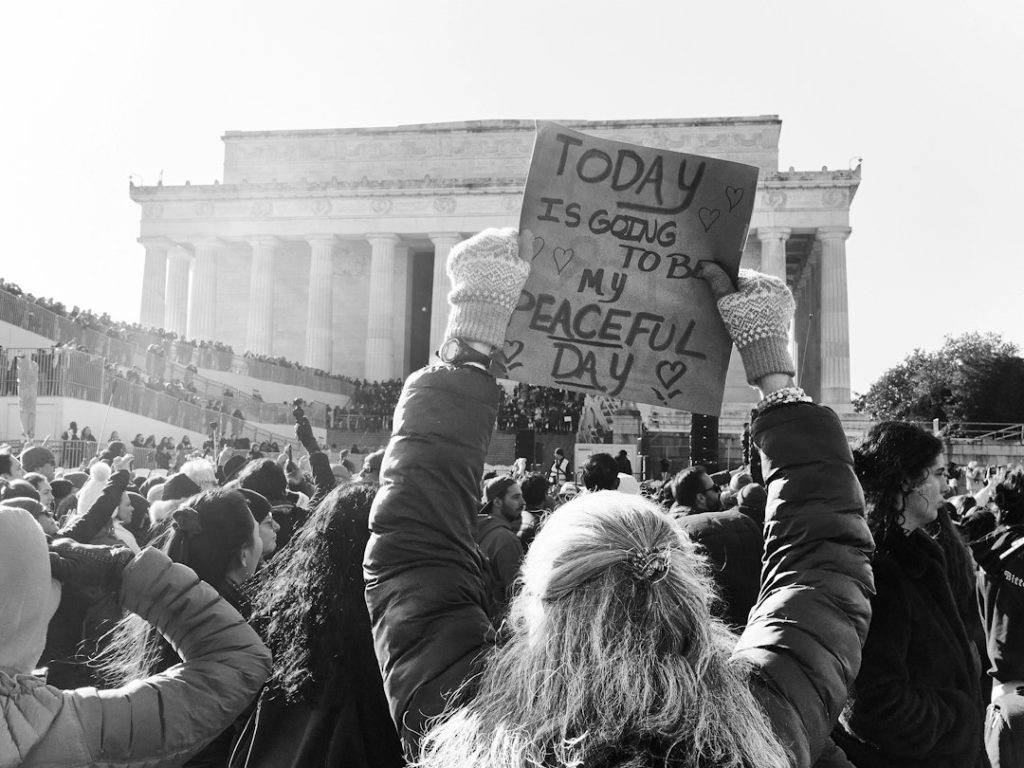
Photo by Chip Vincent on Unsplash
Relacionado
Discover more from Fyra - Dating App for Progressives
Subscribe to get the latest posts sent to your email.