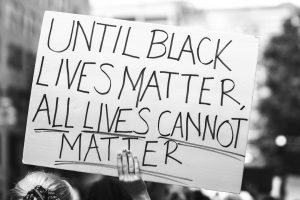
If you’ve ever swiped past someone because their profile said “No politics, please,” you’re not alone.
For many progressives, politics isn’t just something that happens every four years—it’s a reflection of core values: justice, equity, consent, bodily autonomy, climate, queer and trans rights, racial justice, disability justice, labor rights, and more. Those values naturally spill into dating and relationships.
So how do you date in a way that honors those values, without turning every first date into a debate stage?
Let’s dig into values-based dating for progressives: finding like-minded partners, communicating clearly, and building real, grounded connections in 2026’s wild dating landscape.
—
1. Start with values, not just vibes
Attraction matters. Chemistry matters. But for values-based dating, your starting point is: What actually matters to me long-term?
Take 10–15 minutes and write down:
– Causes you care about (e.g., climate justice, racial equity, trans rights, disability justice, worker protections)
– Non-negotiables (e.g., “Supports reproductive rights,” “Affirms trans and non-binary identities,” “Anti-racist in practice, not just words”)
– Relationship values (e.g., emotional honesty, consent, mutual care, shared domestic labor, community-mindedness)
Ask yourself:
– Could I be in a serious relationship with someone who “stays out of politics”?
– How important is shared activism versus just shared beliefs?
– Where am I willing to compromise—and where am I absolutely not?
This clarity helps you avoid months of “Well, maybe they’ll come around…” with someone whose worldview fundamentally clashes with yours.
—
2. Make your values visible in your dating profile
If you’re using apps (and most of us are), your profile is your first filter. Use it.
Instead of vague lines like “I care about social justice,” be concrete and conversational:
– “Mutual aid over ‘thoughts and prayers.’ I show up for my community and hope you do too.”
– “Union supporter, climate worrier, believer in bodily autonomy. If you think ‘woke’ is an insult, we’re not a match.”
– “Queer, neurodivergent, and very pro-trans rights. Looking for someone who doesn’t see my existence as a debate topic.”
A few tips:
– Include signals: Mention organizations you support, marches you’ve attended, mutual aid work, or the kind of news you follow.
– Use photos that reflect your life: A pic at a protest, volunteering, or at a community event can say a lot.
– Be clear but not hostile: You’re not writing a manifesto; you’re inviting aligned people in and gently filtering out the rest.
Example profile blurb:
> “Left-of-center bookworm who believes health care is a human right, Black Lives Matter, and trans rights are non-negotiable. I spend weekends at community events, mutual aid drop-offs, and trying new vegan spots. Looking for someone kind, curious, and politically awake.”
This doesn’t guarantee perfect matches, but it dramatically reduces “So actually I’m kind of libertarian…” surprises.
—
3. Where to find like-minded people (beyond the apps)
Dating apps can feel like a numbers game, and they’re not always kind to progressive folks (especially queer, trans, disabled, and fat people). Balance them with values-aligned spaces:
Try:
– Local organizing & mutual aid
– Tenant unions, climate groups, racial justice orgs, reproductive rights networks
– Don’t go just to find dates—but notice who you naturally connect with.
– Progressive social clubs and meetups
– DSA socials, queer meetups, book clubs with political themes, community art nights
– Skill-sharing & workshops
– Consent workshops, transformative justice trainings, labor rights events, political education sessions
– Online spaces
– Discords, forums, and group chats around progressive causes, queer communities, disability justice, or leftist politics
– Many friendships (and relationships) start in shared-interest servers and group chats.
When you’re in spaces built around your values, it’s easier to meet people who “get it” without having to explain why pronouns matter or why you care about prison abolition.
—
4. Talk about politics without making every date a seminar
You don’t need to open with “So what’s your stance on capitalism?” on date one. But you do want to notice how someone talks about people, power, and responsibility.
Early-date questions that reveal values:
– “What’s something you care about a lot these days?”
– “Do you follow politics much, or does it stress you out?”
– “Are there any causes or communities you feel really connected to?”
– “What would a ‘better world’ look like to you?”
Listen for:
– Do they speak respectfully about marginalized groups?
– Do they understand consent and bodily autonomy as real, lived values?
– Are they dismissive (“I don’t get why people are so sensitive”) or curious (“I’m still learning, but I’m trying to do better”)?
If you hit a red flag, you don’t have to argue. You can say:
– “I think we’re coming from really different places on this, and that’s pretty central to how I live my life.”
– “I’m realizing our values don’t line up in a way that would work for me romantically.”
You’re not obligated to be anyone’s political educator.
—
5. Practice progressive communication in your relationships
Dating with progressive values isn’t just about what you believe—it’s how you communicate.
Center consent and autonomy
– Ask before physical contact: “Can I hold your hand?” “Is it okay if I kiss you?”
– Check in: “How are you feeling about our pace?” “Is this still feeling good for you?”
This isn’t “unromantic”; it’s respectful and often very attractive.
Use “I” statements and curiosity
Instead of:
“You never care about my time. This is selfish.”
Try:
“I felt hurt when you cancelled last minute. Can we talk about what happened?”
And follow up with curiosity:
– “Can you tell me how you saw it?”
– “What would feel fair to both of us next time?”
Be transparent about capacity
Progressives are often juggling organizing, care work, and burnout. Be honest about your bandwidth:
– “I’m really invested in my community work, so I’m looking for something that fits with that—not a relationship where we’re together 24/7.”
– “I care about you and also need alone time to stay grounded. Can we talk about what that looks like?”
Respecting your limits is part of respecting yourself—and that’s a progressive value too.
—
6. Navigating differences (because no one will match you 100%)
Even with good filtering, you’ll meet people who share most of your values but differ on some things.
Ask:
– Is this a disagreement about strategy (how to get to a better world) or about core values (whether everyone deserves rights)?
– Is this something we can keep talking about, or does it fundamentally affect how we’d treat each other or others?
Example:
– You: prison abolitionist
– Them: believes in major reform but not abolition
This might be workable if they’re open-minded, not dismissive, and share your commitment to reducing harm. But:
– You: believes trans rights are non-negotiable
– Them: “I just feel like people are too sensitive about pronouns”
That’s not a minor difference; that’s a core mismatch.
You can say:
– “This is a really important part of my values and my community. I don’t think I can be in a relationship where this isn’t respected.”
—
7. Online discourse vs. real-world dating
In 2026, a lot of progressive spaces are online—and sometimes very intense. It can be easy to bring that energy into dating in a way that makes connection harder.
A few grounding reminders:
– People are allowed to be learning, as long as they’re genuinely open and not treating your existence as theoretical.
– You don’t need someone who matches every single one of your opinions; you need someone whose core values align and who treats people (including you) with care.
– It’s okay to have joy, romance, and softness. Pleasure and love are not distractions from justice—they’re part of the world we’re trying to build.
If you notice yourself constantly “testing” your date or waiting for them to say the wrong thing, check in:
– Am I protecting myself from real harm, or am I stuck in debate mode?
– Can I ask a direct question instead of silently judging? (“How do you think about your role in racial justice?”)
—
8. Actionable steps to start dating more intentionally
Here’s a simple plan you can implement this month:
1. Audit your profile
– Add 2–3 concrete value signals.
– Remove vague lines like “I hate drama” and replace with something grounded like “I care about clear, kind communication.”
2. Set your filters
– Decide your non-negotiables and write them down.
– Commit to ending things early if those are violated, instead of hoping someone will change.
3. Join one values-aligned space
– A local mutual aid group, a progressive book club, a queer meetup, or a political education group.
– Show up consistently for a few months.
4. Practice one new communication habit
– Ask for consent explicitly.
– Use “I feel…” instead of “You always…”
– Do a weekly check-in with your partner or date: “How is this feeling for you?”
5. Build a support network
– Talk to friends or chosen family about your dating experiences.
– Ask them to help you spot red flags and remind you of your non-negotiables.
—
Dating as a progressive in 2026 can feel exhausting—especially as politics and rights are constantly in flux. But it can also be deeply hopeful.
When you date with your values at the center, you’re not just looking for someone to watch shows with. You’re looking for someone to build a little pocket of the world with: a relationship rooted in consent, care, justice, and mutual respect.
That doesn’t require perfection. It requires clarity, courage, and a willingness to show up as your full, political, human self—and to let someone else do the same.
Relacionado
Discover more from Fyra - Dating App for Progressives
Subscribe to get the latest posts sent to your email.