There’s a moment I think about a lot.
I was in my early twenties, sitting on the floor of a cramped living room after a community meeting. We’d just spent two hours talking about “building a better world”—big words, big feelings, lots of passion. As people packed up, one older organizer turned to me and said, almost casually:
“Just remember: you don’t get to build a better world by skipping over the one you’re in.”
At the time, I nodded like I understood. I didn’t. I wanted transformation, not complication. I wanted clear villains and easy solutions, not nuance, not contradiction, not the uncomfortable truth that sometimes I was part of the problem.
Years later, that sentence makes more sense. Building a better world isn’t just a political project; it’s deeply personal. It asks us to look at where we stand—our identities, our privileges, our wounds, our blind spots—and decide, over and over, who we want to be in relation to other people’s lives.
It’s not just out there. It starts in here.
—
The world inside the word “we”
We use “we” a lot when we talk about progress.
We need to care about the climate.
We should stand against racism.
We have to protect trans rights.
We must end exploitation.
“We” is a powerful word. It suggests togetherness, shared responsibility, solidarity. But “we” is also slippery. Who is included? Who is left out? And who gets to decide?
I remember a meeting where someone said, “We all feel unsafe walking home at night.” A few people nodded. One person didn’t. Later, she said quietly, “I don’t walk home. I can’t. I don’t have papers. I can’t risk being stopped.”
That “we” had erased her reality.
It’s a small example, but it points to something bigger: when we talk about justice, we often assume our experience is universal. We don’t always ask who’s missing from the conversation, or whose reality doesn’t fit the story we’re telling.
Intersectionality—a word that can feel academic or abstract—is really just the practice of refusing to flatten people’s lives. It asks us to consider how different parts of identity (race, gender, class, disability, immigration status, sexuality, and more) intersect to shape what danger, opportunity, and freedom look like.
It asks us, when we say “we,” to mean it more fully.
—
The quiet discomfort of realizing you’re privileged
The first time I really confronted my own privilege, I felt defensive.
I grew up with some financial instability. I watched my family struggle. I worked multiple jobs in college. So when someone pointed out that I still had certain advantages—citizenship, being able-bodied, being perceived as “non-threatening” in certain spaces—I felt misunderstood.
“I’ve struggled too,” I wanted to say. “Why are you acting like I’ve had it easy?”
It took time to realize that privilege doesn’t cancel pain. It doesn’t mean your life has been simple or your achievements are meaningless. It just means there are some obstacles you haven’t had to face, some dangers you haven’t had to fear, some doors that were more open for you than for others.
One day, a friend said something that shifted things for me:
“Privilege isn’t an accusation. It’s an invitation.”
An invitation to:
– Notice what you’ve been spared.
– Understand that not everyone is spared the same things.
– Use what you have—safety, resources, access, voice—to make more room for others.
That framing helped. It softened my defensiveness and made space for responsibility. It turned privilege from a source of guilt into a source of possibility.
—
Allyship as a practice, not a performance
The word “ally” is everywhere now. It’s on posters, corporate statements, social media bios. It’s easy to claim and harder to live.
At its best, allyship is about showing up for people whose struggles you don’t personally experience, in ways they actually find helpful. At its worst, it becomes a performance—something we declare about ourselves instead of something others experience from us.
I’ve been both. I’ve shared the right articles, said the right words, posted the right hashtags—and still missed opportunities to show up when it mattered. I’ve been loud online and quiet in the room where harm was happening.
I remember sitting in a work meeting where a colleague repeatedly talked over a woman of color. I noticed. I felt uncomfortable. And I said nothing.
Later, I justified it to myself: “It wasn’t my place.” “I didn’t want to overstep.” “I didn’t know how she felt.” All of that might have been true, but it was also convenient. I chose my comfort over her dignity.
Allyship, in that moment, would have looked like:
– “I think she was still speaking—can we let her finish?”
– Or, after the meeting: “I noticed what happened. If you want support raising it, I’m here.”
Small actions, but they matter. They change the texture of a space. They signal who gets to be fully present and who is expected to shrink.
—
Questions worth sitting with
If we’re serious about building a better world, we have to start with questions that make us a bit uncomfortable. Not to shame ourselves, but to see more clearly.
You might sit with questions like:
– Where in my life do I benefit from systems I say I oppose?
– When have I stayed silent because speaking up felt risky, even if someone else was already bearing more risk than me?
– Whose voices do I instinctively trust first? Whose do I unconsciously doubt?
– What identities do I rarely think about because the world is already shaped with me in mind?
– Where am I still centering my own feelings in conversations about other people’s pain?
It can be tempting to rush past these questions—toward action, toward solutions, toward feeling helpful. But reflection is itself a kind of action. It’s the work of reorienting ourselves so that when we do move, we’re less likely to replicate the very patterns we’re trying to dismantle.
—
Growth without self-erasure
There’s a danger in this kind of reflection: we can slide into self-rejection.
Once we start seeing our complicity in harmful systems, it’s easy to think, “I’m terrible,” or “I’m the problem,” and either spiral into shame or retreat into denial. Neither helps anyone.
The point isn’t to erase ourselves; it’s to transform how we show up.
You are allowed to:
– Have a history of getting things wrong.
– Have blind spots you’re only now discovering.
– Have moments you’re not proud of.
– Be learning, slowly, imperfectly.
The question is not: “Am I a good person?”
The question is: “Am I willing to become a more responsible one?”
That shift—from goodness to responsibility—changes everything. It moves the focus from self-image to impact. It invites us to ask, not “Do I mean well?” but “What happens to others when I act this way?”
—
Paths forward: small, steady steps
So what does building a better world look like in practice, beyond slogans and self-reflection?
It might look like:
1. Listening beyond your comfort zone
Seek out voices you don’t usually hear: organizers, disabled activists, migrant workers, trans people, Black and Indigenous thinkers, people with very different life paths than yours. Not to consume their pain as “content,” but to understand how the world feels from where they stand.
2. Redistributing what you can
Money, time, skills, connections—whatever you have. Support mutual aid groups, community bail funds, local advocacy organizations. Offer childcare, rides, translation, or tech support. Share access, not just opinions.
3. Changing your immediate environment
You may not control policy, but you have influence in your workplace, school, group chat, family, or online spaces.
– Challenge exclusionary jokes.
– Advocate for fair policies.
– Make sure meetings are accessible.
– Notice who’s always doing unpaid emotional labor and share the load.
4. Practicing repair
You will get things wrong. You will say the wrong thing, misstep, overlook someone. When that happens:
– Listen without defensiveness.
– Apologize without centering your feelings.
– Ask what repair looks like, and follow through.
Mistakes don’t have to end relationships; they can deepen them, if we handle them with care.
5. Sustaining yourself and others
Burnout doesn’t build a better world; it just leaves fewer people able to show up. Rest isn’t selfish—it’s strategic. Build communities of care where people can pause, grieve, laugh, and replenish without losing the thread of the work.
—
Choosing the kind of “we” we want to be
I think back to that organizer in the cramped living room. “You don’t get to build a better world by skipping over the one you’re in.” The world we’re in is messy. It’s structured by histories of harm and resistance. It’s full of contradictions—tenderness and cruelty, generosity and greed, solidarity and abandonment.
We don’t get to transcend that complexity. But we do get to decide how we move within it.
Every day, in small ways, we’re choosing what kind of “we” we want to be:
– A “we” that erases, or a “we” that expands.
– A “we” that defends our comfort, or a “we” that risks it to protect others.
– A “we” that talks about justice, or a “we” that practices it in rooms where no one is watching.
Maybe the question for each of us, here in 2026, is simple and difficult at once:
Given who I am, and where I stand, what kind of “we” am I helping to create?
And what is one small, honest step I can take—today—to make that “we” more just, more tender, more real?
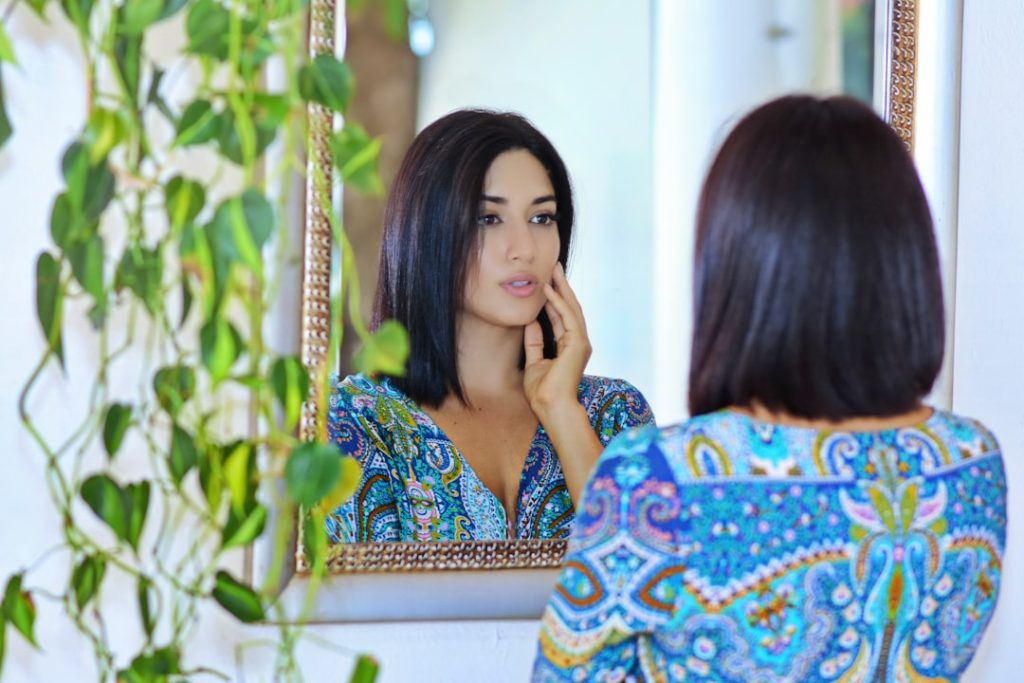
Photo by Chalo Garcia on Unsplash
Relacionado
Discover more from Fyra - Dating App for Progressives
Subscribe to get the latest posts sent to your email.