How quiet luxury and natural fibers are responding to the environmental crisis created by the fashion industry — and why your next purchase matters more than you think.
For decades, the fashion industry operated on a simple principle: more is more. More collections per year, more trends per week, more items in the closet. The result was a production machine that swallowed natural resources, exploited labor, and flooded the world with disposable — and disposed of — clothing.
But something has shifted. Or rather, something is shifting, quietly and consistently, as befits a movement that carries the idea of stillness in its very name.
“Quiet luxury isn’t about how much you spent. It’s about how much you thought before you bought.”
The Invisible Weight of Fast Fashion
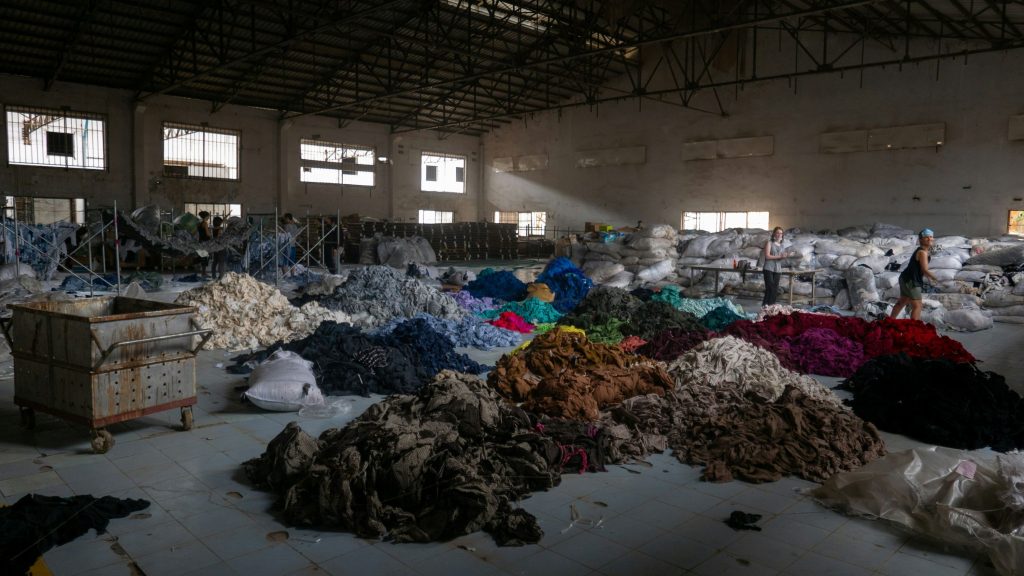
Fashion is the second most polluting industry on Earth, trailing only the oil sector. Every second, the equivalent of a garbage truck full of clothes is landfilled or incinerated worldwide.
- 10% of global CO₂ emissions stem from fashion;
- 7,000 liters of water to produce a single pair of jeans;
- 35% of plastic microfibers in the oceans come from textiles;
- 92 million tons of textile waste per year globally.
Fast fashion fueled this system by promoting a logic of accelerated consumption: weekly drops, dirt-cheap prices, and “aesthetic obsolescence.” The garment doesn’t wear out — it simply “goes out of style,” triggering the impulse to replace it.
Poisoned Rivers, Dead Soil: The Impact Beyond the Storefront
Synthetic dyes used in fast fashion are highly toxic. In countries like Bangladesh, Cambodia, and China — where much of global production is concentrated — entire rivers have been dyed red, blue, or black by decades of untreated industrial waste. The Buriganga River in Dhaka was eventually classified as biologically dead: devoid of enough oxygen to sustain any form of aquatic life.
On land, the scenario is just as grim. Pesticides used in conventional cotton farming contaminate groundwater and destroy local biodiversity. Cotton occupies only 2.5% of the world’s agricultural land but consumes about 16% of all global insecticides — substances that kill essential pollinators like bees, compromising entire ecosystems.
Warning: The polyester and nylon microfibers released with every wash of synthetic clothing are so small they bypass sewage filters and reach the oceans. It is estimated that 700,000 plastic fibers are released per wash cycle — and they have already been found in the stomachs of fish, seabirds, turtles, and even coral.
Animals Also Pay the Price
The textile industry has direct, documented consequences for animal life. The effects go far beyond the debate over fur or leather — though that remains a serious chapter in its own right.
The pollution of rivers by textile effluents contaminates the entire aquatic food chain. Fish absorb heavy metals like lead, mercury, and chrome — used in dyes and fixatives — and these compounds bioaccumulate, reaching birds, marine mammals, and humans. Whales, dolphins, and turtles are found dead with high levels of heavy metals in their tissues near major textile production hubs.
Plastic microparticles are ingested by zooplankton and small fish, creating a cycle that affects polar bears and any animal dependent on the ocean for food. Studies from 2024 identified textile microplastics in 73% of deep-sea fish analyzed in the North Atlantic.
Beyond the Oceans: Textile landfills in developing nations attract and intoxicate terrestrial fauna. In Accra, Ghana — one of the world’s largest destinations for global textile waste — wild and domestic animals feed on waste contaminated with dyes and flame retardants, leading to proven hormonal and neurological damage.
Fabrics with a History — and a Future
In this context, the shift toward natural fabrics is no longer just an aesthetic preference; it’s a stance. Linen, pure silk, organic cotton, certified wool, hemp — materials that have existed for centuries are taking center stage not out of nostalgia, but out of necessity.
Linen requires almost no irrigation, needs no pesticides, and is biodegradable. Organic cotton saves up to 91% more water than conventional cotton and protects farmers and ecosystems from toxins. Natural silk, when ethically produced, is durable enough to last decades — unlike any synthetic piece.
For comparison: A 30-piece capsule wardrobe made of high-quality natural fibers can last over 10 years and have an environmental footprint up to 5 times smaller than the same period of fast fashion consumption. The initial investment is higher — but the cost per wear, and the cost to the planet, are completely reversed.
Quiet Luxury: The Luxury That Needs No Logo
The quiet luxury movement — consolidated between 2024 and 2026 as the new standard for womenswear — proposes the exact opposite of visual ostentation. It’s not about hiding wealth; it’s about redefining what luxury means: raw material quality, precision tailoring, real durability, and an aesthetic that transcends seasons.
Pieces in this universe rarely feature visible logos. They communicate through the touch of the fabric, the impeccable drape, and the way they age gracefully. A well-cut raw silk blouse or tailored linen trousers are investments that pay off — both financially and aesthetically — over years.
Unsurprisingly, the fastest-growing brands in this segment are those combining production transparency with artisanal excellence: small manufacturers, local slow-fashion brands, and ateliers with limited runs and full supply chain traceability.
Awareness is Not Sacrifice
It’s important to debunk a common misconception: conscious fashion doesn’t mean giving up beauty, sophistication, or self-expression. On the contrary — when you invest in a piece because of its true value, your relationship with it changes. You wear it more, care for it better, and discard it less.
Every purchase is a vote. A vote for the kind of industry, planet, and world we want. In 2026, the woman who builds her wardrobe with intention isn’t missing out on anything. She is trading volume for value, trends for identity, and haste for permanence — and in doing so, she is also protecting the rivers, the soil, and the animals that careless fashion insists on ignoring.
And that, in any language, sounds like luxury.
Don’t forget to follow Fyra on social media!
Relacionado
Discover more from Fyra - Dating App for Progressives
Subscribe to get the latest posts sent to your email.