When “Tough on Crime” Meets Dating Profiles: What Xavier Becerra’s Death Penalty Record Reveals About Values
We don’t usually think of capital punishment when we’re scrolling through dating profiles. But we do think about values: who this person is when no one’s watching, what they stand for, how they treat people with less power than they have. And sometimes, a headline forces us to remember that politics isn’t abstract—it’s about life, death, and whose humanity is considered negotiable.
The Intercept recently reported that Xavier Becerra—now a leading contender for California governor and former California attorney general—pushed to uphold the death sentence of a Black man by arguing that the man’s IQ should be considered higher than it actually was, effectively trying to clear the way to execute him. The report also highlights Becerra’s broader record of blocking police accountability and defending the death penalty, even as California brands itself as a progressive state.
For a progressive dating app community that cares about racial justice, disability rights, and state violence, this story is more than a political scandal. It’s a case study in how “progressive” branding can coexist with deeply harmful policies—and a reminder that our personal and romantic choices are intertwined with the systems we either challenge or silently accept.
Read the full article: Xavier Becerra Pushed to Inflate a Black Man’s IQ to Execute Him as California AG (The Intercept)
What The Intercept Reported: A Closer Look
The case at the center: a Black man on death row
The Intercept’s investigation centers on a Black man on California’s death row whose attorneys argued he was intellectually disabled. Under U.S. Supreme Court precedent—most notably Atkins v. Virginia (2002)—it is unconstitutional to execute people with intellectual disabilities. IQ scores are often a key metric in these determinations, though they are imperfect and heavily contested tools.
According to the report, when Xavier Becerra served as California’s attorney general, his office fought to preserve the man’s death sentence by challenging the evidence of intellectual disability. Rather than taking a cautious approach given the irreversible nature of execution and the racial and disability implications, Becerra’s office reportedly pushed arguments that would effectively raise the man’s IQ above the legal threshold that bars execution.
In other words, instead of erring on the side of life, his office sought to reinterpret or reframe the data in a way that made execution possible.
A pattern, not an anomaly
The article situates this case within a broader record. As attorney general, Becerra:
- Defended the death penalty in court, even as California’s political leadership increasingly signaled discomfort with capital punishment.
- Resisted police accountability measures, including reforms and transparency efforts that activists and civil rights advocates had fought for.
- Aligned with “law and order” positions that often disproportionately impact Black, Brown, disabled, poor, and marginalized communities.
All of this stands in stark contrast to Becerra’s public image as a progressive, especially on issues like health care, immigration, and labor rights. The Intercept’s reporting underscores a fundamental tension: can a politician be considered progressive if they are willing to preserve systems of state violence—even when those systems target the most vulnerable?
Why This Story Matters for Progressives
Capital punishment is a racial and disability justice issue
On paper, the death penalty is “neutral.” In practice, it is anything but. In the U.S., people on death row are disproportionately Black and Brown, poor, and often have intellectual disabilities, mental health conditions, or histories of trauma and abuse.
When a state official argues that a Black man’s IQ should be considered higher so he can be executed, several injustices intersect:
- Racial injustice: Black defendants are more likely to face the death penalty, especially when the victim is white. This is not incidental; it’s baked into how the system operates.
- Disability injustice: People with intellectual disabilities have long been targeted, institutionalized, and dehumanized. The Supreme Court’s ban on executing them was meant to recognize their vulnerability and humanity.
- Class injustice: Wealthy defendants rarely end up on death row. Poor defendants, especially those with overworked or under-resourced public defenders, do.
When a state actor pushes to reinterpret IQ data to keep someone eligible for execution, it’s not a technocratic legal argument—it’s a moral statement about whose life is expendable.
“Progressive” branding vs. carceral reality
Many of us have been sold a story: that there’s a clear line between “tough on crime” conservatives and “reform-minded” progressives. But in practice, a lot of centrist and even self-identified progressive politicians have embraced mass incarceration, expanded policing, and defended the death penalty when it suited their careers.
Becerra’s record, as described by The Intercept, is a reminder that:
- Progressive rhetoric on health care, climate, or immigration doesn’t automatically translate into progressive criminal legal policies.
- State violence can be maintained—even expanded—by officials who also support other progressive causes.
- Voters and movements need to scrutinize not just what politicians say, but what they do when lives are on the line.
For people on a progressive dating app, this matters because it speaks to a broader question: do we accept “partial progressivism” on some issues while ignoring others, especially when those “others” involve life and death, race, and disability?
Historical Context: How We Got Here
The long arc of “law and order” politics
To understand why a politician like Becerra might defend the death penalty while claiming a progressive mantle, we have to look at the history of “law and order” politics in the U.S.
From the late 20th century onward, both major parties leaned into tough-on-crime policies: mandatory minimums, three-strikes laws, expanded policing, and the death penalty. Democrats often embraced these measures to avoid being painted as “soft on crime,” even as those policies devastated Black and Brown communities.
California, despite its reputation as a liberal state, was a leader in punitive criminal policy: three-strikes laws, massive prison expansion, and a large death row population. Many officials who now call themselves reformers played a role in building or defending that system.
Progress—and backlash—on the death penalty
In recent years, there has been a significant shift in public opinion against the death penalty. Several states have abolished it; others have moratoriums. California’s governors have faced intense pressure to dismantle the machinery of death, and activists have organized tirelessly to expose wrongful convictions, racial bias, and the moral costs of execution.
Yet the system doesn’t disappear overnight. Prosecutors, attorneys general, and judges still have enormous power to either hasten its demise or keep it on life support. According to The Intercept, Becerra chose the latter, defending death sentences and resisting challenges—even in cases involving intellectual disability and racial injustice.
Different Perspectives Within the Progressive Camp
The “incrementalist” defense
Some might argue that Becerra’s record should be viewed in context:
- He has supported progressive causes in other arenas, such as health care access or immigrant rights.
- As attorney general, his job was to defend existing state law, including the death penalty, regardless of his personal views.
- Incremental change in a complex system sometimes means taking imperfect positions in the short term.
This perspective emphasizes the constraints of office and the importance of political pragmatism. It suggests that we should judge politicians by their overall record, not single cases.
The abolitionist critique
On the other side, abolitionists and many racial justice advocates argue that defending the death penalty is not a neutral or technical stance—it’s a moral failure.
From this perspective:
- There is no “progressive” way to administer an inherently racist, classist, and ableist punishment.
- State officials always have choices: they can decline to defend certain sentences, support resentencing, or publicly call for abolition.
- Using legalistic arguments to raise a Black man’s IQ above a threshold so the state can kill him is fundamentally incompatible with any claim to progressive values.
This critique doesn’t just target Becerra; it challenges an entire political culture that tolerates or rationalizes state violence while branding itself as humane and forward-thinking.
What This Means for Progressive Movements—and Our Relationships
Values aren’t abstract—they’re lived
On a dating app built for people who care about justice, equity, and consent, stories like this are a reminder that values are not just hashtags or aesthetic choices. They’re about:
- Who we vote for and why.
- Which movements we support with our time, money, and voices.
- How we talk about safety, harm, and accountability in our own lives and relationships.
If we say we value Black lives, disabled lives, and the dignity of all people, that has to include those who are most marginalized—like people on death row, many of whom were failed by every system long before they ever encountered a courtroom.
Dating in a world of “complicated” politics
It’s one thing to hold strong political views in theory; it’s another to navigate them in relationships. Stories like Becerra’s raise practical questions for people in our community:
- Would you date someone who supports the death penalty?
- How do you talk about “crime” and “safety” with partners whose lived experiences differ from yours?
- What do you do when someone you’re into has a “tough on crime” stance that clashes with your abolitionist or decarceral values?
These aren’t hypothetical questions; they’re showing up in conversations every day. The key is not to demand ideological perfection, but to be honest about where our lines are—and to recognize that for many people, especially Black, Brown, and disabled communities, these issues are not abstract debates but matters of survival.
Moving Forward: Accountability, Hope, and Action
Holding “our own” accountable
One of the hardest tasks for progressive movements is holding “our own” accountable—especially when they’ve delivered wins in other areas. But
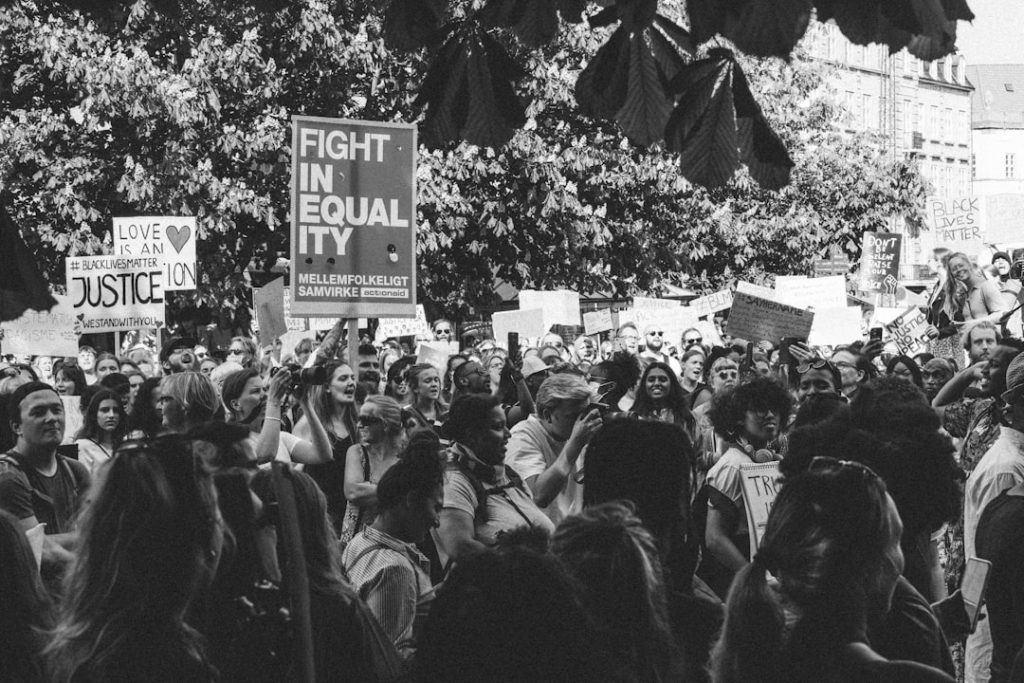
Photo by Jeppe Mønster on Unsplash
Stay Connected with Flamr
Don’t forget to follow Flamr on social media!
Relacionado
Discover more from Fyra - Dating App for Progressives
Subscribe to get the latest posts sent to your email.