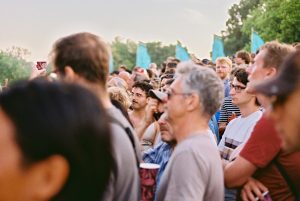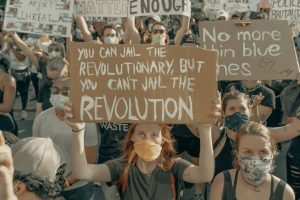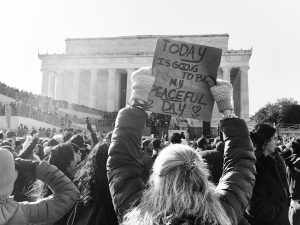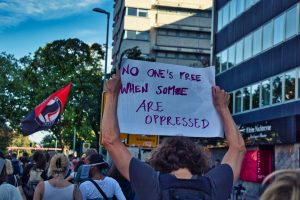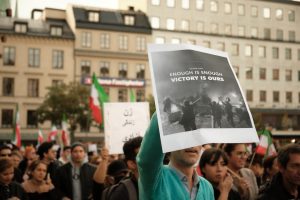
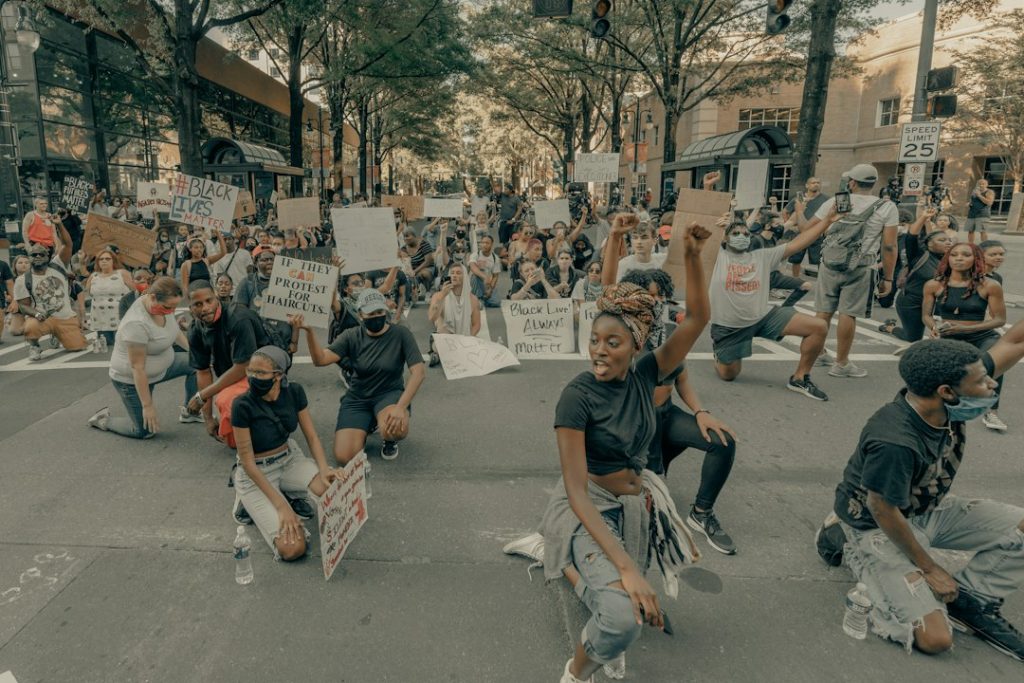
Benjamin Netanyahu came to New York this week to address the United Nations. The city answered with a wall of people.
For hours, protesters lined the streets near the UN, chanting, marching, and refusing to let the visit pass as just another diplomatic photo op. Their message was blunt: there can be no normal business with a government accused by international experts, human rights organizations, and growing numbers of states of committing genocide in Gaza.
This matters far beyond Manhattan. The protests mark a pivotal moment in the long-running struggle over U.S. complicity in Israel’s assault on Palestinians—and over the right to dissent in an increasingly authoritarian political climate. They show that, even after years of repression, fear, and fatigue, a core of organized resistance remains determined to challenge power in public.
Mother Jones’s report, “New Yorkers Lined the Streets Against Benjamin Netanyahu’s Visit,” captures this moment and the years of struggle that led to it. Understanding that story is key to understanding where the progressive movement stands today—and what comes next.
—
1. How We Got Here: From Mass Uprisings to Crackdowns
In the early months of Israel’s war on Gaza, New York City became one of the central stages of global protest.
As the Mother Jones piece recounts, tens of thousands flooded the streets in late 2023 and early 2024. Demonstrators blocked bridges and tunnels. The Statue of Liberty was briefly occupied in a powerful symbolic action, with activists unfurling banners calling for a ceasefire and an end to U.S. military aid to Israel. College campuses saw encampments and building occupations; professional associations and unions began to break decades of silence.
Police responded with mass arrests. Hundreds were detained at protests; organizers were targeted; surveillance intensified. But the movement grew anyway, fueled by horrifying images from Gaza and the clear reality that U.S. weapons and diplomatic cover were enabling Israel’s assault.
Then came a shift that Mother Jones highlights: the Trump administration’s escalated repression.
After Trump’s return to the presidency, the federal government moved aggressively to crush the Palestine solidarity movement. New policies and executive actions:
– Expanded deportations and visa cancellations for foreign students and workers involved in protest.
– Increased federal charges against activists—using “material support” and “extremism”-related statutes in ways civil liberties groups argue are politically motivated.
– Pressured universities and employers to fire or discipline outspoken students, professors, and workers.
– Backed new state-level laws that criminalize certain forms of protest, especially those that disrupt infrastructure or target corporations tied to Israeli settlements and the military.
The result was a chilling effect. Some organizing spaces shrank. People worried about losing jobs, immigration status, or scholarships. Major media outlets shifted toward framing Palestine activism as “extremist” or “dangerous,” even when protests were nonviolent.
Yet, as the Mother Jones story shows, the movement did not disappear. It adapted.
—
2. Netanyahu’s Visit: A Flashpoint Years in the Making
Against this backdrop, Netanyahu’s 2026 visit to New York was guaranteed to be contentious.
He arrived at the UN as:
– The long-serving prime minister who presided over the ongoing devastation in Gaza.
– A leader facing international legal scrutiny, including investigations at the International Criminal Court.
– The political architect of deepening apartheid conditions in the West Bank and inside Israel proper.
For many New Yorkers, his presence was not a routine diplomatic event but a provocation.
Organizers, some of whom had been active since the first months of the war, saw the visit as an opportunity to:
– Reassert public opposition to genocide and occupation after years of repression.
– Draw attention to U.S. complicity, especially continued military aid and vetoes at the UN Security Council.
– Show solidarity with Palestinians who have endured years of bombing, siege, displacement, and collective punishment.
Despite heavy police presence and the real risk of arrest, thousands turned out. They came from long-established Palestinian and Arab communities, Jewish anti-occupation groups, Black and brown organizing networks, student organizations, labor activists, and faith-based justice coalitions.
The message was clear: New York will not silently host a leader who many see as responsible for mass atrocities, nor the global system that shields him.
—
3. A Progressive Reading: What These Protests Reveal
From a progressive perspective, several key themes emerge from this moment.
a. Persistence Under Repression
Authoritarian governments often assume that fear will eventually win. Trump’s crackdown was designed to make Palestine activism too costly—especially for immigrants, students, and workers.
The protests around Netanyahu’s visit show that this strategy has limits. When state violence becomes too blatant, and when the human suffering is too undeniable, people find ways to resist even under threat. Organizers have shifted tactics, built stronger networks of legal support, and deepened ties across movements.
This is a core progressive insight: power is never absolute. It is always contested.
b. Intersectionality in Practice
The crowds in New York were not only “Palestine activists” in a narrow sense. They included:
– Black organizers who connect Gaza to U.S. policing and mass incarceration.
– Climate activists who highlight the environmental devastation of war and occupation.
– Labor organizers who oppose union investments in arms manufacturers and surveillance tech.
– Jewish leftists who reject the idea that their safety depends on Palestinian dispossession.
These coalitions reflect an intersectional understanding of oppression: systems of militarism, racism, capitalism, and colonialism reinforce one another. Challenging any one of them requires seeing the full picture.
c. Contesting the Narrative of “Security”
Netanyahu’s rhetoric at the UN, like that of many U.S. officials, leans heavily on “security” language—Israel’s right to defend itself, the need to fight “terrorism,” the importance of stability.
The protests outside call that framing into question. Progressives argue that:
– Security built on domination is not security at all, but permanent instability.
– Real safety requires justice—ending occupation, siege, and systemic discrimination.
– The language of security is often used to justify mass violence, especially against racialized and colonized populations.
By refusing to accept the official narrative, protesters are challenging not just one leader, but an entire worldview that normalizes state violence.
—
4. Why This Matters for Social Justice and Progressive Values
Netanyahu’s visit and the protests are not an isolated episode. They crystallize what is at stake for social justice movements in the U.S. and globally.
a. The Fight Against Genocide and Apartheid
If progressive values mean anything, they must include opposition to genocide, ethnic cleansing, and apartheid wherever they occur—regardless of the perpetrators’ alliances or identities.
The ongoing destruction in Gaza, the strangling blockade, the dispossession in the West Bank, and the legal discrimination inside Israel are not abstract issues. They are daily realities for millions of Palestinians.
Standing against them is not only “foreign policy”; it is a moral baseline.
b. Defending the Right to Dissent
Trump’s repression of Palestine activism is part of a broader trend: governments using terrorism rhetoric, anti-BDS laws, and protest restrictions to criminalize dissent.
If state power can silence people on Palestine today, it can silence climate activists tomorrow, labor organizers next week, and reproductive justice advocates the week after.
Defending the right to protest Netanyahu is also defending the right to protest pipelines, police killings, union busting, and deportations. Progressive movements rise or fall together on this question.
c. Challenging U.S. Empire
The protests also confront a deeper issue: the role of the United States as a global military power.
Israel’s war on Gaza has been sustained by:
– Billions in U.S. military aid.
– U.S.-made bombs, artillery, and surveillance systems.
– Diplomatic protection at the UN and other international forums.
Progressives argue that you cannot oppose genocide in Gaza while ignoring the empire that funds and shields it. The fight for Palestinian liberation is inseparable from the fight to end U.S. militarism and reorient foreign policy toward human rights and self-determination.
—
5. What People Can Do—and How to Stay Informed
You don’t have to live in New York or attend every protest to be part of this struggle. There are concrete steps people can take:
a. Support Organizers and Legal Defense Efforts
– Donate to local bail funds and legal defense organizations that assist arrested protesters.
– Back Palestinian-led groups and coalitions working on the ground in your city.
– Offer skills—translation, design, research, emotional support—to movement spaces.
b. Pressure Institutions
– Contact your representatives and demand an end to military aid to Israel and support for international investigations.
– Push unions, professional associations, and faith communities to take public positions and cut ties with companies profiting from the occupation.
– Support campus movements and fight retaliation against students and faculty.
c. Fight Repression Everywhere
– Oppose new “anti-protest” laws at the state and federal level.
– Challenge attempts to equate criticism of Israeli policy with antisemitism, while firmly rejecting all forms of antisemitic hate.
– Defend anyone targeted for their speech—whether on Palestine, climate, racial justice, or labor rights.
d. Stay Informed and Critical
– Read independent journalism and investigative outlets that cover Palestine, U.S. foreign policy, and protest movements in depth.
– Follow Palestinian journalists, scholars, and organizers directly.
– Question sensational coverage that frames protests as “chaos” or “extremism” without examining the underlying issues.
The Mother Jones article is a strong starting point for understanding this latest chapter and the broader trajectory of the movement. It situates New York’s streets in a global struggle for justice—and reminds us that the story isn’t over.
You can read the full piece here:
https://www.motherjones.com/politics/2026/09/israel-gaza-protest-netanyahu-new-york-united-nations-speech/
Photo by Clay Banks on Unsplash
Relacionado
Discover more from Fyra - Dating App for Progressives
Subscribe to get the latest posts sent to your email.