Why “Ceasefire” Isn’t the Right Word — And Why That Matters for Love, Justice, and How We Show Up
Words are like dating profiles: they don’t just describe reality, they curate it. A single phrase — “looking for something casual,” “open to more,” “it’s complicated” — can radically shift how we interpret someone’s intentions. The same is true in politics. When mainstream media keeps calling something a “ceasefire” that clearly isn’t, it doesn’t just mislabel events; it reshapes what the public thinks is happening and what we believe is possible.
The Intercept’s piece, “Stop Calling It a Ceasefire”, calls out the gap between the language of peace and the reality of ongoing violence between the U.S., Israel, and Iran. The article argues that we’re being sold a narrative of de-escalation while acts of war continue — drone strikes, covert assassinations, cyberattacks, and proxy clashes — all under the comforting label of “ceasefire.”
For a progressive dating app community that cares about consent, honesty, and mutual care, this isn’t just foreign policy trivia. It’s about how power uses language to obscure harm, and what it means to build relationships — romantic, social, political — on truth instead of denial. If we want our intimate lives to be rooted in consent and clarity, we can’t accept gaslighting at the global level either.
Read the full article: Stop Calling It a Ceasefire (The Intercept)
What The Intercept Is Arguing
The core claim: This isn’t peace — it’s low-visibility war
The Intercept’s article challenges the mainstream narrative that the U.S., Israel, and Iran are in a “ceasefire” or “post-escalation” phase. The core argument is simple but damning: if missiles are still flying, scientists are still being assassinated, and infrastructure is still being sabotaged, then calling it a “ceasefire” is a lie — or at least a dangerous euphemism.
The story lays out a pattern: after each headline-grabbing crisis — an assassination, a bombing, a drone strike — political leaders and many media outlets frame the aftermath as “calm,” “restraint,” or a “return to deterrence.” But in the background, the following continues:
- Targeted killings of Iranian officials, scientists, and militia leaders, often attributed to or linked with U.S. or Israeli operations.
- Drone and air strikes on Iranian-allied militias and infrastructure in neighboring countries.
- Cyberattacks and sabotage against nuclear facilities, energy grids, and critical systems.
- Economic warfare through crushing sanctions that devastate civilians while being framed as “non-violent pressure.”
None of this fits any honest definition of “ceasefire.” Instead, The Intercept describes a state of ongoing, normalized war — just one that’s managed, compartmentalized, and pushed to the edges of public consciousness.
Media framing: why the word “ceasefire” keeps showing up
The article criticizes mainstream U.S. and Western media for repeating official talking points that emphasize “de-escalation” even when the facts show continued violence. According to The Intercept, this happens because:
- Officials and spokespeople use calming language (“restored deterrence,” “contained,” “no appetite for war”) that journalists then echo.
- News cycles focus on spectacular moments — a missile barrage, a high-profile assassination — and treat everything between them as “peace” instead of a continuum of conflict.
- U.S. and Israeli actions are often framed as “defensive,” while Iranian responses are framed as “aggressive,” even when both are military strikes.
The result: a public perception that war is always something that’s about to start, instead of something that is already happening to people far away whose lives are deemed less visible and less grievable.
The Trump factor and the longer arc
The Intercept situates this pattern in a longer story of U.S. policy, including the Trump era’s maximum pressure campaign, assassinations like that of Gen. Qassem Soleimani, and repeated escalations that walked right up to the line of full-scale war. Even when administrations change, the article argues, the underlying logic remains: a willingness to use lethal force, sanctions, and covert operations while insisting that “we don’t want war.”
What’s new is not the violence itself, but the gap between the language of restraint and the reality on the ground. That gap, The Intercept says, is where public consent is manufactured.
Read the full article: Stop Calling It a Ceasefire (The Intercept)
Why Language Matters So Much — In Politics and in Relationships
“Ceasefire” without consent is like “we’re fine” after a boundary is crossed
Progressive communities talk a lot about consent, boundaries, and emotional honesty. Imagine this scenario in your personal life:
- You and a partner have a blowup argument.
- They cross a boundary you’ve clearly set.
- They keep making smaller, more subtle digs afterward — but every time you try to talk about it, they say, “We already made up, why are you bringing this up? We’re good now.”
That’s not resolution; that’s gaslighting. The Intercept’s critique is that something similar is happening at the level of states: governments and media declare a “ceasefire” or “de-escalation” while continuing harmful actions that the other side clearly experiences as attacks.
In both dating and foreign policy, the words we use can either clarify reality or distort it. A “ceasefire” that doesn’t stop violence is like an “apology” that doesn’t change behavior. It’s not peace — it’s branding.
Euphemisms as tools of power
Progressives have long pointed out how language can obscure violence:
- “Collateral damage” instead of civilians killed.
- “Enhanced interrogation” instead of torture.
- “Officer-involved shooting” instead of police shot and killed someone.
“Ceasefire” can become another euphemism when it’s used to describe anything less than a real halt to hostilities. The Intercept’s piece is part of a broader progressive push to insist on language that reflects actual conditions, not the PR needs of powerful states.
Connecting This to Broader Progressive Values
Anti-war isn’t abstract; it’s about whose lives are valued
At the heart of progressive politics is a simple conviction: everyone’s life has equal worth, no matter what passport they hold. When media and politicians treat U.S. or Israeli casualties as tragic and Iranian, Palestinian, or Lebanese casualties as background noise, that’s not just bias — it’s a hierarchy of whose pain counts.
The Intercept’s critique of the “ceasefire” narrative is really a critique of that hierarchy. If war is only acknowledged when Western lives are at risk, then the constant low-level violence inflicted elsewhere becomes normalized, invisible, and therefore easier to sustain.
This ties directly into movements many of us already care about:
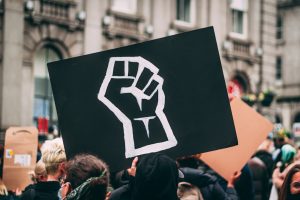
- Black Lives Matter challenging which lives are seen as expendable in domestic policing.
- Abolitionist and anti-carceral movements questioning why cages and punishment are the default tools of “safety.”
- Climate justice movements pointing out that communities in the Global South bear the brunt of a crisis they didn’t cause.
Anti-war politics, in this light, isn’t some separate niche. It’s the global extension of the same insistence: no one is disposable, and no one’s suffering should be hidden behind sanitized language.
Honesty as a political and romantic value
Our dating culture has been slowly learning to value clarity: naming our intentions, talking about boundaries, checking in about consent. The same skills are needed in how we talk about war and peace.
Progressive politics asks us to reject “vibes-based” reality — the sense that things are fine because we’re told they are — and instead look at material conditions. Are bombs still dropping? Are sanctions still cutting off medicine? Are drones still flying? If yes, then “ceasefire” is a lie, no matter how many officials repeat it.
For a community that’s trying to build healthier relationships, this matters. We can’t compartmentalize our ethics: if we want partners who don’t minimize harm or hide behind technicalities, we should also demand governments and media that don’t do the same.
Different Perspectives and Why They Persist
Why some officials and commentators defend the “ceasefire” narrative
To be fair, not everyone using the word “ceasefire” is acting in bad faith. Some arguments you’ll hear:
- “It’s relative calm.” Compared to full-scale war, fewer missiles and fewer casualties can feel like “peace” to policymakers, even if targeted killings and sanctions continue.
- “We need language that avoids escalation.” Some diplomats believe that publicly calling the situation “war” could box leaders into more aggressive positions.
- “This is how modern conflict works.” There’s a real debate about whether cyberattacks or proxy clashes count as “war” in the traditional sense.
The Intercept’s response to this is essentially: if it walks like a war and kills like a war, it’s war. Euphemistic language may serve short-term diplomatic goals, but it also numbs the public to ongoing harm.
What about people who say, “This doesn’t affect my daily life”?
It’s easy, especially in the dating and social world, to feel like foreign policy is distant. But the same systems that normalize war abroad shape our lives at home:
- Military spending crowds out investment in healthcare, mental health support, housing, and education — all the things that actually make relationships and communities healthier.
- Islamophobia and anti-Iranian racism are fueled by constant portrayals of Iran as an enemy, which affects how people from the region are treated in our dating lives, workplaces, and neighborhoods.
- Surveillance and
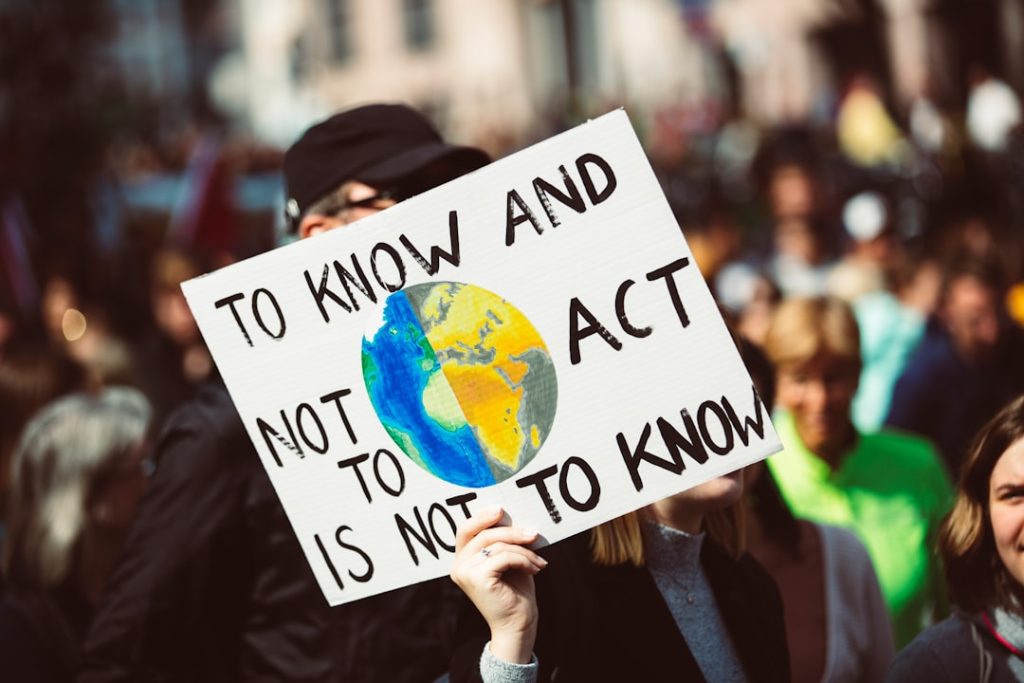
Photo by Markus Spiske on Unsplash
Stay Connected with Flamr
Don’t forget to follow Flamr on social media!
Relacionado
Discover more from Fyra - Dating App for Progressives
Subscribe to get the latest posts sent to your email.