Love, Liberation, and the Ongoing Story of LGBTQ+ Rights
Dating apps are supposed to be about connection: that electric moment when two people realize they might be seen, understood, and cherished. But for queer and trans people, the simple act of looking for love has always been entangled with politics — with questions of safety, visibility, and the right to exist without fear.
LGBTQ+ rights are often framed as a “culture war” issue, something abstract and distant. In reality, they are about the most intimate parts of our lives: who we love, how we form families, how we move through public spaces, and whether we can show up as ourselves on a date, in a classroom, at work, or at the ballot box.
In 2026, queer and trans communities are living in a paradox: unprecedented visibility and progress in some areas, paired with escalating backlash and legislative attacks in others. For anyone navigating the world of dating and relationships — especially those who are LGBTQ+ or love someone who is — this tension shapes daily life.
From Criminalization to Connection: A Brief History of Queer Love in Public
It’s easy to forget how recent many LGBTQ+ rights are, and how deeply they’re tied to our ability to connect openly. For much of modern history, queer love was criminalized, pathologized, or erased. Laws against “sodomy” and “cross-dressing” were used to police intimacy and gender expression. Queer people met in secret, coded their desires in subtext, and risked their jobs, families, and freedom just to be together.
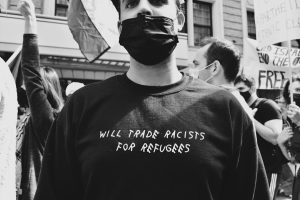
The mid-20th century saw the rise of organized LGBTQ+ resistance — from the Mattachine Society and the Daughters of Bilitis to the Stonewall uprising, where queer and trans people (including many Black and Brown trans women and drag queens) pushed back against police brutality and demanded the right to exist. Pride began as a protest, not a parade.
In the decades that followed, activism reshaped the landscape of love:
- Decriminalization of same-sex intimacy in many countries and regions.
- Removal of homosexuality from major medical diagnostic manuals.
- Anti-discrimination protections in employment, housing, and public accommodations in some jurisdictions.
- Legal recognition of same-sex relationships, culminating in marriage equality in multiple countries.
Each of these shifts changed what dating could look like. Queer couples could hold hands in public without as much fear of arrest. They could build families with legal recognition. They could show up on dating platforms without hiding behind coded language or fake profiles.
And yet, legal progress has never been evenly distributed. Trans and nonbinary people, intersex people, bisexual folks, asexual and aromantic communities, and queer people of color have often been left behind or actively targeted, even as some parts of the LGBTQ+ community gained visibility and rights.
2026: Visibility, Backlash, and the Politics of Everyday Intimacy
Today, LGBTQ+ rights sit at the center of broader political struggles over bodily autonomy, education, and democracy. In some places, we’ve seen expanded recognition of gender diversity, stronger anti-discrimination laws, and growing representation in media and politics. In others, we’re witnessing:
- Legislation restricting gender-affirming healthcare, especially for trans youth.
- Attacks on inclusive school curricula and book bans targeting queer and trans stories.
- Efforts to limit public drag performances and gender expression.
- Violence and harassment against LGBTQ+ people, especially trans women of color.
For people using dating apps, these realities aren’t abstract. They shape:
- Safety: Can I safely put my pronouns or identity in my profile? Will I face harassment or outing?
- Belonging: Will this app recognize my gender, my relationship style, my family structure?
- Access: If I’m in a place hostile to LGBTQ+ communities, can digital spaces offer refuge and connection?
- Future planning: If I fall in love, will our family be recognized? Will we have healthcare, parental rights, and legal protections?
The current moment is one of contradiction: queer and trans people are more visible than ever in culture and tech, yet many are experiencing heightened anxiety, grief, and burnout. We’re asked to celebrate Pride while watching rights being rolled back or contested. We’re told “love is love” while seeing some loves and genders treated as expendable.
And still, people keep swiping, matching, flirting, and falling in love. That persistence is political. It’s a quiet refusal to accept that our lives and bodies are up for debate. Every queer date, every trans person updating their name and pronouns on a profile, every couple negotiating open or non-traditional relationships in a world that still clings to rigid norms — all of this is part of a broader movement for liberation.
Imagining Future Queer Intimacy: Beyond Tolerance, Toward Liberation
Progressive visions of LGBTQ+ rights don’t stop at “don’t be mean to queer people” or “let same-sex couples marry.” They ask bigger questions: What would it look like to build a world where everyone can explore identity, intimacy, and family without fear, scarcity, or coercion?
In the context of dating and relationships, that future might include:
- Affirming healthcare and bodily autonomy: Trans and nonbinary people having accessible, affordable, respectful healthcare. Queer parents having reproductive care without discrimination. Survivors of violence receiving trauma-informed support.
- Inclusive education: Young people learning about diverse genders, sexualities, and relationship models, so they can navigate consent, desire, and boundaries without shame.
- Economic justice: LGBTQ+ people, especially those at the intersections of race, disability, class, and immigration status, having stable housing, employment, and income — because love is harder to nurture under constant economic threat.
- Legal protections that match lived realities: Recognition of chosen family, polyamorous households, co-parenting arrangements, and caregiving networks beyond the nuclear model.
- Tech that centers dignity: Dating platforms designed to minimize harassment, respect gender diversity, and protect privacy — especially in regions where being LGBTQ+ can be dangerous.
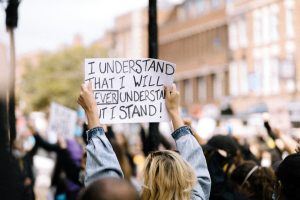
This future isn’t guaranteed. It will require organizing, voting, mutual aid, storytelling, and everyday acts of courage. It will require listening to those who’ve been marginalized even within LGBTQ+ spaces: Black and Brown queer and trans people, disabled folks, sex workers, undocumented people, elders, and youth.
But there is real hope. We see it in community-led mental health initiatives, in mutual aid funds supporting trans healthcare, in queer bookstores and bars that double as organizing hubs, in online spaces where people experiment with new ways of loving and living together. We see it every time someone says, “I didn’t know this was possible for me,” and then builds a life that would have been unthinkable a generation ago.
Dating as a Political Practice: How We Show Up for Each Other
It might feel strange to think of dating as political, but the choices we make in our intimate lives ripple outward. They either reinforce existing hierarchies or help dismantle them. They either make space for more people to live fully or keep the circle tight and exclusionary.
In practical terms, that can look like:
- Interrogating our biases: Who do we swipe right on? Who do we ignore? Are our preferences shaped by racism, fatphobia, transphobia, ableism, or classism? Are we willing to challenge that?
- Practicing consent and care: Do we treat people as disposable or as full human beings? Do we respect boundaries, communicate clearly, and avoid tokenizing or fetishizing identities?
- Creating safer spaces: Do we call out harassment when we see it? Support friends who are navigating unsafe situations? Advocate for better moderation and safety features on platforms we use?
- Building community, not just couples: Do we value friendships, chosen family, and collective care as much as romantic relationships? Do we see liberation as something we build together, not just something that benefits us individually?
For LGBTQ+ people, dating can be a way of reclaiming joy in a world that often insists our lives are tragic or controversial. For allies, dating is an opportunity to practice solidarity in the most intimate parts of life — to love in ways that affirm others’ dignity, not just our own comfort.
Where We Go From Here: A Call to Reflect and Act
LGBTQ+ rights are not a niche issue; they are a lens for understanding how power works in our society — whose bodies are controlled, whose families are recognized, whose desires are policed, whose safety is prioritized. If we care about love, we have to care about liberation.
So as you move through the world of matches, messages, and first dates, consider:
- How does my dating life reflect the kind of world I want to help build?
- Whose experiences and safety am I considering when I use dating apps and social spaces?
- What small actions can I take — online and offline — to support LGBTQ+ rights and dignity?
That might mean educating yourself on current legislation, supporting local queer and trans organizations, showing up at community events, or simply being more intentional in how you talk about identity and relationships with friends and partners. It might mean rethinking your “type,” your assumptions, or your silence in the face of discrimination.
Love has always been a force for change. When we expand our capacity to love — ourselves, each other, and our communities — we expand what’s politically possible. In this moment of both danger and possibility, let’s treat our connections not as escapes from the world, but as spaces where a more just, joyful, and liberated world can begin.
The next time you open a dating app, take a breath and ask yourself: How can my search for connection also be a commitment to justice? The answer won’t be perfect or simple — but it’s worth exploring, one conversation, one relationship, one act of solidarity at a time.
Photo by Gayatri Malhotra on Unsplash
Stay Connected with Flamr
Don’t forget to follow Flamr on social media!
Relacionado
Discover more from Fyra - Dating App for Progressives
Subscribe to get the latest posts sent to your email.