
Why Social Justice Belongs in Your Dating Life
For a long time, dating advice focused on chemistry, compatibility, and communication—without talking much about power, privilege, or justice. But who we date, how we treat partners, and what we tolerate in relationships are all deeply shaped by social structures. Social justice isn’t just a political stance; it’s a value system that shows up in your matches, your messages, your boundaries, and your breakups.
Bringing a social justice lens to dating doesn’t mean every date turns into a seminar on systemic oppression. It means recognizing that people show up with different lived experiences, that power imbalances are real, and that care and consent are ongoing practices. It’s about aligning your romantic life with your values—without pretending that anyone is perfectly “woke” or that every relationship has to be ideologically flawless to be worth exploring.
Intersectionality: No One Dates in a Vacuum
Intersectionality—coined by legal scholar Kimberlé Crenshaw—describes how multiple identities (race, gender, sexuality, class, disability, immigration status, and more) intersect to shape someone’s experience of the world. In dating, this means there is no single “universal” way to navigate romance. A queer Black woman, a trans disabled man, a nonbinary person of color, or a white cis straight guy all move through dating spaces differently, because the world treats them differently.
Ignoring intersectionality in dating often leads to harm, even when intentions are good. For example:
- Racial fetishization: Saying “I’ve always wanted to date an Asian guy” or “I’ve never dated a Black woman before” reduces someone to a racial experience for your curiosity or fantasy.
- Trans and nonbinary erasure: Swiping left on anyone who is trans or nonbinary “as a rule,” or insisting on misgendering someone, reinforces marginalization and can be deeply unsafe.
- Class and disability blind spots: Assuming everyone can afford certain dates, has flexible work schedules, or can physically access every venue ignores economic and accessibility realities.
Dating with an intersectional lens doesn’t mean you need to fully understand every identity before you go out with someone. It means you:
- Stay curious about how their identities shape their safety, comfort, and needs.
- Don’t argue with or minimize their experiences of discrimination or microaggressions.
- Recognize that your experience of dating is not the default or the standard.
Privilege and Accountability: Owning Your Impact
Privilege in dating doesn’t mean your life is easy; it means some parts of your identity are less likely to be stigmatized or targeted. You might have privilege around race, gender, sexuality, body size, citizenship, age, neurotype, or income. In dating spaces, those privileges can translate into more matches, more safety, and more social validation.
Being aware of your privilege isn’t about guilt; it’s about responsibility. Accountability is what you do with that awareness. It’s how you respond when someone tells you, “That hurt,” “That felt racist/ableist/transphobic,” or “That dynamic isn’t fair to me.”
Some practical ways privilege and accountability show up in dating:
- Listening without defensiveness: If a partner says, “When you joke about my accent, it feels like you’re mocking my culture,” resist the urge to say, “I’m just kidding.” Instead: “Thank you for telling me. I’m sorry that hurt you. I won’t do that again.”
- Sharing the emotional labor: If you’re part of a dominant group, don’t expect marginalized partners to be your educators. It’s okay to ask questions, but also do your own reading, listening, and learning.
- Challenging harmful norms: If you’re a man benefiting from sexist norms (like being listened to more or having your needs prioritized), actively create space for your partner’s voice and boundaries—and call out misogyny among friends, even when your partner isn’t there.
- Respecting “no” without punishment: If a disabled partner declines a physically demanding date, or a Muslim partner says no to alcohol-centered plans, treat that boundary as valid, not as a rejection of you.
Accountability also includes self-reflection after things go wrong. Instead of only asking, “Why are they overreacting?” try asking, “What power dynamics might I be missing? How might my privilege be shaping this interaction?”
Allyship in Relationships: More Than a Label
Many people describe themselves as “allies” on their profiles—supporters of Black Lives Matter, LGBTQ+ rights, disability justice, reproductive freedom, and more. That’s a start, but allyship in dating is less about what you write in your bio and more about what you do in your relationships.
Allyship in a romantic context means:
- Believing your partner’s experiences. If your partner says they face racism on dating apps, or that being misgendered is a daily risk, don’t debate them or demand “proof.” Trust their lived reality.
- Taking initiative to learn. Read books, follow creators, attend workshops, and stay informed about the issues that affect your partner’s communities—without making them your personal search engine.
- Advocating when it counts. When family, friends, or coworkers make harmful comments about your partner’s identity, speak up. Don’t leave your partner to defend themselves alone, or stay silent to “keep the peace.”
- Respecting boundaries around visibility. A trans partner might not be out to everyone. A polyamorous partner might be discreet at work. Allyship means you don’t out them, post them, or discuss them without consent.
- Centering their safety. If your partner is at higher risk of harassment or violence in public spaces, your date choices should reflect that. Ask what feels safe and comfortable, rather than assuming.
Allyship also means being willing to be uncomfortable. You might learn that something you’ve always done is harmful, or that a joke you love is rooted in stereotypes. The goal isn’t to never make mistakes; it’s to handle them with humility and a commitment to do better.
Dating Ethically: From Filters to First Dates
Social justice values show up in the small, everyday decisions of dating. From how you set up your profile to how you handle rejection, there are concrete ways to make your dating life more ethical and inclusive.
1. Be honest about your values. If social justice matters to you, say so. You might mention:
- Mutual respect for pronouns and identities
- Support for racial and gender justice movements
- Commitment to consent and communication
This doesn’t mean listing every belief like a manifesto, but it can filter in people who share your core values and filter out those who are hostile to them.
2. Examine your “preferences.” Many people treat racial, body-type, or disability exclusions as “just my type.” But often, what we call “preference” is shaped by bias, representation, and social conditioning.
- If you’ve “never been attracted” to a certain group, ask why that might be. Is it really about attraction, or about stereotypes and limited exposure?
- Avoid blanket statements like “No Black girls,” “No femme guys,” or “No fat people.” They’re dehumanizing and rooted in oppression, not neutrality.
You don’t have to date everyone, but you can refuse to turn systemic bias into a proud identity.
3. Practice robust consent. Consent is a social justice issue because it’s about power, autonomy, and respect. In dating:
- Ask before touching, kissing, or escalating intimacy: “Can I kiss you?” “Are you comfortable with this?”
- Make “no” and “not yet” safe answers by responding with care, not pressure or guilt.
- Remember that consent is ongoing—someone can change their mind at any time.
This is especially crucial when there’s a power difference (age, status, money, citizenship, etc.). The more power you have, the more careful you need to be.
4. Consider accessibility and inclusion in date planning. When you suggest dates:
- Offer options that aren’t centered on alcohol or high spending.
- Check whether venues are physically accessible and sensory-friendly.
- Ask about dietary needs, prayer times, or other cultural/religious considerations.
A simple, “Is this kind of place comfortable for you?” can go a long way toward making someone feel seen.
5. Break up with care. Even endings are political in the sense that they reflect how we value people. Ghosting, breadcrumbing, or stringing someone along often hit marginalized folks harder because they’re already navigating dehumanization elsewhere.
- If you’re no longer interested, send a brief, kind message instead of disappearing.
- Don’t blame their identity (“I can’t handle dating someone with your mental health issues”); focus on your own capacity and needs.
Embracing Complexity: No Perfect Politics, Just Ongoing Practice
Dating through a social justice lens is messy. You might care deeply about equity and still realize your patterns are shaped by racism or fatphobia. You might be marginalized in some ways and privileged in others, sometimes hurting people even as you fight for change. You may genuinely connect with someone whose politics don’t fully align with yours and have to decide what’s non-negotiable for you.
There’s no single “right” way to integrate social justice into your love life. But some guiding principles can help:
- Humility: Assume you have more to learn. Be open to feedback.
- Curiosity: Ask, “How does this feel for you?” and really listen.
- Consistency: Let your values show up in private, not just in public or online.
- Boundaries: It’s okay to decide that certain beliefs or behaviors are dealbreakers for you.
Ultimately, social justice in dating is about treating people as whole human beings, shaped by systems but not reducible to them. It’s about building relationships—casual or serious—that honor dignity, autonomy, and care. No one does this perfectly. But if you’re willing to keep learning, unlearning, and showing up with intention, your dating life can become another space where your values and your actions actually match.
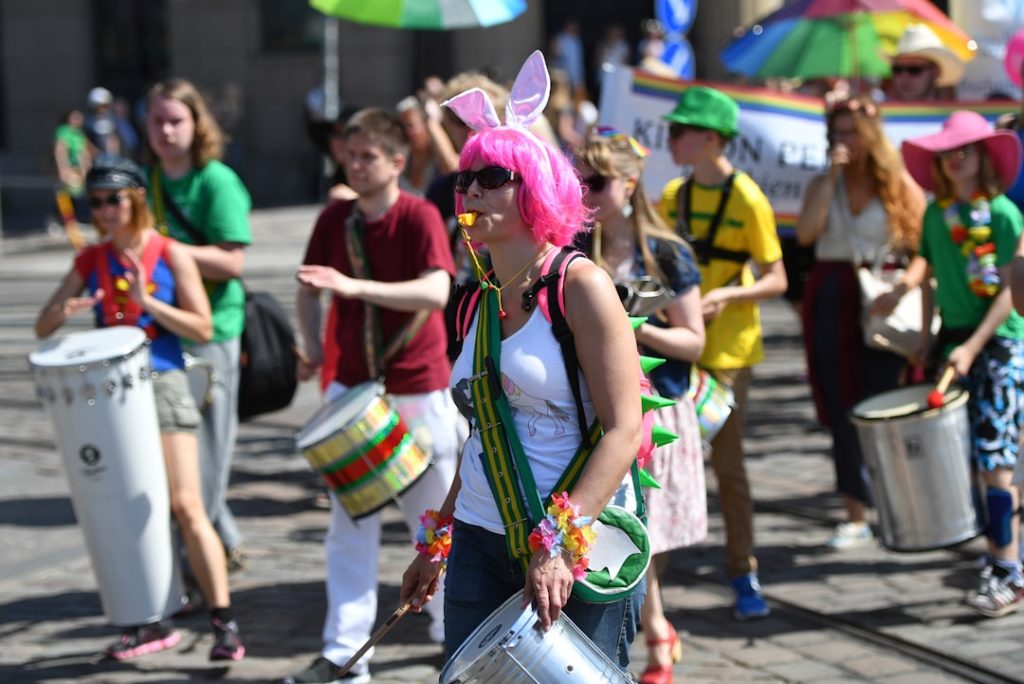
Photo by Margo Evardson on Unsplash
Stay Connected with Flamr
Don’t forget to follow Flamr on social media!
Relacionado
Discover more from Fyra - Dating App for Progressives
Subscribe to get the latest posts sent to your email.