
Dating in a Time of Social Justice: Why Our Values Come on Every Date
Dating has never been just about chemistry. It’s also about values—how we show up for each other, how we move through the world, and how we respond to systems bigger than ourselves. In an era where conversations about race, gender, climate, disability, and economic justice are part of everyday life, social justice doesn’t stay at the protest, the group chat, or the ballot box. It comes with us to the apps, into our DMs, and across the table on a first date.
This doesn’t mean dating has to become a political debate club. It means acknowledging that who we are—our identities, our privileges, our experiences of oppression—shapes what we need in relationships. It also means recognizing that being a good partner is deeply connected to being a good ally, listener, and community member.
How Social Justice Values Shape Attraction and Compatibility
For many people, social justice is a non-negotiable part of compatibility. It influences who we swipe on, what we put in our profiles, and how we decide whether to go on a second date. Values like equity, consent, bodily autonomy, and community care are not “extras”; they’re foundational.
Some practical ways this shows up:
- Profiles as value statements. People increasingly mention causes they care about—mutual aid, prison abolition, trans rights, climate justice, disability justice, Palestinian liberation, Indigenous sovereignty, and more. These aren’t just buzzwords; they signal priorities and boundaries.
- Consent and communication as justice practices. Social justice culture has helped normalize asking about boundaries, checking in about comfort levels, and respecting “no” without pressure. A date who understands consent as ongoing and enthusiastic is often also someone who understands power dynamics more broadly.
- Dealbreakers rooted in harm reduction. For some, “no racists, no homophobes, no transphobes” is the bare minimum. Others draw firmer lines: no cops, no landlords, no TERFs, no people who mock pronouns or disability accommodations. These boundaries are about safety and emotional labor, not “being picky.”
None of this means people have to agree on every policy issue to date. But if your core beliefs about who deserves safety, dignity, and freedom are fundamentally misaligned, it’s hard to build trust. Values don’t have to be identical, but they need to be compatible enough that neither person’s humanity is up for debate.
Intersectionality: Relationships Don’t Exist in a Vacuum
Intersectionality—a term coined by Kimberlé Crenshaw—reminds us that people experience oppression and privilege in overlapping ways. A queer Black woman doesn’t just experience racism plus sexism plus homophobia; she experiences something specific at their intersection. The same goes for a disabled trans person, a working-class immigrant, or anyone whose identities intersect in complex ways.
In dating, intersectionality shows up in both obvious and subtle ways:
- Who gets seen and desired. Colorism, fatphobia, ableism, transphobia, anti-Blackness, and racism shape who gets swiped right on, who gets messaged, and whose profiles are fetishized or ignored. A “preference” that consistently excludes certain groups is rarely just a preference—it’s usually reflecting social conditioning.
- How safety is experienced. A white cis person may feel safe meeting in almost any public place. A trans person of color might need to think about neighborhood, time of day, and whether their date will defend them if they encounter harassment.
- What “normal” looks like. For someone with chronic illness, “spontaneous late-night dates” might be unrealistic. For someone supporting family financially, expensive dinners may be stressful rather than romantic. Intersectionality asks us to see these realities as valid, not as inconveniences.
Practicing intersectional awareness in dating can look like:
- Asking, not assuming, about accessibility needs (physical, sensory, financial, emotional).
- Recognizing that your partner may be navigating forms of oppression you don’t see—and believing them when they name it.
- Being mindful of jokes, “preferences,” or comments that might land differently across identities.
Intersectionality doesn’t mean ranking who has it “worst” or competing in oppression Olympics. It means understanding that each person brings a unique mix of vulnerability and power into the relationship—and that this affects everything from communication to conflict to intimacy.
Privilege, Accountability, and Showing Up as an Ally
Everyone has some form of privilege, whether it’s race, class, citizenship, ability, gender identity, sexuality, or something else. The question isn’t whether you have privilege; it’s what you do with it—especially when you’re dating people who don’t share it.
In relationships, privilege can show up as:
- Whose comfort is centered. If you’re the one who “passes” more easily in public, are you willing to prioritize your partner’s safety over your desire to hold hands in a hostile environment, or to challenge bigoted comments from friends and family?
- Who carries the emotional labor. Expecting your partner to educate you about racism, transphobia, ableism, or colonialism—especially if they’re directly impacted—can be draining and unfair.
- Whose reality gets questioned. Dismissing your partner’s experiences with discrimination as “overreacting” or “reading too much into it” is a way privilege protects itself.
Accountability is how we interrupt these patterns. It’s not about being perfect; it’s about being willing to listen, repair, and change. Some concrete ways to practice accountability and allyship in dating:
- Do your own homework. Read, listen to podcasts, follow organizers and educators, and talk to peers—not just partners—about social justice. Don’t rely on your date as your only teacher.
- Invite feedback—and mean it. Saying “If I ever say something off, please tell me” only matters if you respond without defensiveness when it actually happens.
- Apologize without centering yourself. Instead of “I’m such a terrible person, I can’t believe I did that,” try “I see how that harmed you, and I’m committed to doing better. Here’s what I’m changing.”
- Use your privilege. Speak up when it’s safer for you to do so, whether that’s with a server misgendering your partner, a friend making racist jokes, or a landlord exploiting tenants. Allyship is a verb.
Accountability also means recognizing when the relationship itself isn’t healthy or safe. Sometimes the most just choice is to step back, seek support, or end a relationship rather than staying and continuing patterns of harm.
Dating Across Differences: Boundaries, Curiosity, and Growth
Many of us date across lines of identity and experience—race, class, gender, religion, culture, disability, political background. These relationships can be rich and transformative, but they require intentionality.
Some practical approaches for navigating differences with care:
- Talk about values early. You don’t have to unload your entire political manifesto on the first date, but it’s reasonable to ask about what matters to someone: “What issues are important to you?” “How do you feel about protests, mutual aid, or voting?”
- Clarify non-negotiables. Maybe you’re open to different opinions about tax policy, but not about trans rights or police violence. Name that. It’s kinder to be clear than to hope someone will “come around.”
- Respect different levels of disclosure. A survivor might not want to detail their experiences just because you’re “curious.” A disabled person might choose not to discuss medical history early on. Curiosity is healthy; entitlement is not.
- Share, don’t perform. Posting infographics or saying all the “right” words on a date means little if your behavior doesn’t match. Are you actually showing up for your communities? Do you treat service workers with respect? Do you listen more than you speak?
Dating across differences can also be a site of growth. Maybe you learn about a struggle you weren’t aware of, or your partner helps you see how your own community has internalized certain biases. Growth is beautiful—but it should never come at the expense of your partner’s safety, dignity, or time.
Embracing Complexity: There’s No Perfectly “Woke” Relationship
It’s tempting to imagine there’s a checklist for being the perfect socially conscious partner. If you read enough, protest enough, say the right things, and only date people with identical politics, everything will be simple. Reality is messier.
People are inconsistent. Someone can be deeply committed to racial justice and still have unexamined ableism. A person might be politically aligned with you but emotionally unavailable. Another might be early in their political journey but incredibly accountable and willing to learn.
Holding complexity means:
- Allowing room for growth while still protecting your boundaries.
- Recognizing that marginalized people can cause harm too—and still deserve compassion and accountability, not disposability.
- Accepting that you will get it wrong sometimes, and that how you repair matters more than never slipping up.
Social justice and dating are both about relationship: to ourselves, to each other, and to the systems we live in. When we bring our justice values into our dating lives, we’re not making things “too political”; we’re choosing honesty. We’re saying: this is who I am, this is what I believe, and this is how I want to love in a world that’s unjust—and changing.
Whether you’re swiping tonight, planning a first date, or reflecting on a long-term partnership, it’s worth asking: How do my politics show up in my love life? How can my relationships be spaces of care, accountability, and liberation—not just for me, but for the people I’m building with?
There’s no one right way to date ethically in a complex world. But starting from a place of curiosity, humility, and a commitment to each other’s full humanity is a powerful beginning.
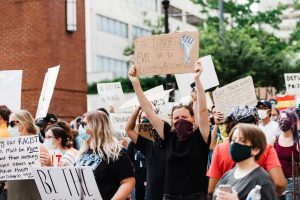
Photo by Euronewsweek Media on Unsplash
Stay Connected with Flamr
Don’t forget to follow Flamr on social media!
Relacionado
Discover more from Fyra - Dating App for Progressives
Subscribe to get the latest posts sent to your email.