The world’s most important climate summit has just begun, and once again, the central question is one that should be painfully simple: Will global leaders finally say the words “fossil fuels” out loud—and commit to phasing them out?
COP31, the latest annual UN climate conference, opened today in Antalya, Turkey. It arrives at a time of overlapping crises: accelerating climate disasters, rising authoritarianism, and a growing backlash against even modest climate policies. Under an unusual arrangement, Turkey is hosting the summit while Australia presides over the negotiations—an awkward power-sharing deal that reflects the political tensions surrounding climate diplomacy.
This isn’t just another meeting. What happens at COP31 will help determine whether the world stays on a path toward catastrophic warming—or finally begins to confront the root cause: coal, oil, and gas. For progressives, it’s a test of whether global climate talks can move beyond greenwashing and incrementalism toward real justice and systemic change.
—
1. Why COP31 Matters Now
The stakes are brutally clear. The world is already at roughly 1.2–1.3°C of warming above pre-industrial levels. Every fraction of a degree brings more deadly heatwaves, stronger storms, rising seas, and crop failures. Communities least responsible for the crisis—particularly in the Global South—are bearing the brunt.
Yet even after decades of climate summits, the international system still tiptoes around the obvious: fossil fuels must be rapidly phased out. The Paris Agreement talks about “emissions” and “temperature goals” but never once says “coal,” “oil,” or “gas.” That omission is not accidental. It reflects the enormous political power of fossil fuel corporations and petrostates that have shaped the rules of the game.
COP31 is another chance to change that. But it’s happening in a context that should give us pause: a climate conference hosted by a government known for growing political repression, with a major fossil fuel exporter (Australia) running the negotiations. The contradiction could not be sharper.
—
2. Background: What’s Going On in Antalya?
According to the Mother Jones report, COP31 is being held in Antalya, Turkey, under a compromise in which:
– Turkey hosts the conference, providing the venue and security.
– Australia presides over the negotiations, chairing the talks among more than 190 countries.
This unusual arrangement reflects the politics of the UN climate process. Turkey has long tried to position itself as a bridge between developed and developing countries, while Australia has been one of the world’s most notorious climate laggards—historically a major coal and gas exporter that has fought stronger climate language in global agreements.
At COP31, negotiators are supposed to:
– Review progress under the Paris Agreement, which aims to limit warming to “well below” 2°C and preferably 1.5°C.
– Strengthen countries’ national climate plans (NDCs), which currently put us on track for around 2.4–2.7°C of warming.
– Address the glaring gap between rhetoric and reality—especially on fossil fuel production and finance for poorer nations.
For the third year in a row, as Mother Jones notes, the same unresolved issue hangs over everything: will the final agreement explicitly address fossil fuels? Or will it once again dodge the central cause of the crisis with vague language about “emissions” and “low-carbon energy”?
—
3. A Progressive Analysis: Power, Fossil Fuels, and Greenwashing
From a progressive perspective, the problem with COP isn’t that global cooperation is useless. It’s that the process has been captured and constrained by the very interests driving the crisis.
The Fossil Fuel Elephant in the Room
The most basic fact about climate change is that it’s caused by burning fossil fuels. Yet for years, the UN climate talks have focused on emissions targets, market mechanisms, and technical accounting rules—while avoiding direct commitments to leave coal, oil, and gas in the ground.
Why? Because naming fossil fuels means confronting:
– Corporate power: The world’s largest oil and gas companies—Exxon, Shell, BP, Saudi Aramco, and others—have spent decades funding denial, delay, and disinformation. They now promote themselves as “part of the solution” while planning to expand production.
– Petrostate dependence: Countries whose economies rely on fossil fuel exports (from Saudi Arabia to Russia to Australia) fear the economic and political fallout of a rapid phaseout.
– Neoliberal constraints: Trade deals, investor-state dispute mechanisms, and corporate-friendly economic policies make it harder for governments to regulate or nationalize fossil fuel industries.
At recent COPs, fossil fuel lobbyists have outnumbered many national delegations. Their goal is simple: keep the language weak, keep the timelines vague, and ensure that “transition” never means “phaseout.”
Turkey, Australia, and Authoritarian Drift
Turkey’s role as host raises another concern: the shrinking space for civil society. Under President Recep Tayyip Erdoğan, Turkey has seen:
– Crackdowns on journalists and opposition figures
– Restrictions on protests and freedom of assembly
– Increased surveillance and repression of activists
Climate justice movements rely on public pressure, direct action, and transparency. When summits are hosted in countries with authoritarian tendencies, it becomes easier to marginalize dissenting voices—especially those from Indigenous communities, youth movements, and frontline communities.
Australia’s presidency is also fraught. While recent governments have taken more serious steps on climate, Australia remains one of the world’s biggest fossil fuel exporters. Its political class has long been deeply intertwined with the coal and gas industries. Progressives have every reason to question whether a fossil superpower can credibly lead negotiations toward a fossil phaseout.
The Risk of “Net Zero” Without Justice
One of the key battles at COP31 will be over language: “phaseout” vs. “phase down,” “unabated” vs. “all” fossil fuels, “net zero” vs. real zero. These aren’t just semantics; they determine whether we get:
– Real emission cuts, driven by rapid reductions in fossil fuel use, or
– Accounting tricks, relying on carbon offsets, unproven technologies like large-scale carbon capture, and creative bookkeeping.
For progressives, the danger is that “net zero” becomes a cover for continued extraction, with rich countries and corporations buying their way out of responsibility while frontline communities continue to suffer.
—
4. Why This Matters for Social Justice and Progressive Values
Climate policy is not just about parts per million of CO₂. It’s about power, equity, and whose lives are valued.
Climate Justice and Historical Responsibility
The countries most responsible for the climate crisis—wealthy nations in the Global North—built their economies on centuries of fossil fuel use and colonial extraction. Now, communities in the Global South are facing:
– More frequent and severe floods, droughts, and storms
– Food and water insecurity
– Displacement and migration
– Health impacts from heat and pollution
A progressive climate agenda insists on:
– Loss and damage finance: Direct support for countries and communities already suffering irreversible climate harms.
– Debt relief: Many poorer nations are trapped in debt cycles that force them to prioritize repayment over climate resilience.
– Technology transfer and public investment: Sharing clean energy technology and funding without forcing privatization or austerity.
If COP31 produces another vague set of pledges without binding commitments on fossil fuels and finance, it will deepen global injustice.
Democracy, Rights, and the Climate Crisis
Holding COP31 in a country with growing political repression highlights another truth: climate justice and democracy are intertwined.
– Authoritarian regimes often suppress environmental defenders, Indigenous land protectors, and journalists who expose ecological destruction.
– Fossil fuel extraction frequently goes hand in hand with human rights abuses, land grabs, and militarized security.
For progressives, fighting climate change means defending the right to organize, protest, and speak freely. It means recognizing that climate policy made behind closed doors, without public accountability, will almost always favor corporate interests over communities.
—
5. What You Can Do and How to Stay Informed
You don’t need to be in Antalya to influence what happens at COP31. Here are concrete ways to engage:
1. Follow Independent and Progressive Coverage
Corporate media often treats COP as a technocratic spectacle. To understand what’s really at stake, follow outlets and organizations that center justice and frontline voices, such as:
– Mother Jones (start with the article this post is based on)
– Climate justice groups and Indigenous organizations
– Progressive think tanks and unions
Read the original Mother Jones article here for deeper context and reporting:
https://www.motherjones.com/environment/2026/11/cop31-turkey-australia-paris-agreement-fossil-fuels-warming/
2. Pressure Your Government
Even if the UN process is flawed, national governments still respond to public pressure. You can:
– Contact your representatives and demand:
– A rapid fossil fuel phaseout with clear timelines
– Strong support for loss and damage and climate finance
– Opposition to weak “net zero” schemes that rely on offsets instead of real cuts
– Support candidates and parties that back bold climate and justice policies.
3. Support Climate Justice Movements
Grassroots movements have been the driving force behind every major climate breakthrough. You can:
– Join local climate justice groups, especially those led by frontline communities.
– Participate in protests, teach-ins, and mutual aid efforts.
– Donate to organizations working on:
– Indigenous land rights
– Environmental justice in Black, Brown, and low-income communities
– Global South climate organizing
4. Challenge Fossil Fuel Power at Home
International agreements matter, but so do local fights. Progressives can:
– Oppose new fossil fuel projects (pipelines, LNG terminals, coal mines).
– Push for public ownership and democratic control of energy systems.
– Demand just transition plans that protect workers and communities as fossil industries wind down.
—
COP31 is another reminder that the climate crisis is not a mystery; it’s a political choice. The science is clear. The technology exists. What’s missing is the courage to confront the fossil fuel industry and build a world rooted in justice, democracy, and care.
Whether global leaders finally say “fossil fuels” isn’t just a symbolic question. It’s a test of whether they’re willing to name the problem—and be held accountable for solving it.
Read the original Mother Jones article here:
https://www.motherjones.com/environment/2026/11/cop31-turkey-australia-paris-agreement-fossil-fuels-warming/
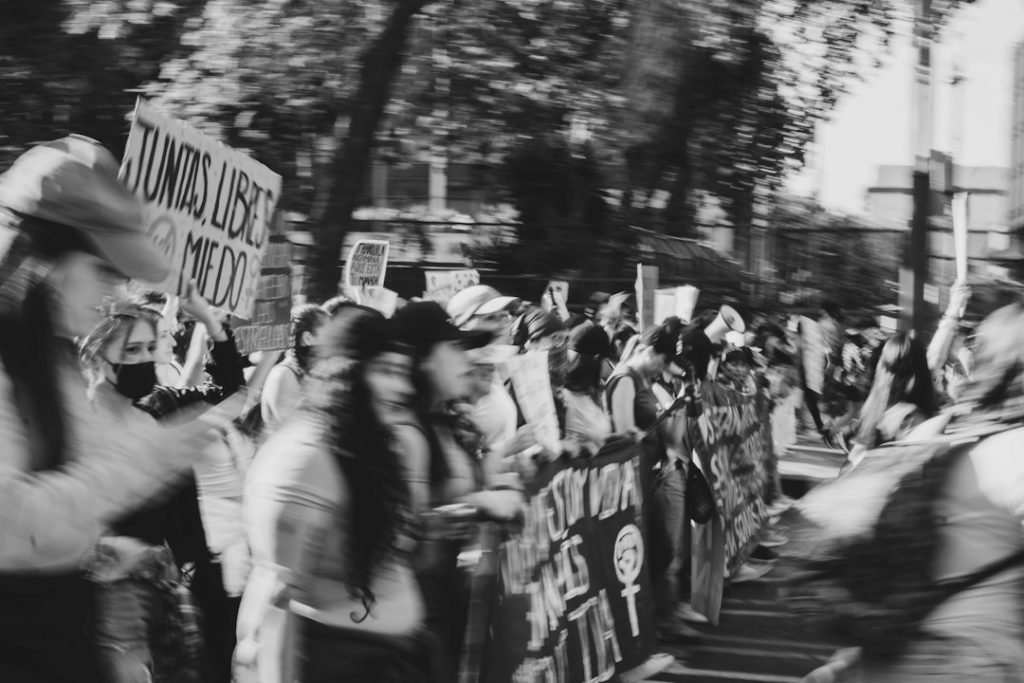
Photo by Daniela Martinez on Unsplash
Relacionado
Discover more from Fyra - Dating App for Progressives
Subscribe to get the latest posts sent to your email.