
When “Smart” Weapons Meet Real Lives: What a Portland AI Company’s Drone Tech Has to Do With Dating, Ethics, and Love
What does a protest outside a tech office in Portland have to do with the way we date, love, and build relationships in 2026?
A lot more than it might seem at first glance.
The Intercept recently reported that Sightline Intelligence, a Portland-based company that builds artificial intelligence for video processing, is facing growing protests for shipping its AI-powered targeting system to the Israeli military. Sightline claims its technology can help “separate civilians from militants” by analyzing drone footage and other surveillance video. Protesters, however, argue that this is just the latest example of “ethical” branding being used to justify tools that make war more efficient and more deadly.
On a progressive dating app blog, it might feel strange to dive into the world of defense contracts and AI targeting systems. But this story goes straight to the heart of what progressive love is about: consent, power, safety, empathy, and the belief that technology should deepen human connection, not help destroy it.
Read the full article: Maker of AI Targeting System for Drones Faces Protests for Shipments to Israeli Military (The Intercept)
What’s Happening With Sightline Intelligence?
The company and its tech
According to The Intercept, Sightline Intelligence specializes in advanced video processing. Think of the tech behind facial recognition, object tracking, and real-time analysis of crowded scenes—only, instead of being used to find your friend in a concert video, it’s being used to identify “targets” in a war zone.
Sightline’s AI is reportedly integrated into drone systems and surveillance platforms. The company markets its technology as a way to distinguish civilians from militants, suggesting that its tools could make military operations more “precise” and “humane.” In other words, it claims that smarter targeting means fewer civilian casualties.
Shipments to the Israeli military
The Intercept’s reporting focuses on Sightline’s shipments of this AI targeting technology to the Israeli military, in the context of Israel’s ongoing military operations in Gaza and the occupied territories. For years, human rights organizations and international bodies have documented:
- Mass civilian casualties
- Destruction of homes, hospitals, schools, and critical infrastructure
- Patterns of collective punishment and blockade
Against that backdrop, any technology that strengthens or streamlines military operations becomes ethically charged—especially when it’s marketed as “safer” or “more ethical” warfare.
Protests in Portland
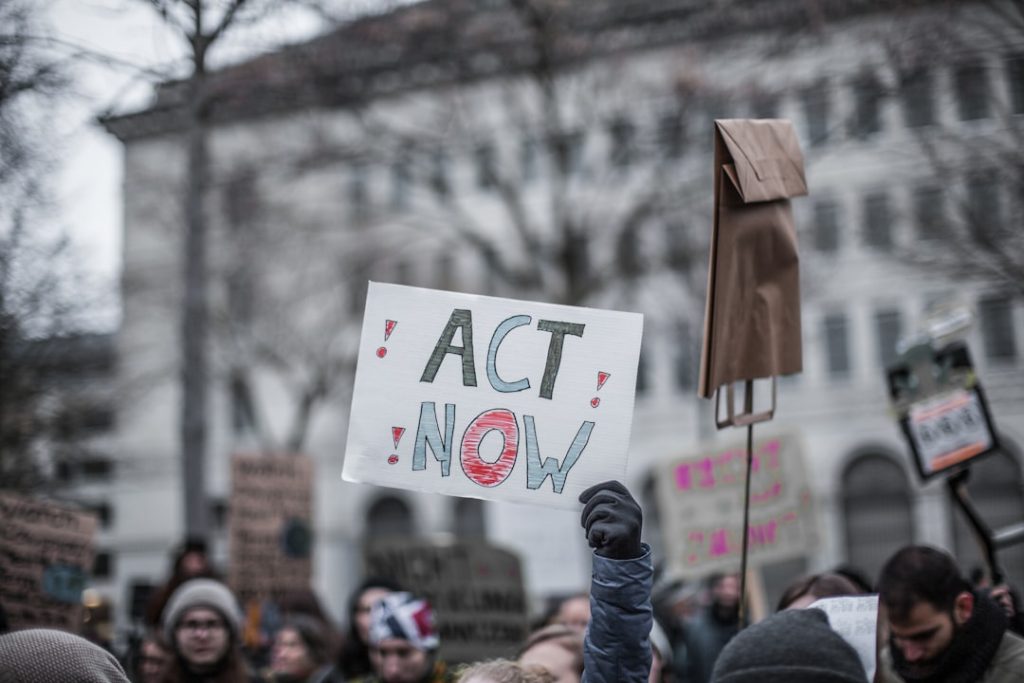
Local activists, including Palestinian solidarity groups, anti-war organizers, tech workers, and community members, have been protesting outside Sightline’s offices. They’re calling attention to the company’s role in enabling a military campaign that many international observers describe as disproportionate and in violation of human rights.
Demonstrators are reportedly demanding that Sightline:
- End its contracts with the Israeli military
- Disclose all military and surveillance clients
- Adopt a human-rights-centered policy on where its technology can and cannot be used
For protesters, this isn’t just about one company. It’s about a broader pattern: tech firms quietly building the infrastructure of war and surveillance while publicly presenting themselves as neutral or even benevolent innovators.
The Progressive Lens: Why This Story Matters
AI ethics isn’t abstract anymore
For years, AI ethics sounded like a panel topic at a tech conference: bias in algorithms, transparency, fairness. Important, but often theoretical. The Sightline story shows how immediate and concrete these questions are. An AI system isn’t just a line of code; it’s a decision-making tool that can determine who lives and who dies.
When a company claims its AI can “separate civilians from militants,” it’s making a huge promise—and a huge assumption:
- That militants and civilians can be cleanly distinguished by behavior, appearance, or location
- That the data used to train the system is accurate, unbiased, and up to date
- That the military using the system will follow international law and rules of engagement
- That mistakes will be rare, and that those mistakes are acceptable
Progressive values demand we question all of these assumptions, because we know how often tech systems misidentify people, reinforce racism, and amplify existing power imbalances. Now imagine those same flaws, but attached to a drone missile.
The myth of “clean” or “ethical” war
Sightline’s marketing taps into a familiar narrative: that technology can make war more precise and therefore more moral. Drones were once sold to the public this way. So were “smart bombs.” Now AI is the new frontier of this promise.
But war remains war. Civilian populations in Gaza and elsewhere are not living in a lab environment. They’re in dense urban areas, often with limited ability to flee or relocate. Militants, when present, don’t wear uniforms or carry visible labels. The idea that an algorithm can reliably distinguish “combatant” from “non-combatant” in such a setting isn’t just technically dubious; it risks becoming a moral shield for the continued use of lethal force.
Progressive movements have long opposed the idea that we can solve fundamentally political and moral crises—like occupation, apartheid, and systemic violence—by upgrading the weapons used to enforce them. There is no software patch for injustice.
Tech workers, consent, and complicity
One of the most powerful aspects of this story is the way it connects to a growing movement of tech workers refusing to build tools for harm. From Google employees protesting Project Maven (a Pentagon AI drone program) to staff walkouts over cloud contracts with police and immigration agencies, there’s a clear pattern: people inside tech are increasingly unwilling to be silent cogs in a war machine.
Progressive values emphasize consent and boundaries in our personal lives. We’re used to talking about enthusiastic consent in dating—about how “no” is a full sentence, and how silence isn’t agreement. That same logic is now showing up in the workplace:
- Workers saying “I do not consent to my labor being used to harm people.”
- Communities saying “We do not consent to our neighborhoods becoming test sites for surveillance tech.”
- Users saying “We do not consent to our data training systems that will be used against vulnerable populations.”
In this sense, the protests against Sightline aren’t just about foreign policy. They’re about whose values guide our technology, whose safety matters, and who gets to say “no.”
Historical and Global Context: This Isn’t New
The long history of tech and militarism
From the early days of computing, military funding has shaped what gets built and why. The internet itself emerged from defense research. But in recent years, the line between “civilian tech” and “military tech” has blurred even more:
- Cloud computing used to store and analyze battlefield data
- Facial recognition used at borders, protests, and in occupied territories
- Predictive policing algorithms targeting communities of color
- AI-powered weapons systems that move closer to autonomous killing
Israel, in particular, has become a hub for exporting surveillance and military technologies that are “battle-tested” on Palestinians. Companies market their tools based on real-world use in occupation and war, then sell them globally—to other governments, police departments, and private security firms.
Sightline’s work with the Israeli military places it squarely within this ecosystem. For progressive movements, that means this isn’t just a local Portland story; it’s part of a global pattern of militarized tech shaping how power operates everywhere.
From campus protests to corporate pressure
The protests at Sightline also connect to a broader wave of activism targeting institutional complicity in violence—from student encampments demanding university divestment, to campaigns pressuring pension funds to pull money from arms manufacturers, to local efforts to stop police from purchasing surveillance tools.
Progressive organizers have learned that following the money—and the code—can reveal hidden links between everyday institutions and faraway violence. A university contract with a defense firm, a city’s deal with a surveillance vendor, or a startup’s quiet military client list can all become flashpoints for public debate and change.
Different Perspectives and Tough Questions
What Sightline and its defenders might argue
To understand the full picture, it’s important to consider the arguments that Sightline or its supporters might make:
- “If militaries exist, they should be as precise as possible.” The idea here is harm reduction: if war is happening anyway, better targeting tools could reduce civilian casualties.
- “We’re not making weapons; we’re making software.” Some companies try to draw a line between building “dual-use” tech and directly manufacturing arms.
- “If we don’t do it, someone else will.” This is the familiar inevitability argument: the tech will exist regardless, so ethical companies should be the ones building it.
These arguments resonate with a lot of people who feel trapped in systems they didn’t create. Many workers need jobs. Many founders believe in their technology’s potential for good. Governments insist on security threats that feel urgent and real.
A progressive response
Progressive movements don’t ignore these complexities, but they push back with some key points:
- Harm reduction can’t be separated from power. “Precision” in the hands of an occupying force or a government with a record of human rights violations doesn’t automatically mean less harm; it can mean more efficient repression.
- Dual-use is still a choice. If a tool can be used both to save lives and to take them, companies can set boundaries on who gets access, under what conditions, and with what oversight.
- Inevitability is not ethics. The fact that someone else might do something harmful doesn’t absolve us of responsibility for our own choices. That’s true in relationships, and it’s true in geopolitics.
Ultimately, progressives argue that we need to shift the conversation from “How can we make war cleaner?” to “How can we reduce the reliance on war in the first place?”
What This Means for Progressive Movements—and for Us
Values alignment isn’t just for dating profiles
On a dating app, we talk a lot about “values alignment.” People want
Photo by Tom Seger on Unsplash
Stay Connected with Flamr
Don’t forget to follow Flamr on social media!
Relacionado
Discover more from Fyra - Dating App for Progressives
Subscribe to get the latest posts sent to your email.