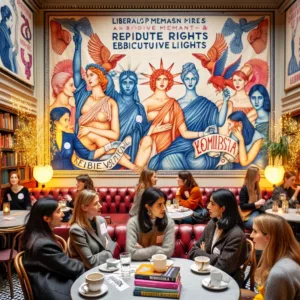
Dating As a Progressive: How to Lead With Your Values (And Still Have Fun)
If you’re someone who cares deeply about justice, equity, and the future of the planet, dating can feel…complicated. You’re not just looking for chemistry—you’re looking for someone who gets why pronouns matter, why you marched last summer, and why you’re not “arguing politics,” you’re talking about people’s lives.
The good news: you don’t have to choose between your heart and your values. Values-aligned dating is about showing up as your whole self, being honest about what matters to you, and making space for growth in yourself and others.
Below are some practical, grounded tips to help you date in a way that feels ethical, joyful, and aligned with your politics.
1. Lead With Your Values Early (Without Turning Your Profile Into a Manifesto)
Progressives often worry about being “too much” on dating apps—too political, too intense, too serious. But hiding your values is a fast track to mismatches and burnout. You don’t need a 10-point platform; you just need a few honest signals.
In your profile, consider weaving your values into how you describe your life, not just listing labels. For example:
- Instead of: “Very political, leftist, if you voted for X don’t message me.”
- Try: “I care a lot about racial justice, queer liberation, and climate action. Looking for someone who’s on the same page about human rights and basic decency.”
You can also drop in a few specifics that hint at your values:
- “Weekend plans: mutual aid drop-off, then a movie.”
- “Proud union member, forever pro-labor.”
- “Trans-inclusive, pro-choice, anti-racist—if that’s ‘political’ to you, we’re probably not a match.”
On the app, you might answer prompts in a values-forward way:
- Prompt: “Something I care about…”
Answer: “Reimagining safety beyond policing, and making sure everyone has access to housing and healthcare.” - Prompt: “A cause I’ll always support…”
Answer: “Queer and trans liberation. I show up at Pride, but I also show up when there aren’t rainbow flags everywhere.”
You’re not trying to pass an ideological purity test; you’re signaling the baseline of what you need to feel safe and understood.
2. Clarify Your Non-Negotiables vs. Your “Teachable Moments”
Not every disagreement is a dealbreaker, and not every difference is something you have to gently educate your way through. Knowing your own limits makes dating much less confusing.
Take a moment offline to sort your values into three buckets:
- Non-negotiables: Core beliefs that, if not shared, make a relationship unsafe or unsustainable for you.
- Growth areas: Topics where you’re willing to learn and where you’re okay with someone being in process, as long as they’re genuinely open.
- Personal preferences: Things you care about, but that don’t need to be perfectly aligned.
For example, your list might look like this:
- Non-negotiables: Supports LGBTQ+ rights; believes in bodily autonomy; is anti-racist in more than just words; respects my pronouns and identity.
- Growth areas: Understanding of abolition, disability justice, or decolonization; they might not know all the language but they’re curious and humble.
- Personal preferences: Same level of involvement in protests; same political party affiliation on paper; same exact reading list or media tastes.
Once you’re clear on this, it’s easier to respond when something comes up. Picture a first date where they say, “I’m still learning about pronouns, but I’m trying to get it right.” That might land in your “growth area” bucket. But if they say, “I don’t get why people make such a big deal about pronouns,” that may touch your non-negotiable boundary.
You don’t owe everyone a workshop. It’s okay to say: “This is important to me, and I’m looking for someone who’s already there.”
3. Have Values Conversations Without Turning Every Date Into a Debate
You want to know where someone stands, but grilling them like a hostile witness usually kills the vibe. The goal is to be curious and grounded, not performatively correct.
Try asking open, real-life questions instead of theoretical ones:
- “What issues do you care about most, and how do you engage with them?”
- “How do you like to show up for your community?”
- “What’s something you’ve changed your mind about in the last few years?”
- “How do you handle it when you realize you messed up or hurt someone?”
These questions reveal more about their values than a simple “Who did you vote for?” ever will. Pay attention not just to the content of their answers, but to their attitude:
- Do they talk about marginalized people with respect?
- Do they center themselves in every story, or do they show awareness of systems and power?
- Do they sound defensive, dismissive, or like they’re competing to be “the most woke”?
If a conversation gets tense, you can gently reframe:
- “I’m not trying to win an argument; I’m trying to understand how you see this.”
- “This is really personal for me because of my identity and my community. I need my partner to treat that as real, not hypothetical.”
And if you hit a hard line—like they deny systemic racism, or mock gender-neutral pronouns—you’re allowed to end the date early and protect your energy. That’s not being “closed-minded”; that’s self-respect.
4. Practice Consent, Care, and Accountability in How You Date
Progressive values aren’t just about what we say; they’re about how we treat each other, especially in vulnerable spaces like dating. You can embody your politics in your approach to consent, communication, and endings.
Some ways to align your behavior with your values:
- Be explicit about consent. Ask before you touch, kiss, or escalate intimacy. A simple “Can I kiss you?” or “How are you feeling about going back to my place?” goes a long way.
- Respect boundaries, not just preferences. If someone says they’re not ready for sex, a relationship, or meeting your friends, don’t push. Believe them.
- Don’t ghost when you can be honest. Ghosting is common, but it can feel dehumanizing. When it’s safe to do so, send a kind, clear message: “I’ve enjoyed getting to know you, but I’m not feeling a romantic connection. Wishing you all the best.”
- Take responsibility when you mess up. If you misgender someone, talk over them, or say something uninformed, apologize without making it about your guilt: “I’m sorry, I shouldn’t have said that. I’m working on doing better.”
- Be mindful of power dynamics. Age gaps, financial differences, race, gender, immigration status, disability—these all shape how safe someone feels saying no. Check in, invite feedback, and don’t use your relative privilege to steer everything your way.
Living your politics in your dating life isn’t about being perfect. It’s about being willing to listen, adjust, and repair when harm happens.
5. Protect Your Energy in a World That Can Feel Heavy
Being politically engaged can be exhausting. Trying to date on top of that—while navigating oppression, burnout, and a news cycle that never lets up—can feel like a lot. Your desire for companionship doesn’t make you shallow, and your need for rest doesn’t make you less committed to the work.
Some ways to care for yourself while you date:
- Set emotional bandwidth limits. It’s okay to say, “I can’t talk about politics tonight; my brain is fried. Can we just watch a movie and cuddle?”
- Balance heavy topics with joy. Build dates around things that nourish you: art, music, nature, mutual aid cookouts, queer dance parties, game nights.
- Use the app intentionally. Decide how much time you want to spend swiping and stick to it. Log off when you feel yourself getting cynical or numb.
- Lean on your community. Talk to friends about your dating life, especially other progressives. They can help you reality-check red flags, celebrate green flags, and remind you of your worth when a date goes badly.
- Don’t confuse compatibility with worth. If someone isn’t aligned with your values, that’s about mismatch, not about you being “too intense” or “too political.” Your standards are valid.
Remember that joy, pleasure, and connection are not distractions from justice—they’re part of what we’re fighting for. Building loving, equitable relationships is its own form of resistance to systems that thrive on isolation and despair.
Dating With Your Whole Self Is Worth It
You deserve relationships where you don’t have to shrink your politics, hide your pronouns, or explain why your community matters. You deserve to be with someone who respects your convictions, even as both of you keep learning and growing.
Values-aligned dating doesn’t mean you’ll never disagree, and it doesn’t mean you’ll only date people who share every single belief you hold. It means you’re intentional about the kind of world you’re co-creating in your relationships—one that centers consent, care, justice, and mutual respect.
Keep leading with your values. Keep asking the real questions. Keep choosing people who make you feel more like yourself, not less. Somewhere out there, someone is hoping to meet exactly the kind of principled, big-hearted person you already are.
You’re not “too much.” You’re just looking for your people—and they’re looking for you, too.
Stay Connected with Flamr
Don’t forget to follow Flamr on social media!
Relacionado
Discover more from Fyra - Dating App for Progressives
Subscribe to get the latest posts sent to your email.