Why Social Justice Belongs in Your Dating Life
Dating has never been just about chemistry. It’s also about values, power, and how we move through the world together. As conversations about race, gender, disability, climate justice, and economic inequality have become more mainstream, many people now see social justice as a non‑negotiable part of compatibility.
But bringing social justice into dating can feel complicated. How do you talk about privilege without turning a first date into a debate? What does allyship look like in your romantic life? How do you balance personal attraction with political values?
This post explores how social justice values can deepen connection, increase accountability, and make dating safer and more affirming—while also acknowledging the messy, imperfect reality of practicing these values in real time with real people.
Values as Compatibility: Beyond “We Both Like the Same Shows”
Shared values are a core part of long-term compatibility. For many people, that now explicitly includes social justice: anti-racism, queer and trans liberation, disability justice, economic fairness, climate responsibility, and more. These aren’t “extra credit” beliefs; they shape how you treat each other and how you move through the world as a couple.
Social justice values show up in dating in subtle and obvious ways:
- How you talk about people who are different from you. Do you default to stereotypes or ask curious, respectful questions?
- How you show up in public spaces. Do you intervene (when safe) if you see harassment? Do you notice accessibility issues at venues?
- How you share emotional and domestic labor. Are you expecting a partner (often a woman or femme) to carry the bulk of planning, care work, and emotional processing?
- How you think about consent and boundaries. Do you see consent as ongoing, enthusiastic, and intersectional (shaped by power differences), or as a one-time checkbox?
These behaviors are extensions of political beliefs. Someone might say they’re “progressive,” but if they consistently make sexist jokes, dismiss pronouns, or trivialize racism, that disconnect will eventually show up in the relationship.
Practical example: If climate justice matters to you, you might prioritize partners who share that concern and are open to choices like reducing flights, supporting climate-friendly policies, or choosing sustainable date activities. You don’t need identical lifestyles, but you do need enough overlap to build a life that feels coherent and respectful to both of you.
Intersectionality: We Don’t Date in a Vacuum
Intersectionality, a term coined by legal scholar Kimberlé Crenshaw, describes how different forms of oppression (like racism, sexism, ableism, classism, homophobia, and transphobia) intersect and shape people’s experiences. In dating, this means people aren’t just “single” or “taken”—they’re also navigating relationships as Black, disabled, trans, immigrant, fat, neurodivergent, poor, or otherwise marginalized people, sometimes in multiple ways at once.
Intersectionality matters in dating because:
- Safety and risk are unevenly distributed. A queer person of color may face more risk showing affection in public than their white partner. A trans person may worry about being outed or targeted on a date.
- Preferences can be shaped by bias. “I’m just not into [X group]” often reflects social conditioning and systemic devaluation, not purely individual taste.
- Access to dating spaces is unequal. Bars without ramps, apps that mishandle pronouns, or events that assume everyone is neurotypical exclude many people by design.
Intersectional dating asks you to recognize these realities instead of pretending love exists outside of power. That doesn’t mean you have to fully understand every identity before you date someone, but it does mean being willing to learn, listen, and adapt.
Practical example: If you’re a cis, straight, able-bodied person dating someone who is queer and disabled, intersectional care might look like:
- Letting them choose locations that are physically accessible and feel safe.
- Being open to non-traditional date structures (like shorter outings, virtual dates, or sensory-friendly environments).
- Backing them up if staff, strangers, or even friends misgender or dismiss them.
This isn’t about “saving” your partner; it’s about recognizing that the world treats you differently and using that awareness to co-create safer, more equitable experiences.
Privilege, Accountability, and the Work of Being a Partner
Privilege in dating doesn’t mean your life is easy; it means certain barriers aren’t stacked against you in the same way they are against others. You might have privilege based on race, gender identity, sexual orientation, class, citizenship, body size, ability, or other factors. In relationships, privilege often shows up in who gets believed, who gets to be “emotional” without being stereotyped, who feels safe in public, and whose needs are assumed to matter more.
Practicing accountability around privilege in dating can involve:
- Listening without centering yourself. When a partner shares an experience of racism, transphobia, or ableism, resist the urge to defend yourself, debate, or make it about your guilt. Focus on understanding their reality.
- Owning impact, not just intent. You might not intend harm, but you can still cause it. Instead of “I didn’t mean it,” try “I see how that hurt you. I’m sorry, and I’ll work on not repeating it.”
- Doing your own learning. Don’t rely on partners from marginalized groups to be your only teachers. Read books, follow activists, attend workshops, and bring that learning into the relationship.
- Sharing risk and labor. Don’t leave it to the marginalized partner to confront bigotry or educate your friends and family. Step up, especially when your privilege gives you more safety.
Practical example: If your family makes racist comments about your partner, accountability might look like:
- Having private conversations with your family to set clear boundaries.
- Backing your partner if they choose not to attend certain gatherings.
- Refusing to minimize the harm (“They’re just old-fashioned”) and instead taking concrete steps to change the dynamic.
Accountability doesn’t mean perfection. You will mess up. Everyone does. What matters is whether you repair, learn, and change patterns over time.
Allyship in Action: From Profile to First Date to Long-Term
Allyship is the ongoing practice of using your relative privilege to support the liberation and well-being of marginalized people. In dating, allyship is not a self-appointed label; it’s something your actions demonstrate over time.
Here are some ways allyship can show up across the dating journey:
- On your profile:
- Include your pronouns if it feels safe, normalizing sharing them for everyone.
- Avoid fetishizing language (“I love Black girls,” “I’ve always wanted to try dating a trans guy”). Attraction is fine; objectification is not.
- Signal your values clearly (“Pro-choice, anti-racist, trans-affirming; looking for someone who shares similar commitments”).
- In early conversations:
- Ask open-ended questions about values: “How do you like to see your political or social values show up in relationships?”
- Respect boundaries if someone doesn’t want to educate you about their identity right away.
- Believe people when they describe their experiences with oppression, even if you haven’t seen it firsthand.
- On dates and in public:
- Choose venues that are accessible, safe, and affirming (e.g., queer-friendly spaces, wheelchair-accessible locations, places with gender-neutral restrooms).
- Intervene or support your partner if there’s harassment or discrimination, while centering their safety and preferences (“Do you want to leave? Do you want me to say something?”).
- In ongoing relationships:
- Check in about how social justice issues are affecting them: “The news has been heavy lately—how are you holding up?”
- Make decisions together about how your relationship engages with activism, community work, or mutual aid.
- Notice patterns: Are you defaulting to traditional gender roles? Are you taking your partner’s emotional labor for granted?
Allyship isn’t just about “big moments” like protests or public confrontations. It’s also about daily choices: who you follow online, whose voices you amplify, what jokes you laugh at or challenge, and how you treat service workers on a date.
Embracing Complexity: No Perfect Politics, No Perfect Partners
Bringing social justice into dating doesn’t mean you’ll only date people who share every belief you have or use all the same language you do. People are at different stages of learning, and identities are complex. You might be deeply aligned on racial justice but have different experiences with disability. You might be politically similar but differ on how much activism you want in your day-to-day life.
Some tensions to expect:
- Values vs. attraction: You might feel drawn to someone who isn’t as politically engaged. It’s okay to explore that, as long as you’re honest about what you need and what’s non-negotiable.
- Growth vs. harm: People can grow, but you’re not obligated to stay in a relationship that harms you while someone “learns.” Your safety and well-being come first.
- Online performance vs. offline behavior: Someone might have all the right language on social media but struggle to practice those values in intimate relationships. Pay attention to actions, not just posts.
It’s also important to leave room for your own imperfection. You might discover biases you didn’t know you had. You might realize that some of your “preferences” are rooted in anti-fatness, racism, or ableism. That realization can be uncomfortable—but it’s also an opportunity to grow into the kind of partner you want to be.
You don’t have to “fix” everything before you date. You do need to be honest, open to feedback, and willing to repair when you make mistakes. Social justice in dating is less about having flawless politics and more about committing to shared humanity, mutual respect, and ongoing growth.
Ultimately, dating through a social justice lens is about building relationships where everyone’s dignity is non-negotiable. It asks more of us—but it also offers more: deeper trust, richer intimacy, and the possibility of love that doesn’t just feel good, but also helps make the world a little more just.
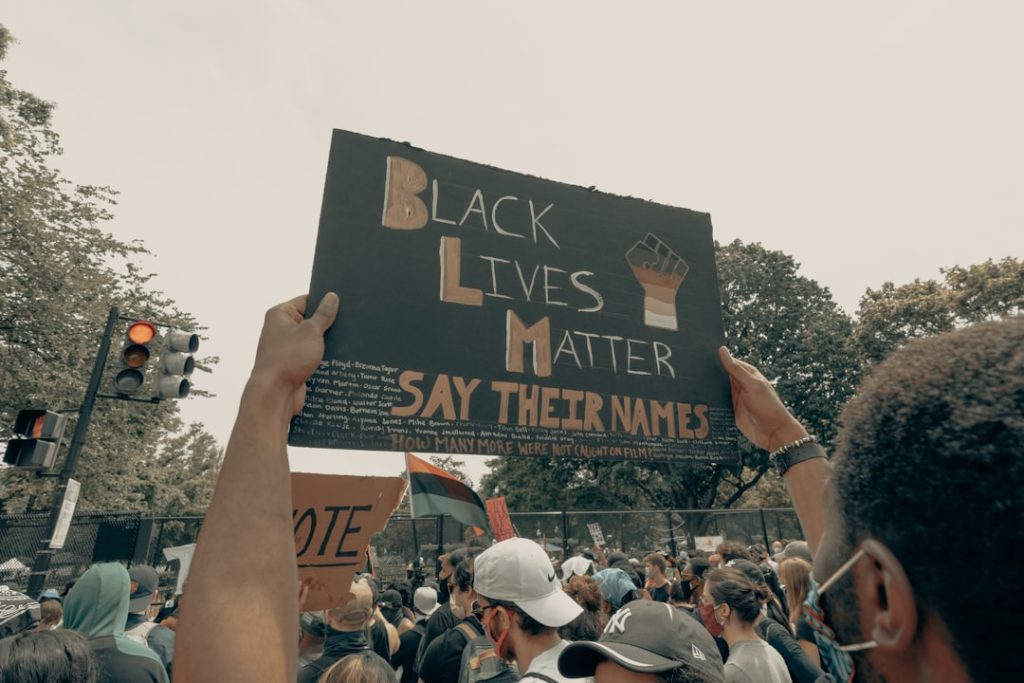
Photo by Clay Banks on Unsplash
Stay Connected with Flamr
Don’t forget to follow Flamr on social media!
Relacionado
Discover more from Fyra - Dating App for Progressives
Subscribe to get the latest posts sent to your email.