Love, Liberation, and the Ongoing Fight for LGBTQ+ Rights
Dating apps are supposed to be about possibility: the possibility of connection, desire, partnership, community, maybe even love. But those possibilities don’t exist in a vacuum. They’re shaped by the laws we live under, the culture we move through, and the ways our identities are respected—or erased. For LGBTQ+ people, the right to love openly has always been bound up with a larger struggle for dignity, safety, and liberation.
On a progressive dating app, it’s easy to imagine we’re already living in the future: pronouns in profiles, gender fields that go beyond a binary, filters that help people find queer and trans community. But the reality outside the app is more complicated. LGBTQ+ rights have made historic gains in a relatively short time, yet they remain under active, coordinated attack—especially for trans and nonbinary people, queer youth, and LGBTQ+ communities of color.
So what does it mean to seek connection in a world where your very existence is debated in legislatures and comment sections? And how can we build relationships that are not just personally fulfilling, but also part of a broader movement toward justice?
From Criminalization to Visibility—and Backlash
To understand where we are, it helps to remember how far we’ve come. Not long ago, queer and trans existence was treated largely as a crime, a pathology, or a shameful secret. Many countries criminalized same-sex relationships. Police raided bars and arrested people for “cross-dressing.” Homosexuality was listed as a mental disorder. Transgender identities were largely invisible in mainstream discourse, except as punchlines or cautionary tales.
The modern LGBTQ+ rights movement in the United States is often traced to the Stonewall uprising of 1969, when queer and trans people—many of them Black and brown, many of them unhoused or sex workers—fought back against police harassment. But Stonewall was part of a longer continuum of resistance: organizing by trans women like Marsha P. Johnson and Sylvia Rivera, lesbian feminist movements, Black queer liberation struggles, and AIDS activists who turned grief into political power.
Over the decades, hard-fought organizing led to major shifts: the removal of homosexuality from the list of mental disorders, anti-discrimination protections in some cities and states, and eventually marriage equality in many countries. Visibility increased as LGBTQ+ characters appeared on television, queer artists shaped culture, and more people came out at work, at school, and in their families.
Yet progress has never been linear. Each gain has sparked backlash. Today, that backlash is often aimed squarely at trans and nonbinary people, especially youth, and at anyone whose gender or sexuality challenges rigid norms. The pendulum of public opinion and policy keeps swinging, and LGBTQ+ people are forced to live and love in that uncertainty.
The Current Landscape: Rights on Paper, Risks in Practice
In many places, LGBTQ+ rights are a patchwork. The protections you have—or don’t—depend on your zip code, your race, your class, your immigration status, your disability, your faith, and more. Some people can legally marry, adopt, and access gender-affirming care. Others face criminalization, forced medical “treatments,” or the threat of violence for simply existing.
There have been important advances: more legal recognition of same-sex relationships, broader conversations about nonbinary identities, and growing awareness of intersectional issues like how racism, ableism, and transphobia overlap. Many workplaces have nondiscrimination policies. Some schools offer LGBTQ+ student groups and inclusive curricula. Health organizations increasingly recognize gender-affirming care as essential.
At the same time, there is a wave of policies and rhetoric that target LGBTQ+ communities. These include:
- Restrictions on gender-affirming healthcare, especially for trans youth, despite medical consensus that such care can be life-saving.
- Attacks on inclusive education, such as efforts to ban discussions of sexual orientation and gender identity in schools.
- Attempts to roll back protections in housing, employment, and public accommodations.
- Escalating online and offline harassment, doxxing, and violence directed at queer and trans people.
For people trying to date in this climate, the stakes feel high. Coming out to someone new can be risky. Public displays of affection may draw unwanted attention. Trans and nonbinary people often have to navigate whether to disclose their identity early, later, or at all—and what safety measures to take when meeting someone in person. Queer and trans people of color face layered dangers from both interpersonal bigotry and systemic discrimination.
And yet, people are still flirting, still matching, still falling in love and building chosen families. The persistence of queer joy is itself a form of resistance. But it shouldn’t have to be. Safety and dignity shouldn’t be seen as luxuries or acts of defiance; they should be basic conditions of life.
Dating as a Radical Act of Self-Determination
On a personal level, dating while queer or trans can be an act of radical self-determination. It’s a way of saying: I exist, I desire, I deserve connection on my own terms. That’s powerful in a world that has often told LGBTQ+ people that their love is wrong, their bodies are wrong, or their futures are limited.
Progressive dating spaces can support that self-determination by:
- Offering nuanced gender and sexuality options—and letting people describe themselves in their own words.
- Making pronouns visible and normalized, not an afterthought.
- Building in safety features like block/report tools that are taken seriously, and resources for dealing with harassment.
- Creating community norms that center consent, respect, and curiosity rather than fetishization or tokenization.
But inclusive design is only a starting point. The deeper work is cultural: challenging internalized shame, unlearning biases, and recognizing that “preference” is often shaped by systems of power. When someone says they’re “just not into” a certain race, body type, or gender expression, it’s worth asking where that came from. Are we confusing attraction with the narrow standards we’ve been taught to value?
For cisgender, straight, or otherwise more privileged users, being in a progressive dating space is an opportunity to practice solidarity in everyday choices:
- Listening when LGBTQ+ people share their experiences, instead of debating their realities.
- Respecting boundaries around disclosure, names, and pronouns—online and offline.
- Reflecting on how privilege shows up in dating: who feels entitled to safety, who is expected to educate, who is exoticized or erased.
These are not abstract issues. They shape who feels welcome on an app, who gets messages, who is believed when they report harm, and who feels like they belong.
Imagining a Future Where Queer and Trans Love Thrives
It’s easy to feel discouraged when headlines are filled with attacks on LGBTQ+ rights. But it’s also true that more people than ever understand that gender and sexuality are diverse and fluid. More families are affirming their queer and trans kids. More faith communities are embracing LGBTQ+ members. More workplaces are recognizing that inclusion is not optional.
The future of LGBTQ+ rights will be shaped by choices we make collectively and individually. On a broad scale, that means:
- Supporting policies that protect LGBTQ+ people in healthcare, housing, education, and employment.
- Defending access to gender-affirming care and accurate, inclusive education.
- Centering the leadership of trans people, especially trans people of color, who are often most impacted and least resourced.
- Building coalitions: recognizing that LGBTQ+ liberation is tied to racial justice, disability justice, reproductive rights, labor rights, and more.
On a more intimate scale, it means treating every interaction—every match, every message, every date—as a chance to practice the world we want. A world where:
- People can be honest about who they are without fear of punishment or ridicule.
- Boundaries are respected, and consent is enthusiastic and ongoing.
- Curiosity replaces judgment when we encounter identities or experiences different from our own.
- Love is not limited by gender, body, or tradition, but expanded by authenticity and care.
The future we’re imagining isn’t just one where LGBTQ+ people are tolerated, or even “accepted.” It’s one where queer and trans love is understood as a vital, beautiful part of human possibility—where all of us are freer because we’ve let go of rigid roles and embraced the complexity of who we are.
What You Can Do, Starting Where You Are
You don’t need to be a policy expert or a full-time activist to be part of this work. If you’re using a progressive dating app, you’re already participating in a space that’s trying to do things differently. The question is: how will you show up?
Some starting points:
- Reflect on your own story. How did you learn what “normal” relationships look like? Who was left out of that picture? How is that shaping your desires and assumptions today?
- Practice everyday affirmation. Use people’s names and pronouns correctly. Don’t treat someone’s identity as a curiosity or debate topic. If you make a mistake, apologize briefly, correct it, and move on.
- Challenge harmful talk. When friends make jokes or comments that dehumanize LGBTQ+ people, say something. It doesn’t have to be a speech; even a simple “That’s not okay” can shift the tone.
- Support queer and trans spaces. Follow LGBTQ+ creators, donate to mutual aid funds if you’re able, show up for local events, and amplify voices that are often ignored.
- Vote and advocate. Pay attention to policies that affect LGBTQ+ rights where you live. Support candidates and organizations that are committed to protecting those rights and expanding them.
Most of all, remember that the fight for LGBTQ+ rights is not separate from the search for connection. Every time you choose honesty over performance, respect over entitlement, and curiosity over fear, you’re helping build a culture where queer and trans people can not only survive, but thrive.
As you swipe, chat, and meet new people, consider this an invitation: let your dating life be part of a broader commitment to liberation. Ask yourself not just, “Who am I looking for?” but also, “What kind of world am I helping to create—through how I love, how I listen, and how I show up for others?”
The future of LGBTQ+ rights isn’t just written in laws and court decisions. It’s written in our everyday choices, our relationships, and the communities we build—one conversation, one connection, one act of courage at a time.
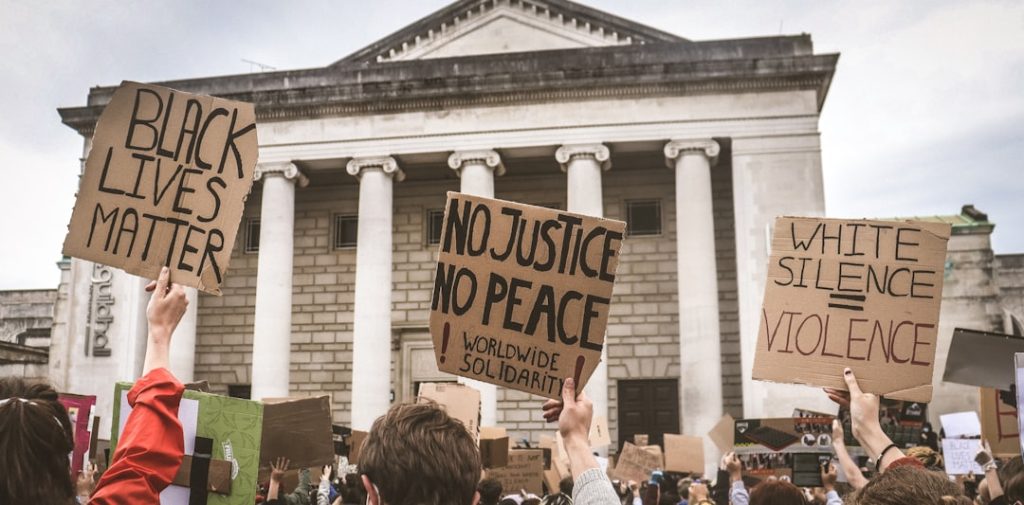
Photo by Thomas Allsop on Unsplash
Stay Connected with Flamr
Don’t forget to follow Flamr on social media!
Relacionado
Discover more from Fyra - Dating App for Progressives
Subscribe to get the latest posts sent to your email.