Love, War, and What We Tolerate: Why Hegseth’s “Deadlier War Machine” Speech Matters for Dating, Ethics, and Our Future
What does U.S. foreign policy have to do with your dating life?
More than it might seem at first swipe.
When War Secretary Pete Hegseth appeared before Congress and proudly described a “deadlier” U.S. war machine while minimizing questions about civilian casualties, it wasn’t just another distant foreign policy hearing. It was a window into what our government believes is acceptable harm — and by extension, what kind of society we’re building, what kind of relationships we normalize, and what values we carry into our most intimate connections.
On a progressive dating app, people often talk about boundaries, consent, emotional safety, and mutual care. We’re quick to flag red-flag behavior in partners: dismissiveness, lack of empathy, a willingness to hurt others to get what they want. Yet, collectively, we’re still living under a political culture that often treats those same behaviors as “strength” when it comes to war.
This disconnect matters. Because the norms we tolerate at the national level seep into our personal lives — shaping what we think is “just how the world works,” and what we dare to imagine and demand instead.
Let’s unpack what happened in Hegseth’s testimony, why it’s alarming from a progressive perspective, and how resisting normalized violence is deeply connected to the way we love, date, and build communities.
Read the full article: Hegseth Brags of a Deadlier War Machine as U.S. Unleashes “Devastating Civilian Harm Globally” (The Intercept)
What Happened: Hegseth’s “Deadlier War Machine” Moment
A Congressional Hearing, a Chilling Tone
According to reporting from The Intercept, War Secretary Pete Hegseth appeared before Congress and used the opportunity to project toughness and military dominance. Rather than focusing on preventing civilian casualties, he reportedly celebrated the increased lethality and reach of the U.S. military — framing it as a necessary show of strength in a dangerous world.
Key elements of the testimony, as summarized in the coverage, include:
- Boasting about a more lethal military: Hegseth emphasized the U.S. military’s growing capability to strike enemies faster, farther, and with more destructive power — including through advanced weapons systems and technology-driven targeting.
- Downplaying civilian harm: When pressed about civilian casualties from U.S. operations, he reportedly brushed off concerns, leaning on familiar talking points about “precision,” “regrettable but unavoidable” collateral damage, and the idea that U.S. forces are still the “most humane” in history.
- Framing criticism as weakness: Questions about civilian harm were implicitly cast as naïve, unpatriotic, or disconnected from “real-world” threats, reinforcing a binary: you’re either “serious” about security or you care “too much” about human rights.
- Global impact, local accountability gap: Behind the rhetoric is a pattern: U.S. operations that cause large-scale civilian suffering abroad, while meaningful accountability, transparency, or reparations remain rare.
The Intercept’s framing — that the U.S. is unleashing “devastating civilian harm globally” while top officials brag about deadlier capabilities — highlights the moral and political contradiction at the heart of current U.S. militarism.
Why This Matters to Progressives (and to How We Date)
1. The Normalization of “Acceptable” Harm
Progressive politics is rooted in a simple idea: other people’s lives matter, even when they’re far away, even when they’re not “useful” to us, even when no one is watching. In dating, that shows up as emotional care, consent, and mutual respect. In foreign policy, it should show up as a commitment to minimize harm, prioritize diplomacy, and treat every civilian life as sacred.
Hegseth’s posture does the opposite. It normalizes the idea that:
- Some people’s suffering is a “cost of doing business.”
- Power is proven through the ability to inflict harm, not prevent it.
- Empathy is a liability, not a strength.
That mindset doesn’t stay contained within the Pentagon. It reflects and reinforces a culture where:
- We’re desensitized to violence in the news.
- We accept systemic harm (like poverty, racism, and climate destruction) as inevitable.
- We sometimes internalize the idea that we must “toughen up” emotionally in our personal lives, instead of building relationships around care and mutual vulnerability.
2. The Disconnection Between “Values” and Policy
Many of us list values like compassion, justice, and equality on our dating profiles. We talk about wanting partners who are kind and politically aware. But there’s often a gap between the values we espouse and the policies we tolerate.
When a top official can brag about a “deadlier” war machine while skimming past civilian deaths, it raises hard questions:
- Do we really believe all lives are equal, or only some?
- Are we okay with our tax dollars funding weapons that kill families in other countries while our own communities lack affordable housing and healthcare?
- What does it mean to be “progressive” if we’re quiet about war?
Closing that gap — between what we say we believe and what we accept from our leaders — is part of building integrity, not just individually but as a political community.
3. Militarism as a Relationship Red Flag at Scale
If a partner bragged about how easily they could hurt someone and dismissed the impact of their actions, most of us would see that as a massive red flag. We’d call it abusive or controlling behavior, not “strength.”
Militarism, especially when it glorifies lethality and minimizes civilian suffering, is that same red flag — just scaled up to a nation-state. It’s a pattern of behavior that says:
- “My security is worth your suffering.”
- “My interests justify your trauma.”
- “Your pain is regrettable, but not important enough to change my actions.”
Progressive movements have long drawn connections between interpersonal violence and systemic violence: from domestic abuse to police brutality to war. The same logic of domination and disposability is at work in all of them.
Broader Context: A Long History of “Regrettable” Civilian Deaths
From “Shock and Awe” to Drone Warfare
Hegseth’s testimony doesn’t come out of nowhere. It’s part of a decades-long pattern in U.S. foreign policy:
- Post-9/11 wars: In Afghanistan, Iraq, and beyond, U.S. military campaigns led to hundreds of thousands of civilian deaths, displacement, and long-term trauma. Official language often framed these deaths as “regrettable” but necessary.
- Drone warfare and “precision” rhetoric: The U.S. has repeatedly claimed that advanced technology allows for “surgical” strikes, yet investigations have shown widespread targeting errors, misidentification, and systemic undercounting of civilian casualties.
- Secrecy and lack of accountability: Families of victims rarely receive acknowledgment, much less reparations or justice. Internal military investigations frequently clear U.S. forces of wrongdoing, even in egregious cases.
Progressives have challenged this trajectory for years, calling for:
- Ending endless wars.
- Restricting or banning certain weapons and tactics.
- Full transparency and accountability for civilian harm.
- Redirecting military spending into social needs and climate action.
Hegseth’s proud embrace of a “deadlier” military signals a push in the opposite direction — doubling down on force instead of rethinking what security could mean in a progressive, globally responsible way.
Militarism, White Supremacy, and Patriarchy
It’s also important to see how militarism intersects with other systems of oppression:
- Racialized violence: U.S. wars disproportionately impact people in the Global South, often framed as threats or “terrorists,” echoing racist narratives about who is dangerous and whose lives are expendable.
- Patriarchal masculinity: The glorification of toughness, dominance, and emotional numbness is deeply gendered. The figure of the “strong” male leader who shows no remorse for collateral damage is part of a broader patriarchal script.
- Economic exploitation: War profits corporations, contractors, and arms manufacturers, while working-class communities (often communities of color) bear the human costs of both military service and underfunded public services at home.
For progressive daters who care about anti-racism, feminism, and economic justice, resisting militarism isn’t a side issue — it’s central.
Different Perspectives: Security, Strength, and Responsibility
How Supporters Frame It
To understand the full picture, it’s useful to consider how Hegseth’s stance is defended:
- Deterrence: Supporters argue that a more lethal and advanced military deters adversaries, preventing larger wars and ultimately saving lives.
- “We’re still the most humane”: They claim that compared to other militaries, the U.S. invests more in precision, legal review, and rules of engagement to minimize civilian harm.
- “Realism” vs. “idealism”: Critics of civilian harm policies are sometimes dismissed as unrealistic or naïve, accused of not understanding how war works.
A Progressive Reframing of Security
Progressive analysis doesn’t ignore real threats; it asks deeper questions about what actually keeps people safe. From this perspective:
- True security is holistic: It includes climate stability, economic justice, public health, and human rights — not just military dominance.
- Violence often creates more insecurity: Civilian casualties fuel resentment, extremism, and cycles of retaliation, undermining long-term peace.
- Empathy and restraint are
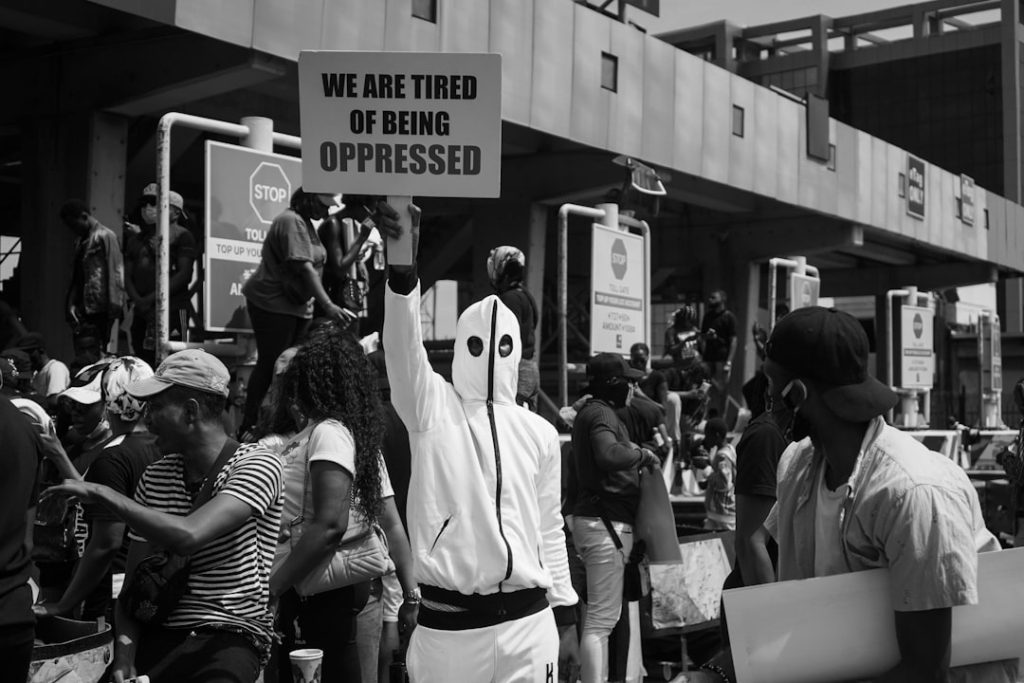
Photo by Olayinka Babalola on Unsplash
Stay Connected with Flamr
Don’t forget to follow Flamr on social media!
Relacionado
Discover more from Fyra - Dating App for Progressives
Subscribe to get the latest posts sent to your email.