Love in the Time of Climate Crisis: Building Relationships for a Livable Future
When we talk about dating, we usually talk about chemistry, values, and whether someone texts back in a reasonable amount of time. But increasingly, there’s another question shaping modern romance: How do we love each other on a warming planet?
Climate justice isn’t just about carbon emissions and policy targets. It’s about who gets to breathe clean air, who can afford to move when their neighborhood floods, who has access to cooling during heat waves, and whose communities are sacrificed for pipelines and profit. It’s about power, race, class, and geography—and it’s about the future we’re trying to build with the people we care about.
For many of us, climate anxiety and grief are now part of the emotional landscape we bring into relationships. The world we’re dating in is not the same one our parents met in—and that changes how we think about commitment, family, home, and hope. But it also opens up possibilities for a more honest, justice-centered way of loving each other.
From “Environmentalism” to Climate Justice
The climate conversation didn’t start with hashtags and documentaries. For decades, frontline communities—often Black, Indigenous, and low-income—have been naming what we now call “climate injustice.” They saw how highways were pushed through their neighborhoods, how factories and landfills were placed near their homes, how their water was poisoned and their land stolen. They understood that environmental harm was never distributed equally.
In the late 20th century, mainstream environmentalism often focused on conservation and lifestyle changes—recycling, reusable bags, saving endangered species. These efforts mattered, but they sometimes sidelined the people most affected. Climate justice movements pushed back, insisting that we can’t separate the planet from the people on it, or “green” solutions from questions of race, labor, and colonialism.
Today, climate justice means:
- Recognizing that those who contributed least to the crisis—often in the Global South, Indigenous communities, and marginalized neighborhoods—are hit first and worst.
- Demanding that solutions don’t repeat old patterns of exploitation, displacement, and extraction.
- Centering care, repair, and redistribution as much as technology and innovation.
This shift isn’t just political; it’s deeply personal. When we talk about who we’re building a life with, we’re also talking about whose lives we value, whose safety matters, and whose futures we include in our plans.
Dating in a Warming World: Anxiety, Values, and Everyday Choices
If you’ve ever bonded with a match over climate anxiety, you’re not alone. Many people now list “climate-conscious” as a non-negotiable in a partner. For some, it’s about shared lifestyle choices—taking public transit, eating less meat, supporting sustainable brands. For others, it’s about political alignment—supporting climate policy, voting for candidates who prioritize environmental justice, joining local organizing efforts.
But climate justice asks us to go deeper than individual habits. It invites us to ask:
- How do we talk about the future when it feels uncertain?
- How do we make decisions about having kids, where to live, or what kind of work to do, knowing the climate is changing?
- How do we show up for communities facing climate disasters right now, not just someday?
These questions can be heavy, but they can also be an opening. Talking honestly about climate can reveal a lot about someone’s compassion, humility, and capacity for long-term thinking. It can help us see whether a potential partner is willing to confront uncomfortable realities, listen to marginalized voices, and act with care even when the path forward isn’t clear.
In many ways, climate conversations are relationship conversations:
- When we talk about resilience, we’re talking about how we weather crises together.
- When we talk about adaptation, we’re talking about how flexible and creative we can be as life changes.
- When we talk about justice, we’re talking about whether our love stops at the boundaries of our own comfort.
Dating apps and platforms can either ignore these questions or help us face them. More people are looking for ways to signal their climate values in their profiles, to match with people who care about justice, and to turn shared concern into shared action.
Climate Justice as an Act of Love
It can be tempting to see climate work as something separate from our personal lives—something “out there” in the realm of protests, policies, and headlines. But climate justice is deeply about relationships: how we relate to each other, to our communities, and to the ecosystems we depend on.
In that sense, climate justice is an act of love. Not a soft, sentimental love, but a grounded, committed love that asks something of us.
Consider how climate justice intersects with other forms of care:
- Racial justice: Recognizing that redlined neighborhoods often have fewer trees and more pollution, and supporting policies that repair those harms.
- Economic justice: Backing a transition to green jobs that doesn’t leave workers behind, and challenging the idea that some communities are “sacrifice zones.”
- Housing justice: Supporting tenants’ rights and affordable housing, especially as climate disasters displace people and fuel gentrification.
- Health equity: Acknowledging that heat waves, air pollution, and contaminated water hit disabled, elderly, and low-income people hardest—and fighting for accessible care.
When we bring this lens into our relationships, we start asking different questions:
- How do our choices—where we live, what we consume, how we vote—affect people we’ll never meet?
- How can we build relationships that are not just “low impact” but actively supportive of justice movements?
- What does it mean to practice solidarity as a couple, not just as individuals?
Instead of seeing climate justice as a burden that weighs down our love lives, we can see it as a framework that deepens them. It nudges us to move beyond “Do we vibe?” to “Can we build something that’s good for us and not harmful to others?”
Imagining Futures Together: From Doom to Possibility
It’s easy to get stuck in climate doom. The news cycles of wildfires, floods, and record-breaking heat can make the future feel like a shrinking horizon. That fear is real, and it deserves space. But staying only in fear can leave us disconnected—from each other and from the possibility of change.
Hope, in this context, isn’t naive optimism. It’s a practice. It’s the choice to keep imagining futures worth fighting for, and to act in ways that make them more likely. In relationships, that might look like:
- Having open, nonjudgmental conversations about climate fears and grief, instead of pretending everything is fine.
- Co-creating a “shared future” vision that includes not just personal goals, but how you want to contribute to your community and the planet.
- Supporting each other’s climate engagement—whether that’s attending local meetings, donating to frontline groups, or simply staying informed.
- Finding small, consistent ways to align your daily life with your values, without turning every choice into a purity test.
On a bigger scale, we’re already seeing signs of what a climate-just future could look like:
- Cities investing in public transit, urban forests, and cooling centers.
- Indigenous-led land back movements restoring ecosystems and cultural stewardship.
- Workers organizing for green, unionized jobs in renewable energy and public infrastructure.
- Mutual aid networks that show up during climate disasters, offering food, shelter, and care when official systems fall short.
These are not abstract trends; they’re the context in which our relationships unfold. The people we date, love, and build families with will live inside these systems. The choices we make now—individually and collectively—shape the world they inherit.
Dating with a Climate-Conscious Heart: A Call to Reflection and Action
If you’re using a dating app in 2026, you’re already navigating a complex world: overlapping crises, rapid technological change, shifting norms around gender, sexuality, and relationships. Climate justice may feel like one more heavy thing to carry into your love life.
But what if, instead of seeing it as extra weight, we saw it as a compass?
Here are a few invitations to reflect on, alone or with someone you’re getting to know:
- What climate-related values feel most important to you in a partner—empathy, political engagement, frugality, adaptability, something else?
- How do you want to talk about the future together, in a way that honors both reality and hope?
- What communities or movements are you interested in supporting, and how might you do that as a duo?
- Where are you willing to be imperfect, to learn, to change your mind as you go?
And if you’re looking for concrete actions, consider:
- Adding a line in your dating profile about climate justice or a cause you care about, as an invitation for deeper conversation.
- Turning a first or third date into a shared action: attending a local climate or justice event, volunteering, or supporting a community garden.
- Supporting organizations led by frontline communities—especially Indigenous, Black, and Global South groups—through donations or amplifying their work.
- Staying curious. Let climate justice be something you explore together, not a test one of you has to pass.
Love has always been about more than two people. It ripples outward—to families, neighborhoods, ecosystems, and futures we can’t fully see. In a time of climate crisis, choosing to love with a justice-centered heart is a radical, tender act. It says: I care not only about our story, but about the stories we’re part of.
As you swipe, match, and meet, you don’t have to have everything figured out. You only have to be willing to ask: How can we show up for each other and for the world we share? The answers won’t be perfect—but they might be exactly where a new kind of love begins.
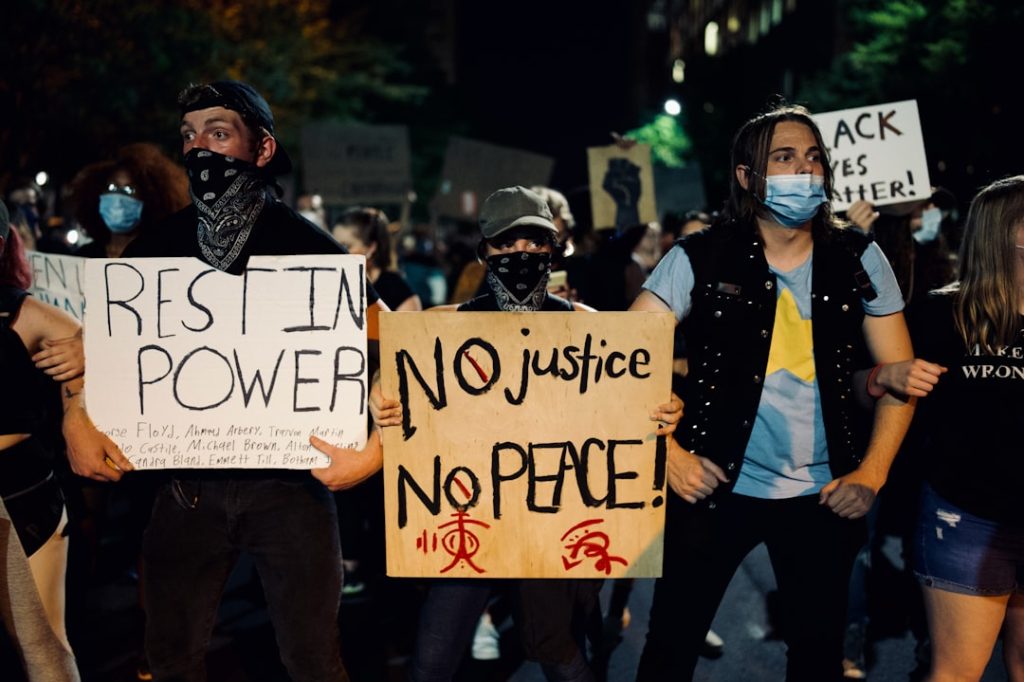
Photo by Keith Helfrich on Unsplash
Stay Connected with Flamr
Don’t forget to follow Flamr on social media!
Relacionado
Discover more from Fyra - Dating App for Progressives
Subscribe to get the latest posts sent to your email.