Love, Liberation, and the Right to Exist: Queer Futures in a Dating-App World
When we talk about LGBTQ+ rights, it’s easy to think in headlines: marriage equality, bathroom bills, drag bans, anti-trans legislation, rainbow-washing every June. But beneath the news cycle is something quieter and more intimate: the simple, radical act of trying to find love and connection in a world that still debates whether you should exist.
A dating app might seem like a small piece of the political puzzle, but it’s actually one of the most personal places where law, culture, and identity collide. Every profile is a tiny declaration: This is who I am. This is what I want. This is what I deserve. For queer and trans people, that declaration has never been purely private. It’s always been about survival, safety, and the right to live openly.
How We Got Here: A Brief History of Queer Visibility
Modern LGBTQ+ rights movements have always been about more than legal recognition; they’ve been about reimagining what love, family, and community can look like. From the Stonewall uprising in 1969 through the AIDS crisis, queer liberation has been built through mutual aid, chosen family, and underground networks of care and connection.
Before apps, queer people found each other in coded ads, bars that risked raids, community centers, campus groups, and classifieds that used euphemisms to dodge censorship. Meeting someone like you was itself a political act—especially when doing so could cost you your job, your housing, or your safety.
The early internet changed that. Message boards, chat rooms, and early dating sites gave LGBTQ+ people new ways to connect beyond geography. For many, the screen was both shield and lifeline: a place to explore identity, flirt, and experiment with language—“bi-curious,” “genderqueer,” “nonbinary”—before saying it out loud.
But this shift didn’t erase risk. Harassment, outing, and discrimination simply followed people online. Queer people had to build their own digital safety practices, from carefully curated usernames to private groups. And even as legal victories like marriage equality arrived in some countries, the backlash intensified elsewhere—especially against trans people, queer youth, and those at the intersections of race, class, disability, and migration.
The Dating App as a Political Space
A dating app is not a neutral tool. It makes choices: what gender options exist, what bodies are centered in images and marketing, how harassment is handled, whether people can filter by race or religion, what names are allowed, how safety is prioritized. All of those choices either reinforce or challenge the systems that shape queer lives.
Some of the most pressing realities for LGBTQ+ people today show up directly in dating spaces:
- Safety and criminalization. In many places, being visibly queer or trans is still criminalized or violently policed. Even where it’s legal, hate crimes and harassment are rising. For trans people, especially trans women of color, the risk of violence is disproportionately high. Dating apps can either amplify that risk—or actively work to reduce it through design, moderation, and safety tools.
- Digital discrimination. Algorithms can replicate offline biases: prioritizing certain bodies, skin tones, or gender expressions; burying others. Filters that allow people to exclude entire races or body types normalize prejudice as “preference.” Queer people with disabilities, fat people, older people, and Black and brown queer folks routinely experience fetishization and exclusion.
- Legal and policy attacks. Anti-trans laws, “Don’t Say Gay” policies, and attacks on gender-affirming care send a clear message: your identity is up for debate. That message doesn’t stop at the legislature; it seeps into culture. It shows up in how people talk to each other on dates, in profiles that mock pronouns, in “no trans” disclaimers, in jokes that aren’t jokes.
- Mental health and belonging. Queer people are more likely to face anxiety, depression, and isolation—not because of who they are, but because of what they experience. Dating apps can intensify those feelings through ghosting, harassment, or endless swiping. But they can also become spaces of affirmation, where people see themselves reflected and desired.
In other words, LGBTQ+ rights aren’t just about court decisions and policy documents. They’re about who gets messaged back. Who is considered “dateable.” Who feels safe enough to use their real name. Who can be out in their profile without fearing consequences at work, at home, or in their community.
Designing for Liberation, Not Just Inclusion
A progressive dating app in 2026 can’t stop at rainbow flags and Pride campaigns. It has to recognize that every design choice either supports or undermines queer liberation. “Inclusion” is the floor, not the ceiling.
Some of the most meaningful shifts aren’t flashy; they’re structural:
- Expansive identity options. Letting people choose their pronouns, describe their gender in their own words, and select multiple sexual orientations isn’t “extra”—it’s basic respect. It tells users: you don’t have to squeeze yourself into a box to belong here.
- Safety by design. Features like easy block/report tools, in-app safety resources, education about consent, and options to control how and where you appear can make a real difference. So can policies that explicitly ban hate speech, misgendering, deadnaming, and discriminatory language.
- Challenging bias. Apps can choose not to offer filters that enable discrimination by race or body type. They can audit algorithms for bias, amplify underrepresented users, and highlight a wider range of bodies, genders, and relationships in their marketing.
- Centering the most vulnerable. When safety and visibility are designed with trans people, migrants, sex workers, disabled users, and people in criminalized contexts in mind, everyone benefits. Queer liberation has always moved forward when those at the margins are centered, not treated as an afterthought.
None of this is simple. There are trade-offs between visibility and safety, privacy and connection, freedom of expression and protection from harm. But naming those tensions is part of the work. A truly progressive platform doesn’t pretend to be neutral; it admits its values and evolves alongside its community.
Queer Futures: Beyond Tolerance, Toward Transformation
It’s easy to feel overwhelmed by the backlash: anti-trans laws, book bans, attacks on drag and gender-affirming care, targeted harassment of queer educators and activists. For many, especially queer youth and trans people, the message from institutions can feel brutally clear: you are the problem.
And yet, the truth on the ground is more complicated—and more hopeful. Younger generations are coming out earlier, using more expansive language for gender and sexuality, and refusing to accept the idea that there is one “normal” way to love or to live. Chosen families are increasingly recognized. Polyamorous and non-monogamous relationships are more visible. Intersex and asexual communities are claiming space and language. Black, Indigenous, and other queer people of color are reclaiming histories that were erased or sidelined in mainstream LGBTQ+ narratives.
Dating apps, for all their flaws, are part of that future. They’re places where:
- A nonbinary person in a small town can find someone who gets it, even if no one in their offline life does.
- A queer immigrant can connect with others who share their language, culture, and experiences of crossing borders.
- A bisexual person can be fully seen without having to argue that they’re “real” enough.
- A trans person can state their pronouns and boundaries upfront, reducing the risk of being treated like a surprise or a secret.
The future of LGBTQ+ rights is not just about being allowed to marry or serve openly or change a marker on a document—though those things matter. It’s about building a world where queer and trans people can explore desire, make mistakes, learn, grow, and love without being punished for existing.
From Swipe to Solidarity: What You Can Do
You don’t have to be an activist or policy expert to be part of queer liberation. The way you show up in your dating life—online and offline—already sends a message about the kind of world you’re helping build.
Some places to start:
- Examine your “preferences.” Ask yourself where they come from. Are they shaped by stereotypes, racism, fatphobia, transmisogyny, or ableism? Desire is real, but it’s not pure; it’s shaped by culture. Being curious about your own patterns is a quiet form of resistance.
- Use language carefully. Put your pronouns in your profile if it feels safe. Normalize asking others for theirs. Avoid jokes or “preferences” that punch down on queer and trans people. Don’t treat anyone’s identity as a curiosity or a debate topic.
- Prioritize consent and safety. Respect boundaries. Don’t out people without their consent. If someone shares that they’re not fully out, take that seriously. Report harassment when you see it, even if you’re not the target.
- Support beyond the app. Show up for local LGBTQ+ organizations, mutual aid funds, and community spaces. Vote in ways that protect trans rights, queer youth, and bodily autonomy. Challenge anti-queer rhetoric in your circles, not just in public posts but in private conversations.
- Practice solidarity, not just acceptance. It’s not enough to “tolerate” queer people. Solidarity means recognizing that your liberation is tied up with theirs—that a world where everyone can live and love freely is better for all of us.
Every profile, every message, every date is a chance to practice the future we say we want: one where queer and trans people don’t have to justify their existence, where love isn’t limited by gender or body or paperwork, where safety is a shared responsibility rather than a private burden.
As you swipe, match, flirt, and connect, take a moment to ask yourself: What kind of world am I rehearsing here? The choices you make—who you see as worthy, how you talk to them, which communities you support—are small, but they’re not insignificant. They’re part of a larger story of love and liberation that’s still being written.
You are in it. You help shape it. And the future of queer rights isn’t somewhere far away; it’s happening right now, in the ways we choose to show up for each other—on this app, and beyond.
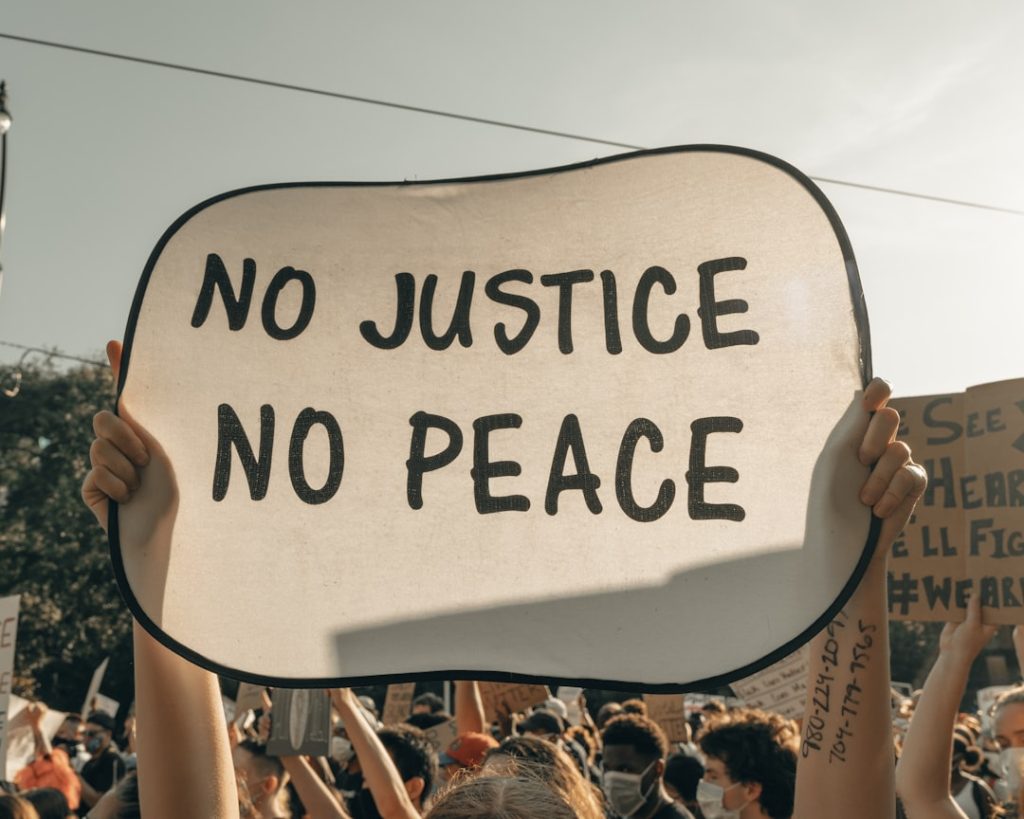
Photo by Clay Banks on Unsplash
Stay Connected with Flamr
Don’t forget to follow Flamr on social media!
Relacionado
Discover more from Fyra - Dating App for Progressives
Subscribe to get the latest posts sent to your email.