
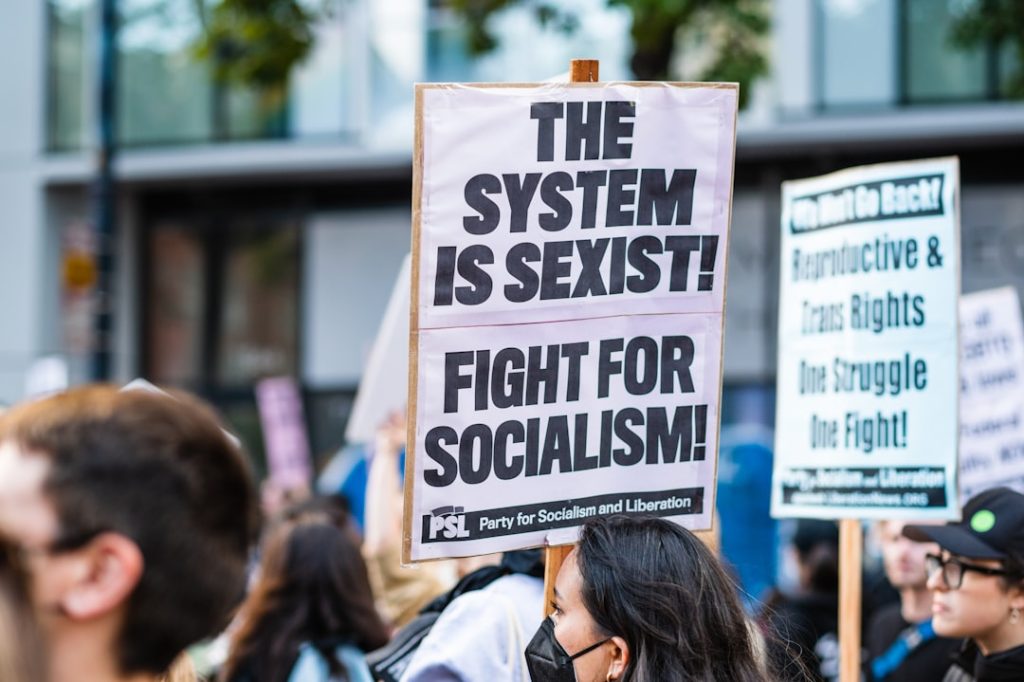
Love, Liberation, and the Fight for Reproductive & Healthcare Justice
Dating apps are usually about meet-cutes, clever prompts, and deciding whether someone’s “two truths and a lie” is actually three lies. But behind every swipe is a body, a mind, and a life shaped by access—or lack of access—to healthcare. If we’re serious about building relationships rooted in care, consent, and mutual respect, we can’t ignore the systems that determine who gets to be healthy, safe, and free.
Healthcare access isn’t just about doctor’s visits and prescriptions. It’s about whether you can decide if and when to have children. Whether you can afford therapy. Whether you can access gender-affirming care. Whether you can get birth control without shame or barriers. Whether your chronic pain is believed. Whether your community has clean air and water. All of this shapes how we show up in love, in sex, and in partnership.
In a world where people are matching across state lines, time zones, and political realities, healthcare justice is not an abstract policy debate. It’s a dating issue. It’s a consent issue. It’s a survival issue. And it’s a love issue.
How We Got Here: A Brief History of Care and Control
The story of healthcare in the United States has always been a story about power—who gets care, who is denied it, and who profits from that denial. Understanding that history helps us see why healthcare access today is so unequal, and why so many people’s intimate lives are shaped by fear, stigma, and scarcity.
A few threads from that history:
- Healthcare as a privilege, not a right. For much of U.S. history, healthcare was treated as a commodity. If you had money, connections, or an employer willing to provide coverage, you had access. If you didn’t, you often went without. Public programs like Medicare and Medicaid were hard-won victories, but they were never universal—and they were shaped by racism, classism, and ableism from the start.
- Reproductive control as a tool of oppression. Black, Indigenous, immigrant, disabled, and poor communities have long faced forced sterilization, coerced birth control, and criminalization of pregnancy outcomes. At the same time, wealthier white women were framed as the “ideal mothers” the state wanted to support. Reproductive freedom has never been evenly distributed.
- Queer and trans exclusion. LGBTQ+ communities have had to fight for recognition in the healthcare system—from the pathologization of queerness and transness, to the HIV/AIDS crisis, to ongoing discrimination in hospitals, clinics, and insurance coverage. Gender-affirming care has often been treated as optional or dangerous, rather than life-saving and essential.
- Mental health in the shadows. For decades, mental health was siloed, stigmatized, or ignored. People were expected to “tough it out,” and seeking help was often seen as weakness or something shameful. Communities of color, in particular, faced both cultural stigma and systemic barriers to care.
This history matters because it reminds us that today’s healthcare landscape—fragmented, unequal, politicized—didn’t happen by accident. It was designed. And anything designed can be redesigned.
Healthcare Access in 2026: The Intimate Impact
The current moment is a paradox: we have more medical knowledge, technology, and language for care than ever before, yet many people are losing access or never had it to begin with. For people navigating dating, sex, and relationships, this shows up in deeply personal ways.
Some realities shaping love and connection today:
- Reproductive rights under attack. Abortion bans and restrictions in many states have created a patchwork of access. Some people are traveling hundreds of miles, taking on debt, or risking criminalization to get care. Others are afraid to disclose pregnancies or miscarriages, even to partners, out of fear of legal consequences. Conversations about sex now carry new layers of risk and calculation.
- Birth control and STI care aren’t guaranteed. Access to affordable contraception, emergency contraception, and STI testing still depends heavily on where you live, your insurance status, and whether you can safely visit a clinic. For many, “just use protection” isn’t simple advice—it’s a logistical and financial challenge.
- Gender-affirming care is politicized. Trans and nonbinary people are facing escalating attacks on gender-affirming care, especially young people. Even adults encounter hostile providers, insurance denials, and travel barriers. This affects not only physical health, but also dating safety, disclosure decisions, and the emotional labor of constantly educating partners.
- Mental health care remains out of reach for many. Therapy and psychiatric care can be expensive, waitlists are long, and culturally competent providers are scarce. Yet mental health profoundly shapes relationships: attachment styles, trauma responses, communication patterns, and the ability to navigate conflict.
- Racial and economic disparities persist. Black, Indigenous, and other people of color still face higher rates of maternal mortality, chronic illness, and medical racism. Low-income communities are more likely to live in “care deserts” with few providers. These inequalities show up in who has the time, energy, and capacity to date, to parent, or to leave unsafe relationships.
For many, healthcare access determines whether they feel safe enough to be intimate at all. It shapes decisions about whether to have sex, whether to disclose a diagnosis, whether to move to a new city for a partner, or whether to consider co-parenting. It influences everything from “What are you looking for?” to “Can we imagine a future together?”
Reimagining Care: What Justice Could Look Like
Even in the midst of backlash and rollbacks, there are powerful movements reimagining what healthcare—and love—could look like when rooted in justice. These visions are not just policy wish lists; they’re blueprints for more caring relationships and communities.
A future grounded in healthcare justice might include:
- Universal, affordable care. A system where primary care, reproductive health, mental health, and gender-affirming care are treated as basic rights—not luxury add-ons. Imagine talking about family planning with a partner without worrying whether either of you can afford prenatal care or abortion care if needed.
- Reproductive justice, not just “choice.” Reproductive justice movements, led by Black women and other women of color, remind us that true freedom means the ability to have children, not have children, and raise children in safe, sustainable communities. That includes paid leave, childcare, housing, and freedom from criminalization.
- Care that affirms all genders and bodies. Healthcare systems that respect people’s names, pronouns, and identities; that provide gender-affirming care without gatekeeping; and that recognize intersex, disabled, fat, and neurodivergent bodies as deserving of care rather than “problems” to fix. In relationships, this means less time explaining your existence and more time building connection.
- Integrated mental health. Normalizing therapy and community-based support as part of basic care. Imagine dating in a world where talking about your therapist is as casual as talking about your workout routine, and where crisis hotlines and mutual aid networks are well-funded and accessible.
- Community care alongside medical care. Mutual aid, harm reduction, peer support, and community health workers are all part of a broader ecosystem of care. When neighbors, friends, and chosen family share resources and knowledge, it becomes easier to leave abusive situations, to support someone through illness, and to build relationships that are not isolated from community.
These shifts aren’t just about “the system.” They’re about the texture of everyday life: whether someone can safely carry a pregnancy, whether a trans partner can access hormones, whether a disabled partner can get the accommodations they need, whether a partner in crisis can get timely mental health support. Justice at the policy level becomes tenderness at the relationship level.
Dating in a Time of Inequality: How We Show Up for Each Other
On a dating app, you might not see someone’s medical history, insurance status, or access to care—but those realities are there, shaping their choices and boundaries. Part of building progressive, compassionate relationships is recognizing that people’s health-related decisions are often constrained by forces far beyond their control.
Some ways we can bring healthcare justice values into our dating lives:
- Normalize honest conversations about health. Talking about STI status, contraception, mental health, or chronic illness doesn’t have to be awkward or stigmatizing. It can be an act of care and respect. Phrases like “What do you need to feel safe and comfortable?” or “How can we make sure we’re both protected?” invite collaboration rather than judgment.
- Respect boundaries shaped by access. If someone says they’re not comfortable with certain kinds of sex, or that they need to move slowly, or that they can’t travel to see you because of medical or financial constraints, believe them. Boundaries often reflect complex calculations about risk, safety, and access—not a lack of interest.
- Challenge stigma in our circles. When friends make jokes about “crazy exes,” stigmatize STIs, or dismiss trans healthcare, we can interrupt that. The stories we tell about health and bodies shape how safe people feel to show up fully in relationships.
- Center consent as ongoing and holistic. Consent isn’t just about “yes” or “no” to sex; it’s about being attuned to each other’s physical and emotional capacities. If someone is dealing with depression, pain, or fear about pregnancy or criminalization, consent conversations need to account for that.
- Practice mutual care, not martyrdom. Caring for a partner who’s navigating health challenges doesn’t mean losing yourself or becoming their only support. It means building networks of care, sharing resources, and recognizing that everyone deserves rest, joy, and pleasure—even in the midst of struggle.
When we bring these values into our dating lives, we’re not just being “good partners.” We’re participating in a broader culture shift—one where care is not a private, individual responsibility but a shared, collective practice.
From Swipe to Solidarity: A Call to Reflection and Action
If you’re reading this on a dating app blog, you’re probably here to find connection—romantic, sexual, or something in between. But connection doesn’t stop at the edge of a match or a chat thread. The same empathy that helps us listen to a partner’s needs can also fuel our engagement with the world beyond our screens.
A few invitations to carry with you:
- Reflect on your own story. How has healthcare access—or lack of it—shaped your dating life, your sexuality, your decisions about family, your mental health? What privileges or barriers have you experienced? What conversations have you avoided, and which ones are you ready to have now?
- Listen to those most impacted. Follow organizers, storytellers, and advocates working on reproductive justice, trans healthcare, disability justice, and mental health access. Let their perspectives expand your understanding of what “healthcare” means.
- Support local and national efforts. That might look like donating to abortion funds, volunteering with mutual aid networks, voting for candidates who support universal healthcare and reproductive rights, or showing up at rallies and town halls. Policy changes may feel distant, but they directly affect the lives of the people you date, love, and befriend.
- Bring care into every interaction. Whether you’re sending a first message, navigating a situationship, or building a long-term partnership, ask: How can I make this interaction a little more compassionate, a little more honest, a little more rooted in justice?
Healthcare justice isn’t just about hospitals and laws; it’s about the kind of world we’re building together. A world where no one has to choose between love and safety. Where no one has to hide their body, their diagnosis, or their identity to be worthy of care. Where intimacy is not a gamble with your health, but a space of mutual protection and possibility.
As you swipe, chat, flirt, and fall—online or offline—consider this an invitation: let your search for connection be part of a larger commitment to care. The future of love is inseparable from the future of healthcare. And we have the power, together, to make both more just, more tender, and more free.
Photo by Patrick Perkins on Unsplash
Stay Connected with Flamr
Don’t forget to follow Flamr on social media!
Relacionado
Discover more from Fyra - Dating App for Progressives
Subscribe to get the latest posts sent to your email.