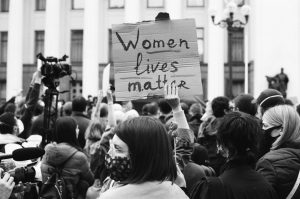
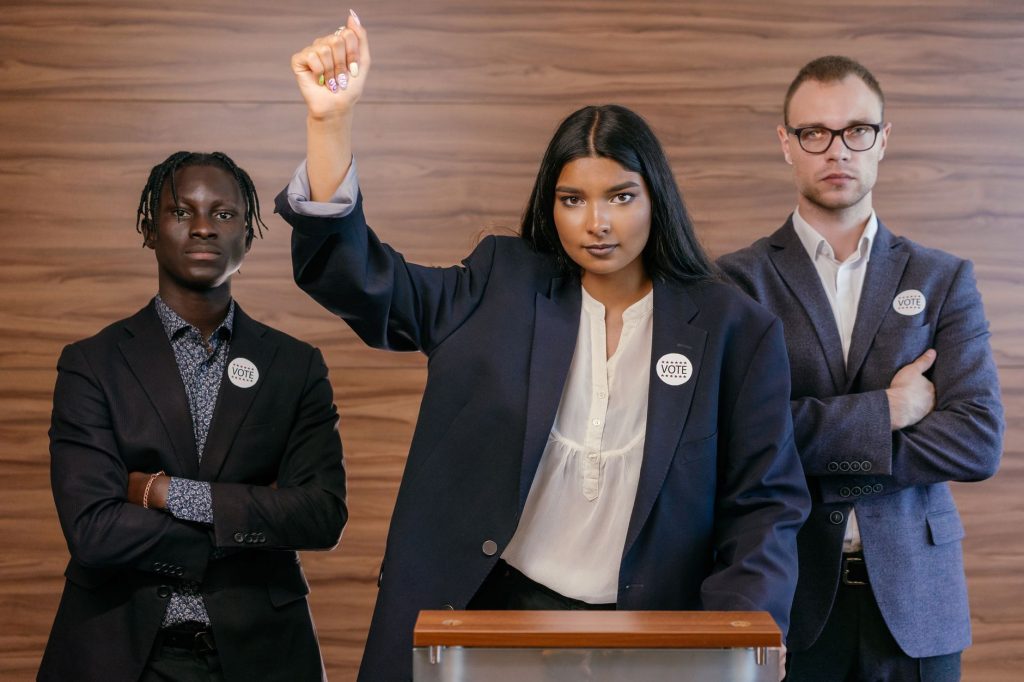
Across the United States, as far-right and conservative movements gain ground in national politics, a growing number of women — inside and outside elected office — have positioned themselves as central figures in the resistance to that advance.
Inside Congress and statehouses: direct confrontation
Alexandria Ocasio-Cortez (D-NY) remains one of the most visible progressive voices in Congress, using her platform to challenge the Trump administration’s agenda on immigration enforcement, economic policy, and reproductive rights, while also becoming a frequent target of right-wing media attacks — attacks that have, if anything, kept her in the center of the national conversation.
Rep. Jasmine Crockett (D-TX) has emerged as another prominent figure, known for sharp exchanges with Republican colleagues in committee hearings and a communication style that has made her a rallying point for younger, more combative Democratic messaging heading into the 2026 midterms.
At the state and executive level, Gov. Kathy Hochul (D-NY), the first woman to lead New York State, has pushed forward progressive priorities such as codifying abortion access and expanding childcare programs, while calling for accountability from Trump administration officials. Meanwhile, Deb Haaland, former congresswoman and Interior Secretary, is now running for governor of New Mexico, campaigning on healthcare access and pushing back publicly against ICE operations in her state.
Women are also driving competitive Senate races seen as pivotal to shifting the chamber’s balance of power. Mary Peltola, the first woman and first Alaska Native to represent Alaska in Congress, is running for Senate in a traditionally red state, backed in part by fundraising support from Ocasio-Cortez. In Maine, Gov. Janet Mills has taken a leading role in her state’s Senate primary fight, positioning herself against the party’s more controversial contenders.
Outside the parties: organizers and movement leaders
Much of the resistance in the U.S. is built outside electoral politics, through grassroots organizing and advocacy networks. Tarana Burke, founder of the Me Too movement, continues to lead national conversations on gender-based violence and accountability. Alicia Garza, co-founder of Black Lives Matter, has extended her organizing work into voter mobilization and economic justice campaigns that directly counter far-right narratives on race and policing. Ai-jen Poo, president of the National Domestic Workers Alliance, has become a leading voice for care-economy workers, a constituency frequently overlooked in mainstream political debates but central to the fight against austerity-driven conservative policy.
Stacey Abrams, though not currently holding elected office, remains one of the most influential non-party figures in this space, having built one of the country’s most effective voter-registration and voting-rights infrastructures through organizations like Fair Fight Action — a direct response to the wave of restrictive voting laws advanced by conservative state legislatures.
A battle over representation, too
The American far right has also cultivated its own female messengers, from media personalities to elected officials, using them to soften and broaden the appeal of policies on immigration, gender, and reproductive rights. This underscores that the fight over who speaks for women in U.S. politics is contested from multiple directions, not just one.
An open contest
With the 2026 midterms approaching and control of Congress in play, women on the progressive flank — both in office and in movement leadership — are positioning themselves at the center of the resistance to the far right’s advance, even as internal debates within the Democratic Party over strategy and messaging continue to unfold.
Don’t forget to follow Fyra on social media!
Relacionado
Discover more from Fyra - Dating App for Progressives
Subscribe to get the latest posts sent to your email.