
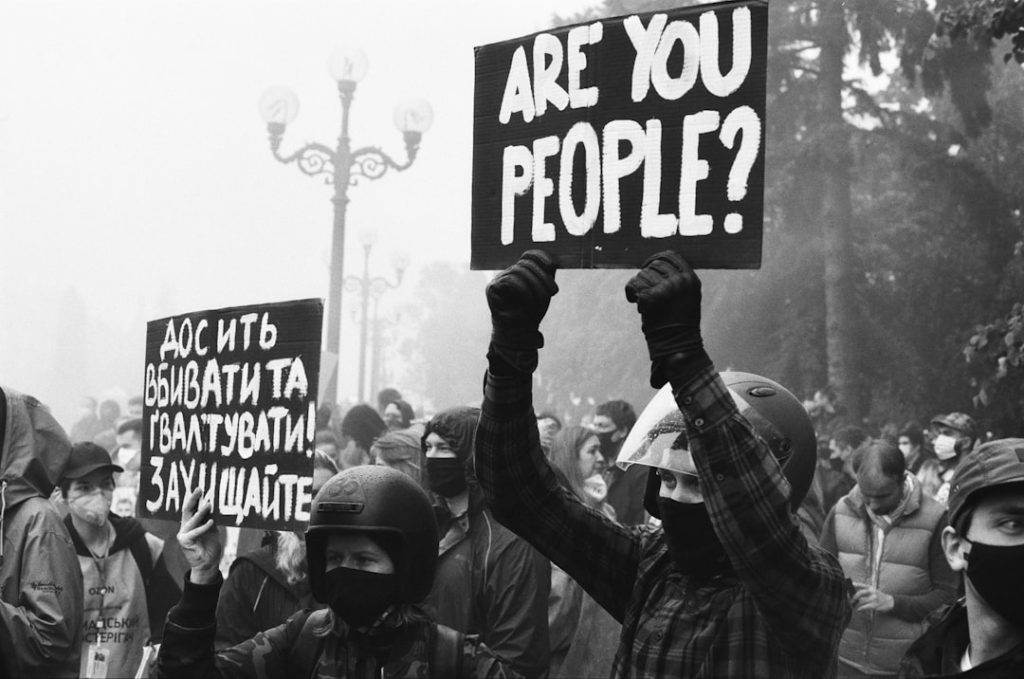
As protests against AI surveillance spread across the country, one company has quietly stepped up its political spending — and not in the direction protesters might hope.
Flock Safety, the fast-growing firm behind automated license plate readers and networked AI-powered cameras, is sharply increasing donations to powerful organizations representing mayors and governors, according to new reporting from The Intercept. At the very moment communities are organizing to limit or ban these systems, Flock is pouring money into the associations of the very officials who control many of its contracts.
This matters because it’s not just a story about one tech company. It’s a snapshot of how corporate power, AI surveillance, and political influence are converging at the local level — often far from public scrutiny. What’s being decided right now will shape who gets watched, who gets stopped, and whose data is collected and stored in the name of “public safety” for years to come.
—
1. The rise of Flock and the backlash against AI cameras
Over the last few years, Flock Safety has become a dominant player in local surveillance. Its systems — often sold as “crime-fighting technology” — are now installed in thousands of cities, suburbs, and neighborhoods across the United States. The cameras capture license plates and sometimes other vehicle details, then run them through databases to flag “suspicious” cars, track movements, and share data across jurisdictions.
Key points about Flock’s model and reach:
– Local contracts, national network: Flock’s cameras are typically purchased or approved by city councils, police departments, mayors, or county governments. But once installed, they feed into a much larger, often regional or national, data-sharing network.
– AI and automation: The system automates what used to be manual police work — scanning plates, logging locations, generating alerts. That automation magnifies both the reach and the risks of surveillance.
– Minimal transparency and oversight: Many communities have discovered Flock cameras only after they’re already in place. Contracts are often approved with limited debate, vague privacy protections, and little public understanding of how long data is stored or who can access it.
In response, communities around the country have begun to push back:
– Civil rights groups warn that AI-powered surveillance amplifies racial profiling, enables dragnet monitoring of entire neighborhoods, and creates massive databases ripe for abuse.
– Local activists have organized to block new contracts, demand public hearings, and push for bans or moratoriums on automated license plate readers and other AI surveillance tools.
– Some cities have passed or proposed surveillance oversight laws requiring public disclosure, impact assessments, and council approval before adopting new technologies.
It’s against this backdrop of growing public resistance that Flock’s political donations are surging.
—
2. Flock’s donations to mayors’ and governors’ groups
According to The Intercept, Flock Safety has dramatically increased its giving to influential organizations that represent local and state executives — groups like associations of mayors and governors that wield considerable soft power over policy direction and procurement norms.
Why these groups matter:
– They shape the “common sense” of local governance. These associations host conferences, panels, and policy discussions where “best practices” get defined. If Flock is a sponsor or major donor, it gets access to decision-makers and a chance to frame its technology as inevitable, modern, and necessary.
– They influence procurement and policy trends. When a mayors’ or governors’ group endorses a particular approach to “smart cities” or “public safety,” that often translates into real contracts and budgets back home.
– They operate with little public oversight. These organizations aren’t directly accountable to voters. Their funding, events, and behind-the-scenes lobbying can shape policy without the transparency that applies to formal government processes.
The timing is crucial. As protests against AI cameras grow louder, Flock is investing in the very networks that can help it maintain and expand its foothold — even when local residents are demanding the opposite.
—
3. A progressive analysis: corporate power meets AI policing
From a progressive perspective, this isn’t just about campaign finance or one company’s lobbying strategy. It’s about how structural power is being reconfigured in the age of AI.
A. Privatized surveillance, public consequences
Flock’s cameras blur the line between public and private power. A private company installs and maintains the system, but law enforcement uses it, and the public lives under it. That creates several problems:
– Democratic accountability is weakened. Companies are not subject to the same transparency, open records requirements, or public oversight as government agencies.
– Profit motives shape policing. The incentive is to sell more cameras, expand data-sharing, and normalize constant surveillance — not to shrink the footprint of policing or address root causes of harm.
– Communities bear the risks. If data is mishandled, misused, or breached, it’s residents — especially marginalized ones — who pay the price.
B. AI surveillance amplifies existing inequalities
AI-powered systems do not emerge in a vacuum. They operate in a context of racialized policing, economic inequality, and criminalization of poverty.
– Over-policed communities become over-surveilled communities. Flock cameras are often concentrated in neighborhoods already subject to heavy police presence, turning them into data-rich zones for enforcement and monitoring.
– Mistakes are not neutral. False alerts or misidentifications can lead to stops, searches, and arrests that disproportionately impact Black, Brown, and low-income residents.
– Data can be repurposed. Even if cameras are marketed as tools against “serious crime,” the data they collect can later be used to track protest activity, target immigrants, or assist in abortion-related investigations where reproductive rights are criminalized.
C. Money as a shield against public backlash
Flock’s donations to mayors’ and governors’ groups are part of a broader pattern: when people push back against harmful technologies, corporations respond by tightening their political relationships.
Instead of responding to community concerns with transparency, independent audits, or stronger safeguards, Flock is:
– Investing in elite access rather than bottom-up accountability.
– Influencing the policy environment where surveillance is framed as innovation and dissent is dismissed as “anti-tech” or “soft on crime.”
– Creating a buffer between public anger and actual decision-makers, by embedding itself in the networks that shape local leaders’ agendas.
This is how corporate capture works in the AI era: not just through direct lobbying, but through sponsorships, conferences, policy “partnerships,” and donations that normalize a particular vision of the future — one where constant data collection is the default.
—
4. What’s at stake for social justice and progressive values
For progressives, the Flock story is a clear warning sign about the direction of “smart city” and “public safety” policy.
Civil liberties and the right to dissent
Ubiquitous cameras and license plate readers don’t just track “criminals”; they track everyone. That has chilling effects:
– People may think twice before attending protests, visiting a clinic, or meeting with organizers if they know their movements are logged and searchable.
– Police and other agencies can quietly build dossiers on activists, journalists, and community leaders, using routine data collected by “neutral” infrastructure.
A society where you can’t move freely without being tracked is fundamentally incompatible with robust democratic participation.
Racial justice and policing
Flock’s technology plugs directly into policing systems that already produce racial disparities. Without strong safeguards and democratic control, AI surveillance:
– Reinforces and automates biased patterns of enforcement.
– Makes it harder to roll back over-policing, because the “data” now seems to justify more patrols and more surveillance in certain neighborhoods.
– Risks becoming a permanent infrastructure of racialized control, even if political leadership changes.
Economic justice and corporate power
Flock’s donation strategy highlights how tech firms are shaping public policy in ways that prioritize profit over community needs:
– Public money that could go to housing, mental health care, violence interruption programs, or youth services is instead spent on surveillance hardware and software.
– Tech companies gain long-term revenue streams and proprietary control over critical infrastructure, while the public takes on the risk and dependency.
Progressive values demand that public safety be defined by community well-being, not by how efficiently we can track and flag people’s movements.
—
5. What people can do — and how to stay informed
This isn’t inevitable. Communities have already shown that organized resistance can slow or stop harmful surveillance projects. Here are concrete steps:
At the local level
1. Find out if your city or county uses Flock or similar systems.
– Check city council agendas, police department websites, or local news.
– File public records requests if necessary.
2. Push for surveillance oversight laws.
– Advocate for ordinances that require:
– Public notice and hearings before adopting new surveillance tech.
– Detailed surveillance impact reports.
– Independent audits and strict data retention limits.
– Regular renewal votes instead of open-ended contracts.
3. Organize with local coalitions.
– Join or support groups working on civil liberties, racial justice, or police accountability.
– Connect the fight against AI cameras to broader campaigns on policing, housing, and public investment.
4. Demand transparency from mayors and governors.
– Ask your mayor’s or governor’s office whether they or their associations receive donations or sponsorships from Flock or similar companies.
– Push them to adopt policies rejecting corporate money that conflicts with community safety and civil rights.
At the national and movement level
1. Support organizations challenging surveillance.
Groups like the ACLU, Electronic Frontier Foundation (EFF), Fight for the Future, and local grassroots coalitions are tracking these developments and fighting back.
2. Connect AI surveillance to broader tech justice work.
– Campaigns on facial recognition bans, data privacy, and algorithmic accountability are all part of the same struggle.
3. Stay informed and share information.
– Read investigative reporting like The Intercept’s coverage.
– Share stories in your networks so people understand that “smart” cameras are not neutral gadgets — they’re political choices.
—
The story of Flock’s surging donations to mayors’ and governors’ groups is a reminder that the future of AI and policing is being negotiated right now, often behind closed doors. Progressives have a crucial role to play in insisting that public safety be rooted in justice, not surveillance — and that decisions about powerful technologies be made by informed communities, not shaped by corporate checks.
You can read the full investigation here:
https://theintercept.com/2026/09/04/flock-camera-surveillance-protest-donations/
Photo by Rad Pozniakov on Unsplash
Relacionado
Discover more from Fyra - Dating App for Progressives
Subscribe to get the latest posts sent to your email.