
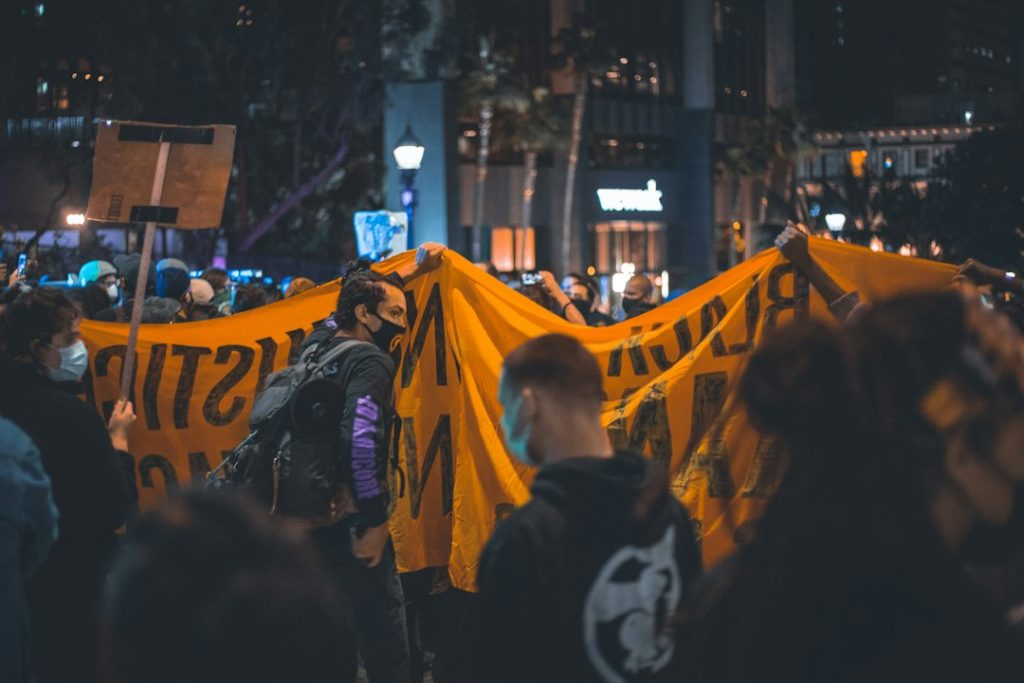
When a city government refuses to release basic police records about a protest, it’s not just a bureaucratic dispute—it’s a test of whether the public has any real power to hold law enforcement accountable. That’s what’s at stake in The Intercept’s newly filed lawsuit against a Texas city over its refusal to disclose police records related to a protest at the Prairieland immigrant detention center.
In an era of mass surveillance, militarized policing, and expanding immigration enforcement, the fight over public records might sound technical. But transparency is the bedrock of democracy. When officials can simply stonewall, they can conceal abuses, retaliatory policing, and coordination with federal agencies like ICE—all without public scrutiny. As one expert quoted in the story put it, this case is “stonewalling on steroids.”
This isn’t just about journalists getting documents. It’s about whether communities have the right to know what their government does in their name—and against their neighbors.
—
Background: What’s Happening in Prairieland and Why Records Matter
The Intercept’s report centers on a protest at the Prairieland immigrant detention facility in Texas, a site tied to the broader infrastructure of ICE detention and deportation. Advocates and community members have been protesting conditions in detention centers for years—lack of medical care, abusive treatment, solitary confinement, and deaths in custody. Prairieland is part of that system.
Following one such protest, The Intercept filed public records requests with the local police department and city government to understand:
– How law enforcement responded to the protest
– Whether police coordinated with ICE or private prison contractors
– What tactics were used—surveillance, arrests, crowd control, or intimidation
– Whether protesters were targeted for their political activity
Instead of complying with basic transparency obligations, the city allegedly refused to release key records, dragging out the process and effectively blocking public access. The Intercept has now sued to force disclosure.
Public records laws (often called Freedom of Information or FOI laws) exist precisely so journalists, advocates, and ordinary residents can see how government agencies operate. These laws are supposed to be straightforward: you request records, the agency responds within a set timeframe, and either releases the documents or cites specific legal exemptions.
But in practice, especially around policing and immigration enforcement, agencies routinely slow-walk, over-redact, or outright deny access. That’s what’s happening here—and The Intercept’s lawsuit is an attempt to push back.
—
Progressive Analysis: Stonewalling as a Political Strategy
From a progressive perspective, this case is about more than administrative non-compliance. It’s about power.
1. Policing and Immigration Are Shielded From Scrutiny
When protests target powerful institutions—ICE, private prison companies, police departments—those institutions have strong incentives to hide their response. Records could reveal:
– Targeting of specific activists or organizations
– Collaboration between local police and federal immigration authorities
– Use of surveillance technologies (drones, license plate readers, social media monitoring)
– Unlawful or heavy-handed crowd control tactics
These are precisely the kinds of details that can fuel public outrage, lawsuits, and policy reforms. Stonewalling public records is a way to prevent that chain reaction.
2. Transparency Laws Are Only as Strong as Enforcement
Texas, like many states, has public records laws on the books. But when agencies ignore them, the burden shifts to journalists and advocates to sue—a costly, time-consuming process.
That dynamic favors secrecy. Wealthy institutions can delay and obstruct; underfunded newsrooms and grassroots groups have to spend limited resources just to get information that should be public by default. Over time, this undermines the very idea of public oversight.
The Intercept’s willingness to litigate is important, but it also underscores a structural problem: transparency depends on adversarial pushback, not on a culture of openness.
3. Retaliation Against Dissent Is Easier When Records Stay Hidden
Protests against detention centers and police violence are often met with subtle forms of retaliation:
– Increased surveillance of organizers
– Selective enforcement of minor infractions
– Pressure on landlords, employers, or campus administrators
– “Intelligence” files tracking activists and organizations
Without access to records, it’s extremely difficult to prove these patterns or challenge them in court. Stonewalling keeps activists in the dark about how they’re being monitored or targeted. It chills dissent by making the risks less visible but no less real.
—
Why This Matters for Social Justice and Progressive Values
Progressive movements—from immigrant rights to racial justice to climate activism—depend on the ability to expose wrongdoing and demand accountability. Public records are one of the few tools that don’t require special access or insider status. Anyone can file a request; anyone can learn what their government is doing.
This case in Texas matters for several core reasons:
1. Immigrant Justice Requires Seeing the System Clearly
Detention centers like Prairieland don’t exist in a vacuum. They’re part of a network of local governments, private contractors, and federal agencies. Understanding how local police interact with ICE at protests is critical for:
– Protecting organizers from harassment and criminalization
– Documenting rights violations at and around detention facilities
– Building campaigns to end local cooperation with immigration enforcement
When records are withheld, immigrant communities and their allies lose a crucial line of sight into how the deportation machine operates at the local level.
2. Police Accountability Depends on Public Access
After years of organizing against police violence, many cities have adopted reforms: body cameras, civilian oversight boards, public complaint databases. But these mechanisms are only meaningful if people can access the information needed to challenge police narratives.
If a city can simply refuse to release protest-related records, then:
– Body camera footage can be effectively hidden
– Use-of-force reports can be kept out of public view
– Internal communications about protest response can remain secret
That undermines every effort to democratize policing. Accountability without transparency is a hollow promise.
3. Journalism Is a Public Good, Not a Private Battle
This lawsuit is being filed by The Intercept, but its outcome affects much more than one newsroom. When courts allow broad stonewalling, they set precedents that weaken transparency for everyone.
Conversely, when judges affirm the public’s right to records, they strengthen the ability of:
– Local papers to investigate city governments
– Community groups to monitor police behavior
– Researchers to document systemic abuses
Progressive values depend on a robust information ecosystem. Attacks on transparency are, indirectly, attacks on social movements that rely on facts to challenge power.
—
What You Can Do and How to Stay Informed
You don’t need to be a lawyer or a journalist to play a role in defending transparency and accountability. Here are concrete steps:
1. Follow and Share Reporting on Prairieland and Similar Cases
– Read The Intercept’s coverage of the lawsuit and the Prairieland protest.
– Share the story with friends, on social media, and within activist networks.
– Use it as a case study in discussions about local policing and immigration enforcement.
Visibility matters. Public pressure can shape how courts and officials respond.
2. Support Independent Investigative Journalism
Outlets like The Intercept take on resource-intensive fights—legal challenges, deep investigations, long-term coverage of complex systems. Supporting them (and other independent outlets) is a tangible way to strengthen the infrastructure of accountability.
Consider:
– Subscribing or becoming a member
– Donating if you’re able
– Amplifying their work in your community and organizations
3. Learn Your Local Public Records Laws
Every state has some form of open records law. You can:
– Look up your state’s public records statute and basic request procedures
– File requests about local issues—police budgets, surveillance tools, contracts with ICE or private prisons
– Work with local advocacy groups to coordinate record requests and share findings
Democratizing the use of public records turns transparency from a niche legal tool into a community practice.
4. Connect With Immigrant Justice and Police Accountability Groups
Local and national organizations are already fighting the systems that Prairieland represents. You can:
– Attend meetings or trainings about protest rights and police interactions
– Volunteer skills—research, translation, outreach, legal support
– Join campaigns to end local cooperation with ICE or to strengthen civilian oversight of police
These groups often rely on records to build their cases. Your involvement helps turn information into action.
5. Watch for Retaliatory Secrecy in Your Own Community
The dynamics in Texas are not unique. Any time:
– A protest is met with aggressive policing
– A controversial project (pipeline, jail, surveillance program) faces public opposition
– Officials suddenly “lose” records or deny routine requests
It’s a warning sign that transparency is being weaponized to protect power. Document these patterns. Talk to local reporters. Consider collective strategies—public campaigns, legal clinics, or partnerships with civil liberties organizations.
—
The fight over records from the Prairieland protest is about more than one lawsuit. It’s about whether the public has the right to know how power is wielded against those who dare to dissent—especially immigrants, activists, and marginalized communities.
If stonewalling becomes the norm, abuses can flourish in the dark. If transparency is enforced, it becomes possible to challenge those abuses, build solidarity, and imagine something better than a system of detention and repression.
Staying informed, supporting investigative journalism, and demanding openness from local governments are not side issues—they’re central to any serious progressive project.
Read the original Intercept article here:
https://theintercept.com/2026/09/29/intercept-sues-police-prairieland-ice-public-records/
Photo by Craig Marolf on Unsplash
Relacionado
Discover more from Fyra - Dating App for Progressives
Subscribe to get the latest posts sent to your email.