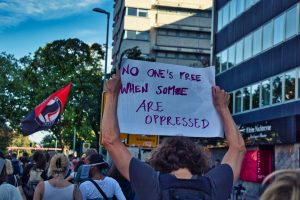
If you’re progressive, dating can feel…complicated.
You care about justice, equity, climate, bodily autonomy, LGBTQ+ rights, racial justice, workers’ rights, and more. You’re not just looking for someone who’s “nice” or “fun.” You want a partner whose values align with yours—or at least don’t clash with them so hard that every dinner turns into a debate about basic human rights.
The good news: you don’t have to choose between your values and your love life. You can date in a way that’s intentional, values-driven, and still fun.
Let’s walk through how.
—
1. Start With Your Core Values (and Be Honest About Them)
Before you worry about apps or first dates, get clear on what actually matters to you.
Ask yourself:
– What issues are non-negotiable for me? (e.g., reproductive rights, LGBTQ+ rights, racial justice)
– Where am I open to difference? (e.g., different views on tax policy, specific strategies for change)
– What does “progressive” mean in my daily life? (e.g., do I organize, donate, protest, vote, volunteer?)
Write down:
– 3–5 core values (e.g., equity, consent, environmental stewardship, anti-racism, mutual care)
– 2–3 “dealbreakers” (e.g., they’re anti-trans, dismissive of systemic racism, or hostile to feminism)
– 2–3 “nice-to-haves” (e.g., they also volunteer, they’re vegan, they read political theory)
This exercise helps you:
– Avoid vague “vibes” and get specific.
– Recognize when someone is actually incompatible vs. just different.
– Communicate more clearly when you start dating.
Example:
If reproductive rights are a hard line for you, that’s important to know before you invest in someone who thinks abortion should be illegal. That’s not just a “difference of opinion”—it’s a fundamental mismatch in values.
—
2. Find Like-Minded People on Purpose
You don’t have to rely solely on luck and dating apps. You can intentionally move in spaces where your values are shared.
Offline spaces
Consider:
– Local mutual aid groups
– Tenant unions or labor organizing spaces
– Climate or environmental groups
– Racial justice organizations
– LGBTQ+ community centers or events
– Progressive faith communities
– Political campaigns or voter registration drives
– Book clubs focusing on social justice or progressive literature
You’re not joining just to date—but these spaces naturally attract people who care about similar things. Shared context makes conversations easier and deeper from the start.
Action step:
Pick one cause you already care about and commit to attending 3 events or meetings over the next month. Go in with the mindset: “I’m here to contribute and connect,” not “I must find a partner tonight.”
Online spaces
If in-person options are limited:
– Join online communities (Discord servers, subreddits, Mastodon instances, Facebook groups, etc.) centered on progressive causes.
– Look for dating apps where you can filter by politics or values.
– Use profiles to signal your values clearly (more on that next).
—
3. Use Your Dating Profile as a Values Filter
Your profile is your first line of defense against major mismatches. Use it to attract the right people and gently repel the wrong ones.
Be explicit, not vague
Instead of:
– “I’m very open-minded.”
– “I hate injustice.”
– “No bigots.”
Try:
– “Politically left, pro-LGBTQ+, pro-choice, anti-racist—if that offends you, we’re not a match.”
– “Active in climate justice and mutual aid. Looking for someone who cares about community and equity.”
– “If you think ‘woke’ is an insult, we’re not going to get along.”
This saves everyone time and emotional energy.
Show, don’t just tell
Include:
– A photo at a march, rally, or community event (if safe and comfortable).
– Interests like: “Organizing with my tenants’ union,” “volunteering at a local shelter,” or “reading about abolitionist frameworks.”
– Prompts that reveal your values, e.g.:
– “A cause I care deeply about…”
– “On a typical weekend, you’ll find me…”
– “I’m a nerd about…”
Action step:
Rewrite one section of your profile to clearly reflect your values and one non-negotiable. Read it out loud. Does it sound like you? Adjust until it does.
—
4. Talk About Values Early (Without Making It an Interrogation)
You don’t need to grill someone like it’s a Senate hearing, but you also don’t have to wait until you’re emotionally invested to find out they think “systemic racism isn’t real.”
Gentle, real questions
On early dates, try:
– “How do you usually stay informed about what’s happening in the world?”
– “Are there any causes or issues you care a lot about?”
– “How do you feel about going to protests or community events?”
– “What does being a good community member mean to you?”
Pay attention not just to their answers, but to:
– Whether they’re dismissive of marginalized people.
– Whether they mock “social justice warriors” or “woke people.”
– Whether they get defensive when you mention your activism.
Watch for subtle red flags
Examples:
– “I don’t really believe in labels; I just treat everyone the same” (often used to dodge conversations about race, gender, etc.).
– “Politics doesn’t matter in relationships” (translation: “I don’t want to be accountable for my beliefs.”).
– “I’m socially liberal but fiscally conservative” (not always a dealbreaker, but worth exploring what that actually means to them).
Action step:
Pick 2–3 values-based questions you feel comfortable asking on a first or second date. Practice saying them so they feel natural.
—
5. Communicate With Empathy and Boundaries
Being progressive doesn’t mean you’re obligated to endlessly educate or debate. You can be compassionate and still have firm boundaries.
Use “I” statements
Instead of:
– “You’re being sexist.”
– “You’re so ignorant.”
Try:
– “When I hear comments like that, it feels dismissive of women’s experiences.”
– “I’m not comfortable with jokes that punch down on marginalized people.”
This keeps the focus on your feelings and values, not their character—while still drawing a clear line.
Set limits on emotional labor
Some people will expect you to be their personal political tutor. You can say:
– “I’m glad you’re curious. I’m happy to share a couple of resources, but I’m not in a place to be your main teacher on this.”
– “I don’t have the bandwidth to explain this right now; I recommend [book/podcast/article].”
If they respond with guilt-tripping, anger, or entitlement, that’s data about their character.
—
6. Navigating Value Differences: What’s Flexible vs. Non-Negotiable?
You don’t need to agree on everything. But some differences are more workable than others.
Potentially workable differences
– They’re less politically engaged but supportive of your involvement.
– They’re still learning and open to growth.
– They’re unsure about specific policies but clearly care about harm reduction and equity.
– They’re introverted and don’t love protests but support you going.
Often non-negotiable differences
– They deny the humanity or rights of marginalized groups.
– They mock or belittle your activism or your communities.
– They refuse to examine privilege or systemic issues.
– They see your values as “a phase” or “too much.”
Example:
If your partner doesn’t want to attend rallies because crowds overwhelm them, that’s a logistical difference. If they say, “Protests are stupid, those people should get jobs,” that’s a values clash.
Action step:
Write down one example of a value difference you could live with, and one that would be a dealbreaker. Keep this in mind as you date.
—
7. Bring Your Whole Self—But Pace the Vulnerability
Authenticity doesn’t mean trauma-dumping on the first date or giving someone your entire political manifesto over drinks.
Start real, not performative
You can be:
– Honest: “I spend a lot of time on community work; it’s important to me.”
– Human: “I care about this stuff, but I also love trashy TV and long walks with iced coffee.”
You’re allowed to be complex. Being progressive doesn’t mean you can’t enjoy light, joyful things. In fact, joy and rest are part of sustainable activism—and healthy relationships.
Share in layers
– First few dates: general values, how you see the world, what matters to you.
– As trust builds: your experiences with oppression or activism burnout, deeper fears and hopes.
– Always: your boundaries, needs, and expectations.
—
8. Practice Consent and Mutual Care—Beyond the Bedroom
Progressive dating isn’t just about politics; it’s about how you treat each other.
Model the values you care about
– Ask for consent—not just sexually, but emotionally: “Is it okay if I ask you something more personal?”
– Respect boundaries: If they say they’re not ready to talk about something, believe them.
– Share emotional labor: Ask how they’re doing, not just vent about your own stress.
– Consider access needs: Ask about sensory issues, mobility, mental health, and plan dates accordingly.
Example:
Instead of assuming everyone loves loud bars, you might say: “Would you prefer a quiet coffee shop or a park walk? I want to make sure you’re comfortable.”
—
9. Don’t Lose Yourself in the Struggle (Or the Relationship)
Progressive people often carry a lot: news cycles, community stress, personal experiences of oppression. It’s easy to burn out or make your relationship another site of constant political work.
Protect your energy
– Limit doomscrolling before dates so you’re not emotionally flooded.
– Build in rest and joy that aren’t “productive.”
– Notice if you’re slipping into “therapist/organizer” mode with every partner.
Remember: you deserve pleasure and care
You’re allowed to have:
– Silly dates.
– Inside jokes.
– Romance that isn’t a political strategy meeting.
A relationship that aligns with your values will feel like a place of support and refuge, not just another battlefield.
—
10. Trust Your Gut—and Be Willing to Walk Away
If something feels off, pay attention. You’re not “too picky” for wanting someone who respects your values and your communities.
Red flags to trust:
– You feel smaller, quieter, or less safe when you talk about what matters to you.
– They constantly minimize your concerns or call you “too sensitive” or “dramatic.”
– You leave interactions feeling drained, ashamed, or doubting your reality.
You’re allowed to say:
– “I don’t think we’re compatible.”
– “Our values are too different for this to work.”
– “I’m looking for something that feels more aligned.”
—
Final Thought
Dating as a progressive isn’t about finding someone who agrees with you on every policy position. It’s about finding someone who:
– Respects human dignity.
– Is open to growth and accountability.
– Supports your commitments to justice and care.
– Wants to build something rooted in mutual respect, consent, and compassion.
You don’t have to compromise your values to find love. In fact, the more you stand in them, the more likely you are to attract someone who truly gets you.
Start with clarity. Lead with honesty. Protect your energy. And remember: your values aren’t baggage—they’re the blueprint for the kind of relationship you deserve.
Relacionado
Discover more from Fyra - Dating App for Progressives
Subscribe to get the latest posts sent to your email.