
I’ve been thinking a lot lately about how quietly we’re shaped by the systems we move through—and how easy it is to mistake comfort for correctness.
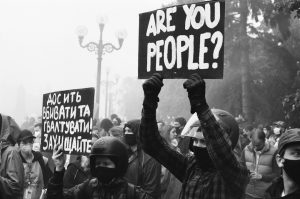
It’s August 2026. We’ve lived through a pandemic, uprisings for racial justice, accelerating climate crises, attacks on trans rights, waves of misinformation, and a constant tug-of-war over whose lives are deemed “worth protecting.” Amid all of this, one word keeps coming back to me: solidarity.
Not the thin, hashtag kind. The kind that costs something. The kind that asks us to move from “I care” to “I’m accountable.”
I want to explore what that means in a grounded, personal way—not as a slogan, but as a practice we can actually live.
—
When “Good Intentions” Aren’t Enough
Years ago, I was in a meeting where a colleague—one of the few Black women in the organization—raised concerns about how decisions were being made without input from staff of color. She spoke calmly, clearly, and with specific examples.
I remember feeling defensive.
My inner monologue went something like: “But I’m one of the good ones. I care. I’m not racist. We’re all doing our best. Isn’t that enough?”
Instead of listening fully, I mentally drafted counterarguments: explanations, context, “not all of us,” “we’re trying.” I didn’t say most of it out loud, but the energy was there. I could feel myself pulling away from her experience and back toward my own comfort.
Later, I realized something that still stings: in that moment, I was more invested in protecting my self-image than in understanding her reality.
That’s the trap of “good intentions”—they can become a shield against accountability.
Solidarity asks for something different. It asks: What if you believed her first? What if you treated her experience as more important than your need to feel like a good person?
That was one of my earliest, clearest lessons in the difference between wanting to be seen as “kind” or “progressive,” and actually showing up in solidarity.
—
Solidarity vs. Sympathy
Sympathy says: “I feel bad for you.”
Solidarity says: “Your struggle is tied up with mine. Your liberation is bound up with my own. I’m willing to take risks with you and for you.”
Sympathy can stay at a distance. It can be quiet, private, even invisible. You can feel sympathy while changing nothing about your life.
Solidarity, on the other hand, rearranges things. It shifts how you spend your time, where you put your money, what conversations you’re willing to have, what you’re willing to lose.
There’s a quote often attributed to Lilla Watson, an Aboriginal activist and artist: “If you have come here to help me, you are wasting your time. But if you have come because your liberation is bound up with mine, then let us work together.”
I think about that line often, especially when I feel the pull to “help” in ways that keep me centered and others peripheral. Solidarity isn’t about being a savior; it’s about recognizing that the same systems that dehumanize one group ultimately diminish us all—even if some of us benefit materially in the short term.
—
The Quiet Comfort of Privilege
Privilege is a word that makes many people uncomfortable. It can feel like an accusation: “You didn’t earn what you have.” But privilege isn’t a moral verdict; it’s a description of uneven terrain.
If you’ve never had to think about whether a bathroom is safe for your gender expression, that’s privilege.
If you’ve never worried that calling the police might put your family in danger, that’s privilege.
If you’ve never had to calculate whether your accent, your name, your hair, or your disability will cost you a job, that’s privilege.
Privilege doesn’t mean your life is easy; it means your struggles are not compounded by certain systemic barriers. And that matters, because solidarity requires us to notice where the ground is smoother beneath our own feet—and ask what responsibility comes with that.
Here are a few questions I’ve been asking myself lately:
– Where do I move more freely than others?
– In what spaces do people assume I belong?
– Whose voices get quiet when mine gets loud?
– What risks do I never have to consider?
These questions aren’t about guilt. They’re about orientation. You can’t build real solidarity if you’re unwilling to see where the playing field is tilted in your favor.
—
When Solidarity Gets Inconvenient
There’s a version of solidarity that lives mostly online: sharing a post, changing a profile picture, posting a statement. Those things aren’t meaningless, but they’re also not enough.
The real test comes when solidarity is inconvenient.
I remember a time when a friend made a transphobic joke in a group chat. No slurs, nothing overtly hateful—just one of those “subtle” jabs that relies on everyone treating trans people as a punchline.
I saw it. I winced. And then I hesitated.
I didn’t want to be “that person” who “makes everything political.” I didn’t want to create awkwardness. I didn’t want to risk being teased or brushed off.
That hesitation—that calculation—is exactly where solidarity either lives or dies.
In that case, after a minute of wrestling with myself, I responded. I said something simple: “Hey, jokes like that contribute to making trans folks less safe. Can we not?”
The chat went quiet for a bit. Then someone changed the subject. It was awkward. I felt exposed.
But here’s the thing: solidarity isn’t about whether the moment feels smooth; it’s about whether someone who isn’t even in the room would be safer if they were.
We don’t always see the impact of those choices. But we’re always shaping the culture we live in—either reinforcing the status quo or nudging it toward something more humane.
—
Intersectionality: Holding More Than One Truth
One of the most helpful frameworks I’ve encountered for understanding solidarity is intersectionality—a term coined by legal scholar Kimberlé Crenshaw to describe how different forms of oppression (like racism, sexism, ableism, homophobia, transphobia, classism) don’t just stack on top of each other; they intersect and shape each other.
A Black woman doesn’t experience racism and sexism as two separate events; she experiences them together, in ways that are different from the experiences of white women or Black men.
Understanding intersectionality has changed how I think about solidarity. It’s not enough to stand against racism but ignore sexism. It’s not enough to support LGBTQ+ rights but ignore disability justice. It’s not enough to care about climate justice but ignore the ways environmental harm hits poor and marginalized communities first and hardest.
Intersectional solidarity asks: Who is at the sharpest edge of this issue? How do we center them—not as a gesture, but as a practice?
—
Questions for Self-Reflection
If you’re still reading, there’s probably a part of you that wants to live more deeply into solidarity. Here are a few questions you might sit with:
1. Where in my life do I benefit from systems that harm others?
2. When was the last time I changed my mind because I listened deeply to someone whose experience is different from mine?
3. Whose voices am I missing in my social circle, workplace, or community? Why are they missing?
4. When have I stayed silent to avoid discomfort, even when I knew something was wrong?
5. What am I willing to risk—socially, professionally, financially—to stand with those who are targeted or marginalized?
These aren’t questions to answer once and file away. They’re more like a practice, a kind of ongoing inventory of our lives.
—
Paths Forward: Making Solidarity a Habit
Solidarity isn’t a personality trait; it’s a set of habits we build over time. Here are a few ways to practice:
1. Listen beyond your bubble.
Seek out books, podcasts, and voices from people whose identities and experiences differ from yours. Not as “research subjects,” but as teachers.
2. Practice speaking up in small ways.
You don’t have to start with a dramatic confrontation. Begin with gentle but clear interventions: “That joke doesn’t sit right with me,” or “Have we considered how this decision affects X group?”
3. Shift where your resources go.
Support organizations and movements led by those most affected. Hire, promote, and collaborate in ways that redistribute opportunity and power.
4. Build relationships, not just positions.
Solidarity is relational. It grows from trust, from showing up consistently, from being willing to be corrected without collapsing into shame.
5. Stay teachable.
You will get it wrong sometimes. We all do. Solidarity isn’t about never making mistakes; it’s about how quickly and humbly we repair them.
—
A Different Kind of Belonging
Underneath all of this is a deeper question: What kind of world do we want to belong to?
One where safety and dignity are scarce resources, hoarded by those who got there first? Or one where we understand that our fates are intertwined—that none of us is truly safe while others are disposable?
Solidarity, at its core, is a bet on the latter. It’s a daily choice to widen our circle of concern, to let other people’s pain interrupt our comfort, and to see our own humanity as bound up with theirs.
We’re living in a time when it’s easy to feel overwhelmed, cynical, or numb. But every day, in small, specific ways, we’re given chances to practice a different way of being: to listen more deeply, to intervene more bravely, to align our lives more closely with our values.
We don’t have to do it perfectly.
We just have to keep choosing each other.
Relacionado
Discover more from Fyra - Dating App for Progressives
Subscribe to get the latest posts sent to your email.