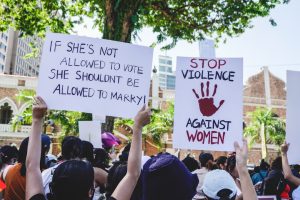
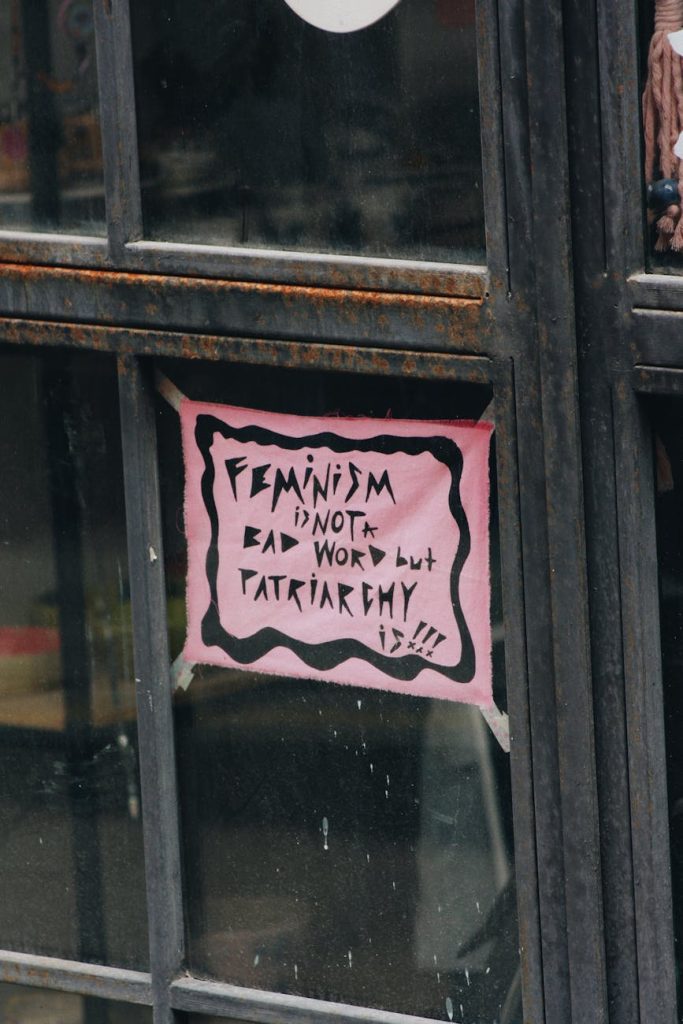
“More than 1,100 American women and girls were killed because of their gender in 2023 alone. Behind every number is a name the system failed to protect.”
Femicide — the killing of women and girls because of their gender — is not a distant or abstract crisis in the United States. It is a daily reality. According to Women Count USA, over 1,100 women lost their lives to femicide in 2023, and more than 600 had already been killed by October 2024. These deaths do not happen in a vacuum: they are almost always the final, lethal outcome of a pattern of abuse, coercive control, and escalating threats that went unaddressed.
1,104
women killed due to gender in the US in 2023
70+
women shot dead by a partner every month
90%
of women murdered by men were killed by someone they knew
Guns, intimacy, and lethality
The United States has a feature that makes gender-based violence uniquely deadly: widespread access to firearms. Nearly seven in ten intimate partner homicides are committed with a gun, and 77 percent of those victims are women. An abuser who has access to a firearm is five times more likely to kill their partner — a statistic that underscores why gun control and domestic violence prevention are inseparable policy conversations.
Stalking is another critical warning sign. Research shows that 76 percent of intimate partner homicides and 85 percent of attempted homicides were preceded by at least one instance of stalking in the year before the attack. Yet too often, these warnings are minimized, dismissed as “relationship problems,” and met with inadequate intervention from law enforcement.
VAWA: a landmark law under pressure
The United States does have a federal framework to address gender-based violence: the Violence Against Women Act (VAWA), originally passed in 1994 and reauthorized most recently in 2022. VAWA funds shelters, rape crisis centers, legal assistance for survivors, training for law enforcement and prosecutors, and culturally specific services for marginalized communities — including immigrants, LGBTQ+ people, and Native American women.
VAWA has been one of the most consequential pieces of legislation in American history for survivors of domestic violence. It created the National Domestic Violence Hotline, established federal crimes for intimate partner violence, and built a coordinated community response that simply did not exist before 1994.
But in 2025 and 2026, this infrastructure is facing serious strain. Of the $713 million Congress appropriated for VAWA programs in fiscal year 2025, only $472 million was distributed by the time the fiscal year ended in September. At least $204 million sat unspent — not because the need disappeared, but because a new executive order required all federal grants to be approved by a senior political appointee, creating bottlenecks across the entire grant pipeline. The CDC’s Division of Violence Prevention, which housed key research programs, was gutted through layoffs. Entire programs — for culturally specific services, LGBTQ+ survivors, and prevention work with men and boys — face proposed elimination in the 2026 budget.
When funding stalls, the consequences are not administrative — they are lethal. Nonprofits that depend on VAWA grants to run shelters, provide legal advocacy, and answer crisis hotlines cannot simply pause their work. Women in danger do not wait for bureaucratic timelines.
The Epstein case: patriarchy protecting the powerful
Understanding why gender-based violence persists requires looking beyond individual perpetrators and examining the systems that protect abusers — especially when they have power. The Jeffrey Epstein case is one of the most documented illustrations of this dynamic in modern American history.
Epstein, a wealthy financier with connections spanning Wall Street, politics, academia, and royalty, sexually abused dozens of young women and girls over decades. He was first arrested in 2006 in Florida. In 2008, he received a plea deal widely condemned as outrageously lenient — thirteen months in county jail, with work release — despite evidence of crimes against numerous victims. His victims, many from vulnerable and low-income backgrounds, watched the legal system negotiate around their suffering.
When Epstein was arrested again in 2019 on federal charges, much of the scrutiny turned not only to him, but to the network of powerful men who had benefited from access to his crimes, and to the institutional failures that shielded him for years. The case exposed how patriarchal structures — deference to wealthy men, victim-blaming, institutional silencing — operate not through explicit conspiracy, but through the quiet workings of a system that was never designed to take women’s testimony seriously.
Racial disparities: not all women are equally at risk
The burden of femicide is not distributed equally. Black women in the US are nearly three times as likely to be killed by an intimate partner compared to white women. For Indigenous women and girls, the homicide rate is 6.4 times higher than for their white counterparts — a reflection of generations of systemic neglect, underfunded law enforcement on tribal lands, and a Missing and Murdered Indigenous Women crisis that remains inadequately addressed at the federal level.
Any serious policy response to femicide must center these disparities rather than treat them as footnotes. Cutting culturally specific services — as proposed budget cuts would do — directly harms the communities most at risk.
What needs to change
There is no single solution to femicide, but the contours of an effective response are well-established. Full and timely distribution of VAWA funding is a baseline requirement — not a policy preference. Stronger firearm regulations for domestic abusers, including mandatory relinquishment and closing legal loopholes, would save lives directly. Law enforcement training to take stalking, threats, and protective order violations seriously — before homicides occur — is essential.
Beyond policy: the Epstein case, and thousands of quieter cases like it, remind us that culture matters. When society consistently doubts women, protects powerful men, and treats intimate violence as a private matter rather than a public crisis, it creates the conditions for femicide to flourish. Naming patriarchy as a structural force — not just a social attitude — is not rhetorical excess. It is an accurate description of how the system operates.
Conclusion
The United States has the legal tools, the institutional knowledge, and the resources to dramatically reduce femicide. VAWA exists. Shelters exist. Crisis hotlines exist. What is missing is not a blueprint — it is the political will to fund and protect that infrastructure, and the cultural honesty to confront the structures that produce this violence in the first place.
A society that holds itself to a standard of justice cannot treat the killing of more than a thousand women per year as a background condition of ordinary life.
If you or someone you know is experiencing domestic violence, contact the National Domestic Violence Hotline: 1-800-799-7233 (TTY: 1-800-787-3224), available 24/7. You can also chat online at thehotline.org.
Data sources: Women Count USA, Violence Policy Center (2025), Everytown Research (2023), The 19th News (2026), UNODC/UN Women Global Femicide Report (2025).
Don’t forget to follow Fyra on social media!
Relacionado
Discover more from Fyra - Dating App for Progressives
Subscribe to get the latest posts sent to your email.