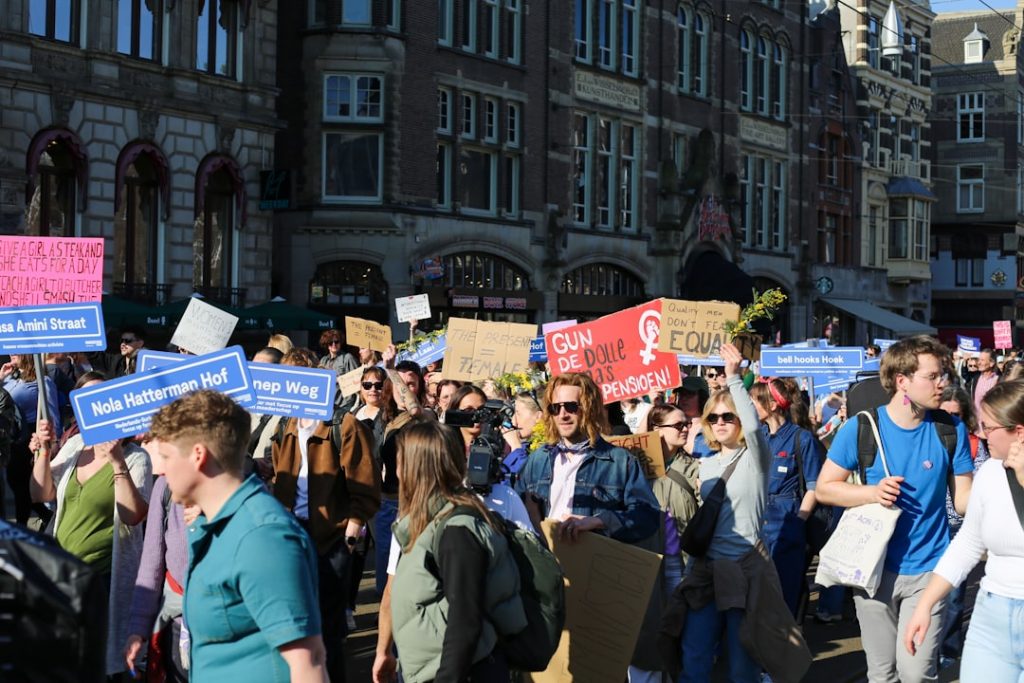
Climate Justice in 2026: Why the Fight for a Livable Planet Is Also a Fight for Human Rights
Climate change is often framed as a scientific or environmental issue: rising temperatures, melting ice caps, extreme weather. But in 2026, it’s increasingly clear that climate change is also a profound social justice issue. Who suffers most from floods, fires, and heat waves? Who has access to clean air, safe housing, and political power? Whose communities are protected, and whose are sacrificed?
These questions are at the heart of climate justice—the movement that insists the response to climate change must be fair, equitable, and grounded in human rights.
—
What Is Climate Justice?
Climate justice connects climate science to social realities. It recognizes that:
– The people who contributed least to climate change are often hit first and hardest.
– The burdens and benefits of climate policies are not equally shared.
– Race, class, gender, geography, and colonial history shape who is most vulnerable—and who has a voice.
For example, the wealthiest 10% of the world’s population is responsible for nearly half of global emissions, while the poorest 50% contributes just around 10% (Oxfam & Stockholm Environment Institute, 2020). Yet it is low-income communities, Indigenous peoples, and communities of color who are more likely to live near polluting industries, in flood-prone areas, or in neighborhoods without adequate green space or cooling centers.
Climate justice demands that solutions do not simply reduce emissions, but also repair harm, redistribute power, and protect the most vulnerable.
—
Background: How We Got Here
The science is clear and sobering. According to the Intergovernmental Panel on Climate Change (IPCC):
– Human activity has already warmed the planet by about 1.1°C above pre-industrial levels.
– Without rapid, deep cuts in greenhouse gas emissions, we are on track to exceed 1.5°C—a threshold beyond which climate risks escalate sharply.
Recent years have made this reality impossible to ignore:
– 2023 was the hottest year on record globally, with multiple regions experiencing unprecedented heat waves (Copernicus Climate Change Service).
– Extreme events—megafires, catastrophic floods, prolonged droughts—are becoming more frequent and severe.
But climate change doesn’t hit everyone equally. Its impacts are layered onto existing inequalities:
– Racial injustice: In the United States, Black and Latino communities are more likely to live near refineries, highways, and industrial facilities, leading to higher rates of asthma, heart disease, and cancer (EPA, 2021).
– Economic inequality: Low-income households often lack insurance, savings, or political influence, making it harder to recover from climate disasters.
– Global inequality: Countries in the Global South—many of which were historically colonized and exploited—face some of the worst climate impacts despite contributing the least to greenhouse gas emissions.
This is why climate justice isn’t just about protecting polar bears; it’s about protecting people and dismantling systems of inequality.
—
Current Challenges in 2026
1. Unequal Exposure and Vulnerability
Climate impacts are not evenly distributed:
– In the U.S., communities of color are more likely to be exposed to higher levels of air pollution, including fine particulate matter (PM2.5), even when income is accounted for (Harvard T.H. Chan School of Public Health, 2020).
– Globally, low-lying island nations and coastal communities face existential threats from sea-level rise, while drought is undermining food security in parts of Africa, Asia, and Latin America.
Heat waves are a stark example. Urban “heat islands” are often concentrated in neighborhoods that were historically redlined—areas where banks refused mortgages to Black and other nonwhite residents. These neighborhoods have fewer trees and more concrete, making them significantly hotter than wealthier, whiter areas nearby. The result: higher rates of heat-related illness and death.
2. Fossil Fuel Dependence and Environmental Racism
Despite the growth of renewable energy, fossil fuels still dominate:
– As of mid-2020s, fossil fuels account for around 80% of global energy consumption (International Energy Agency).
– Many oil, gas, and petrochemical facilities are located near low-income communities and communities of color, creating “sacrifice zones” where health and safety are routinely compromised.
This is environmental racism: policies and practices that place disproportionate environmental burdens on marginalized communities. From Louisiana’s “Cancer Alley” to communities living near coal plants in India, people are paying with their health for energy systems they did not choose.
3. Climate Displacement and Migration
Climate change is already driving displacement:
– The Internal Displacement Monitoring Centre estimates that tens of millions of people are displaced annually by weather-related disasters.
– Rising seas, desertification, and extreme storms are making some regions increasingly uninhabitable.
Without just and humane policies, climate migration can worsen xenophobia, border violence, and social conflict. Climate justice insists that those forced to move deserve protection, dignity, and rights.
4. False Solutions and Unequal Transitions
Some climate policies risk deepening inequality if not designed carefully:
– Carbon markets and offsets can allow wealthy polluters to continue emitting while claiming “net-zero,” often by funding projects in the Global South that displace Indigenous communities.
– Large-scale renewable projects, if imposed without consent, can replicate extractive patterns—taking land and resources without fair compensation or participation.
A just transition means moving away from fossil fuels in a way that protects workers, respects Indigenous rights, and ensures affordable energy for all.
—
What’s at Stake
The stakes are enormous and immediate:
– Health: Air pollution from fossil fuels causes millions of premature deaths every year. Heat waves increase the risk of heart attacks, strokes, and kidney failure. Climate-linked disasters worsen mental health, trauma, and stress.
– Food and Water: Droughts and changing rainfall patterns threaten crops and livestock. Rising temperatures affect fisheries and freshwater supplies, undermining livelihoods and food security.
– Democracy and Human Rights: Climate crises can be used to justify emergency powers, land grabs, and the suppression of dissent. Communities fighting pipelines, mines, and deforestation often face intimidation or violence.
– Intergenerational Justice: Young people and future generations will live with the consequences of decisions made today. Climate justice asks: What kind of world are we leaving behind, and who gets to decide?
If climate action ignores justice, we risk solving one crisis while worsening others. If it centers justice, we have a chance to build societies that are more equitable, resilient, and humane.
—
How People Can Take Action
You don’t need to be a scientist or policymaker to engage in climate justice. You can act at multiple levels: personal, community, and political.
1. Learn and Listen
– Follow organizations led by frontline communities, such as Indigenous groups, environmental justice coalitions, and youth climate movements.
– Seek out resources that connect climate to race, class, gender, and global inequality. The UN Environment Programme, IPCC, and reputable NGOs (e.g., Oxfam, Amnesty International) provide accessible reports and articles.
Listening to those most affected is essential. Climate justice says: nothing about us without us.
2. Support Frontline Communities
– Donate to or volunteer with groups working on environmental justice, disaster relief, and community organizing.
– Amplify campaigns against harmful projects—like new pipelines, refineries, or mines—especially when they threaten Indigenous lands or marginalized neighborhoods.
– Advocate for policies that provide funding and resources directly to communities facing climate impacts, not just corporations or large NGOs.
3. Push for Just Policies
Policy change is crucial. You can:
– Contact local and national representatives to demand:
– Rapid phase-out of fossil fuels
– Strong protections for workers in transitioning industries
– Investment in renewable energy, public transit, and energy-efficient housing
– Enforcement of environmental regulations in overburdened communities
– Support legislation that:
– Recognizes the rights of Indigenous peoples and local communities
– Provides climate reparations and finance to countries in the Global South
– Guarantees access to clean water, clean air, and safe housing as basic rights
Voting, attending public hearings, and participating in consultations can influence how climate policies are designed and implemented.
4. Organize Where You Are
Climate justice movements grow through collective action:
– Join or start a climate justice group in your school, workplace, or community.
– Work with labor unions, faith communities, and neighborhood organizations to build broad coalitions.
– Support youth-led actions and strikes that demand serious, equitable climate policies.
Collective organizing shifts power. It ensures that climate decisions are not made solely by corporations and political elites.
5. Align Your Daily Life with Justice
Individual choices matter most when they’re connected to systemic change:
– Reduce your own fossil fuel use where possible—through energy efficiency, public transit, or renewable energy—and talk about why you’re doing it.
– Support businesses and institutions that prioritize fair labor practices, sustainability, and community accountability.
– Challenge narratives that blame individuals in the Global South or low-income communities for climate problems, and instead highlight the role of large corporations and wealthy nations.
—
Moving Forward: Hope with Eyes Wide Open
Climate justice does not ask us to be optimistic; it asks us to be honest and committed. The challenges are real and urgent, but so is the power of organized communities, informed citizens, and courageous movements.
By seeing climate change not only as an environmental crisis but as a justice issue, we broaden what’s possible. We move from a narrow focus on carbon numbers to a deeper vision of a world where:
– Clean air and water are guaranteed for everyone.
– Energy systems are sustainable and democratically controlled.
– Communities most affected by climate change lead in shaping solutions.
– Repair and redistribution are as central as innovation and technology.
The future is not written yet. Climate justice invites us to help write it—together, and with fairness at its core.
Photo by Hoite Prins on Unsplash
Relacionado
Discover more from Fyra - Dating App for Progressives
Subscribe to get the latest posts sent to your email.