
Reproductive Rights at a Crossroads: What’s at Stake and How We Move Forward
In 2026, reproductive rights are one of the most contested social justice issues in the United States and in many parts of the world. Since the U.S. Supreme Court overturned Roe v. Wade in 2022, access to abortion—and broader reproductive healthcare—has become a patchwork of rights and restrictions determined largely by geography, politics, and income.
This moment is about far more than one medical procedure. It’s about bodily autonomy, gender equality, racial justice, economic security, and the power of governments to control the most intimate parts of people’s lives.
Below is an overview of how we got here, what’s happening now, why it matters, and how people can take meaningful action.
—
Background: How We Got Here
For nearly 50 years, Roe v. Wade (1973) recognized a constitutional right to abortion in the United States. While Roe never guaranteed universal access—many people, especially those in rural areas or living in poverty, still faced major barriers—it provided a federal baseline: states could not ban abortion outright before fetal viability.
That changed with the Supreme Court’s decision in Dobbs v. Jackson Women’s Health Organization (2022), which overturned Roe and returned the power to regulate abortion to individual states.
The impact was immediate:
– As of 2026, more than a dozen U.S. states have near-total bans or severe restrictions on abortion, with very limited exceptions (often vague and difficult to access even when technically allowed).
– Other states have moved in the opposite direction, passing “shield laws” to protect providers and patients, expanding funding, and enshrining abortion rights in state constitutions.
Globally, the picture is mixed. Some countries—such as Argentina (2020) and Mexico (Supreme Court ruling in 2023)—have expanded abortion rights. Others have tightened restrictions or maintained near-total bans, often under pressure from religious or nationalist movements.
—
Current Challenges in Reproductive Rights
1. Criminalization and Legal Uncertainty
In many U.S. states, abortion bans are enforced through criminal law. Doctors face potential prison sentences, loss of licenses, and civil lawsuits. Patients themselves, while often not explicitly criminalized, may still be investigated or prosecuted under other laws—for example, for “self-managed” abortions or pregnancy outcomes like miscarriages.
– A 2023 investigation by the New York Times and other outlets documented cases where law enforcement accessed people’s text messages and search histories in pregnancy-related investigations.
– The Guttmacher Institute reports that by 2024, at least 14 U.S. states had total or near-total abortion bans in effect.
This legal uncertainty makes clinicians hesitant to provide care even when it is technically allowed (such as for life-threatening pregnancies), leading to delays and dangerous outcomes.
2. Disproportionate Impact on Marginalized Communities
Reproductive restrictions do not affect everyone equally.
– Race and ethnicity: Black and Indigenous women and birthing people already face higher maternal mortality rates. In the U.S., Black women are about three times more likely to die from pregnancy-related causes than white women, according to the Centers for Disease Control and Prevention (CDC). Reduced access to abortion and prenatal care exacerbates this disparity.
– Income and geography: People with financial resources can travel to another state or country for care. Low-income individuals, undocumented people, and those in rural areas often cannot. The cost of travel, time off work, childcare, and lodging can be prohibitive.
– Young people: Teenagers may face parental consent laws, stigma, and limited access to confidential healthcare, making it harder to obtain contraception or abortions.
These disparities mean that abortion bans function as a form of structural inequality, deepening existing racial and economic divides.
3. Threats to Broader Reproductive Healthcare
The fight over abortion is increasingly entangled with other aspects of reproductive and sexual health:
– Contraception: Some activists and lawmakers have challenged access to emergency contraception (such as Plan B) and certain birth control methods, arguing—contrary to medical consensus—that they are equivalent to abortion.
– In vitro fertilization (IVF): Laws granting “personhood” to embryos have raised concerns that IVF could be restricted or criminalized.
– Miscarriage care: In states with strict bans, doctors may hesitate to treat miscarriages promptly for fear that their actions might be interpreted as illegal abortions, even when the pregnancy is no longer viable.
When reproductive rights are rolled back, it doesn’t just affect those seeking abortions; it creates a chilling effect across the entire spectrum of reproductive healthcare.
4. Digital Surveillance and Privacy
As people increasingly rely on apps and online resources for health information, digital privacy has become a reproductive rights issue.
– Period-tracking apps, search histories, and location data could theoretically be used as evidence in investigations related to abortion or pregnancy outcomes.
– Civil liberties groups like the Electronic Frontier Foundation (EFF) have warned that without strong data protections, tech companies could be compelled to hand over sensitive information.
This raises broader questions about who controls data about our bodies and our health decisions.
—
What’s at Stake
Reproductive rights are not isolated from other justice movements; they are deeply connected to LGBTQ+ rights, racial justice, economic equality, and democracy itself.
1. Bodily Autonomy: At the core is the principle that individuals should have the right to decide whether, when, and how to have children. When governments restrict those decisions, they set a precedent for broader control over bodies and identities.
2. Gender Equality: The ability to control one’s reproductive life is strongly linked to educational and economic opportunities. Studies have shown that access to abortion and contraception increases women’s labor force participation and earnings, and contributes to narrowing gender gaps.
3. Economic Justice: Forced pregnancy can trap people in poverty. The Turnaway Study, a long-term research project from the University of California, San Francisco, found that people denied abortions were more likely to experience financial hardship and remain in abusive relationships.
4. Racial Justice: Policies that restrict reproductive freedom often intersect with histories of coerced sterilization, racist population control, and unequal medical care. Reproductive justice advocates—especially Black feminists—have emphasized that the right to have children, not have children, and raise children in safe communities are all part of the same struggle.
5. Democratic Governance: When courts or legislatures roll back established rights, it raises questions about whose voices count and whose lives are valued. Attacks on reproductive rights often come alongside efforts to restrict voting, censor school curricula, and limit LGBTQ+ rights.
—
How People Can Take Action
The scale of the challenge can feel overwhelming, but history shows that sustained, collective action can shift laws, norms, and outcomes. Here are concrete ways people can engage.
1. Educate Yourself and Others
Accurate information is a powerful tool.
– Read from reputable sources such as the Guttmacher Institute, World Health Organization (WHO), the American College of Obstetricians and Gynecologists (ACOG), and major peer-reviewed medical journals.
– Learn the specific laws in your state or country—what’s legal, what’s restricted, and what rights patients and providers still have.
– Share credible information in your community, workplaces, and online spaces to counter misinformation.
2. Support Local and National Organizations
Many organizations are on the front lines of providing care, legal support, and advocacy. Examples (U.S.-focused, but similar groups exist worldwide):
– Abortion funds (often listed via the National Network of Abortion Funds) help cover costs for those who can’t afford care.
– Legal advocacy groups like the ACLU and Center for Reproductive Rights challenge restrictive laws in court.
– Community-based reproductive justice organizations—many led by women of color—address the broader social and economic conditions that shape reproductive choices.
If you have the means, regular donations (even small ones) help these groups plan long-term. If you don’t, many need volunteers, board members, translators, drivers, and more.
3. Engage Politically
Policy change requires political pressure.
– Register to vote and participate in local, state, and national elections. Governors, state legislators, attorneys general, and judges often have more direct influence over reproductive laws than federal officials.
– Contact your representatives. Personalized emails, calls, and in-person meetings can influence how officials vote, especially at the state level.
– Support candidates who explicitly defend reproductive rights and broader social justice issues.
Even if you live in a state or country with strong protections, those rights can be rolled back without public vigilance.
4. Protect Digital Privacy
Given the rise of digital surveillance, consider:
– Using apps and services that prioritize privacy and allow you to control your data.
– Turning off location tracking where possible.
– Being cautious about what you share in text, email, or social media regarding sensitive health issues.
Digital security guides from organizations like the EFF and Digital Defense Fund offer practical steps, especially for activists and people seeking care.
5. Build Solidarity Across Movements
Reproductive rights do not exist in a vacuum. Building alliances with movements for:
– Racial justice
– LGBTQ+ equality
– Economic justice and workers’ rights
– Disability rights
– Climate justice
…strengthens all of them. For example, supporting policies like paid family leave, universal healthcare, and living wages helps create conditions where reproductive choices are truly free, not constrained by economic desperation.
6. Create Supportive Communities
Change also happens at the interpersonal level.
– Normalize conversations about reproductive health, contraception, abortion, and pregnancy loss without shame.
– Support friends, family, or colleagues who are navigating reproductive decisions—listen without judgment, offer practical help, and respect their autonomy.
– Encourage comprehensive sex education in schools and community programs, covering consent, contraception, STI prevention, and LGBTQ+ inclusion.
—
Looking Forward
Reproductive rights are at a crossroads, but they are far from lost. Around the world, movements led by women, queer and trans people, people of color, and young activists are reshaping the conversation from one focused narrowly on “choice” to a broader vision of reproductive justice: the right to bodily autonomy, to safe and respectful healthcare, and to raise families in communities free from violence and oppression.
The path forward will not be easy, and backlash is real. Yet history is full of moments when rights seemed permanently out of reach—until they weren’t. The question is not only what laws will say, but what kind of society we choose to build: one rooted in control and punishment, or one grounded in dignity, equality, and care.
Every person has a role to play in that choice.
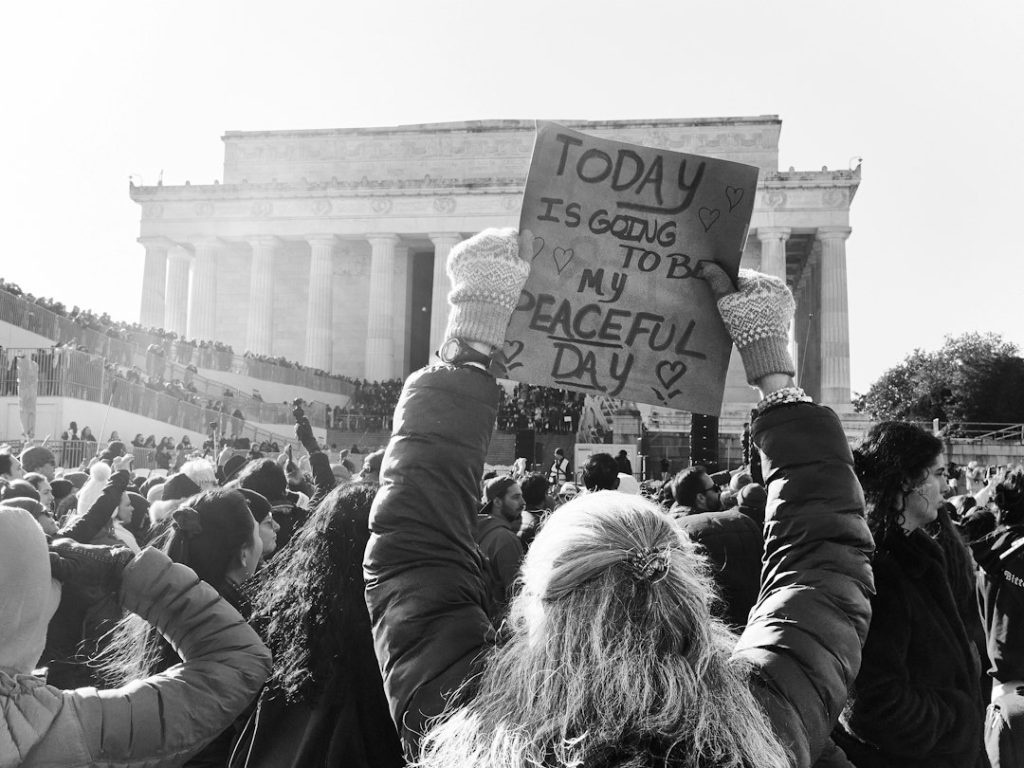
Photo by Chip Vincent on Unsplash
Relacionado
Discover more from Fyra - Dating App for Progressives
Subscribe to get the latest posts sent to your email.