When the Supreme Court speaks on voting rights, it’s never just a legal footnote—it’s a statement about who gets to participate in democracy and on what terms. On Monday, the Court’s conservative majority handed Donald Trump a temporary but significant win in his ongoing crusade to restrict mail-in voting, upholding—for now—his March 2026 executive order that severely curtails access to vote-by-mail.
The ruling is “temporary” in the legal sense, but the consequences are immediate and real. With the 2026 elections approaching and 2028 already on the horizon, this decision could shape who can cast a ballot, whose voices get heard, and whose votes are effectively silenced.
This isn’t just a procedural skirmish. It’s part of a broader struggle over whether the United States will move toward a more inclusive, multiracial democracy—or retreat into a system where voting is a privilege reserved for those who can overcome increasingly hostile barriers.
—
Background: What Just Happened and Why It Matters
According to Mother Jones, the Supreme Court issued an unsigned opinion from its conservative majority, temporarily blocking challenges to Trump’s March 2026 executive order that severely restricts mail-in voting. The three Democratic-appointed justices dissented.
The Court’s reasoning hinges on timing: it says it’s “too soon” for states to challenge the order. In legal jargon, this is often framed as a question of “ripeness” or whether the plaintiffs have standing. In plain language, the Court is saying: we’re not ready to decide whether this order is legal or constitutional, so for now, it stands.
Key elements of the situation:
– Trump’s Executive Order (March 2026):
– Imposes new restrictions on who can vote by mail and under what circumstances.
– Likely adds layers of verification, documentation, and procedural hurdles.
– Comes after years of Republican rhetoric falsely equating mail voting with “fraud.”
– States Challenging the Order:
– Several states, particularly those with strong vote-by-mail traditions or large populations that rely on it (including disabled voters, seniors, rural communities, and people with inflexible work schedules), sued to block the order.
– They argue it violates constitutional protections, interferes with state control over elections, and disproportionately harms marginalized voters.
– Supreme Court Decision:
– The conservative majority says challenges are premature.
– The order remains in effect while litigation continues.
– Progressive and voting-rights advocates warn this gives the Trump administration a green light to weaponize election rules in the near term.
This is happening against a backdrop of sustained attacks on voting rights: voter ID laws, purges of voter rolls, cuts to early voting, closures of polling places in Black and brown neighborhoods, and gerrymandering that dilutes the political power of communities of color.
Mail-in voting, especially after the COVID-19 pandemic, became a crucial tool for making voting safer and more accessible. That’s exactly why it has become a target.
—
Progressive Analysis: A “Procedural” Ruling with Real-World Consequences
On its surface, the Court’s decision may sound limited: it doesn’t say Trump’s order is constitutional, only that it’s too early to challenge it. But from a progressive perspective, there are several troubling dimensions.
1. The Court Is Normalizing Restrictive Voting Measures
By allowing the executive order to stay in place, the Court effectively treats it as a legitimate baseline while it decides whether to intervene. That matters because election rules shape outcomes even before a single vote is cast.
When obstacles are erected—complicated forms, narrow eligibility rules, confusing deadlines—many voters simply won’t make it through the maze. This is especially true for people working multiple jobs, those with limited internet access, disabled voters, and those facing language barriers.
Progressives have long argued that voting should be simple, accessible, and secure—not a test of endurance. The Court’s refusal to act now signals that the burden of proof lies with those trying to expand access, not those trying to restrict it.
2. A Pattern of Deference to Right-Wing Power
This decision isn’t happening in isolation. It sits alongside a series of Supreme Court choices that, taken together, tilt the playing field:
– Gutting key parts of the Voting Rights Act (Shelby County v. Holder, 2013; Brnovich v. DNC, 2021).
– Allowing extreme gerrymandering to continue.
– Making it harder to challenge election rules that have discriminatory impact.
The current Court’s conservative majority has consistently shown a willingness to defer to right-wing claims about “election integrity,” even when those claims are rooted in conspiracy theories and debunked narratives about widespread fraud.
Trump’s crusade against mail-in voting was born out of his refusal to accept the legitimacy of elections he might lose. The Court’s temporary endorsement of his executive order, even on procedural grounds, reinforces the idea that those fears are enough to justify sweeping changes.
3. The Burden Falls on Marginalized Voters
Restrictive mail-in rules don’t fall evenly across the electorate. They hit hardest:
– Elderly and disabled voters who may struggle to reach polling places.
– Low-income workers who can’t afford to take time off to vote in person.
– Rural communities where polling locations are far and transportation is limited.
– Black, Latino, Native, and immigrant communities who already face systemic barriers and intimidation.
From a progressive standpoint, the Court’s ruling is not neutral. It amplifies existing inequalities in political participation by making it harder for those with the fewest resources to vote.
—
Why This Matters for Social Justice and Progressive Values
Voting is not just a procedural right. It’s the mechanism through which communities fight for economic justice, racial equity, climate action, reproductive freedom, LGBTQ+ rights, and more. Restricting access to voting is a direct attack on the ability of marginalized people to shape the laws that govern their lives.
1. Democracy as a Social Justice Issue
Progressive politics are built on the idea that everyone deserves a meaningful voice in collective decisions. When voting is restricted, the policies that emerge tend to favor entrenched interests—corporations, wealthy donors, and those already in power.
– Efforts to raise the minimum wage, strengthen unions, and protect workers rely on broad participation from working-class voters.
– Campaigns for police accountability, criminal justice reform, and ending mass incarceration depend on communities directly impacted being able to vote.
– Climate justice, environmental protections, and public health measures are more likely to succeed when young people and communities of color can participate fully.
Mail-in voting is a practical tool for making that participation real. Restricting it is a way of narrowing the electorate to those the system already serves.
2. The Ongoing Battle Over Whose Votes “Count”
Historically, the United States has expanded the franchise only after intense struggle: ending property requirements, abolishing slavery, granting women the right to vote, dismantling Jim Crow, and passing the Voting Rights Act. Each expansion has been met with backlash.
Trump’s executive order and the Court’s ruling are part of that backlash. They reflect a fear—on the part of those invested in maintaining racial and economic hierarchies—that a truly inclusive democracy will demand redistribution of power and resources.
From a progressive lens, defending mail-in voting isn’t a technical issue. It’s part of a larger fight to ensure that the people most affected by injustice have the power to change it.
—
What You Can Do and How to Stay Informed
The Supreme Court’s decision may feel distant, but the consequences will be felt in local polling places, state legislatures, and community organizing spaces. There are concrete steps people can take.
1. Know Your State’s Rules—and Help Others Navigate Them
– Check your state’s current mail-in voting rules: eligibility, deadlines, ID requirements, and any new restrictions.
– Share that information with friends, family, and neighbors, especially those who may face barriers.
– Volunteer with local organizations that help people register and navigate voting rules, such as state-based voting-rights groups, community centers, and mutual aid networks.
2. Support Organizations Fighting in Court and on the Ground
National and local groups are already challenging restrictive laws and executive orders. Consider supporting:
– Voting-rights organizations that litigate these cases and provide legal assistance.
– Grassroots groups led by communities of color, disabled activists, and low-income organizers who are directly impacted by these policies.
Financial support, volunteering, and amplifying their work on social media all matter.
3. Push State and Local Officials to Expand Access
Even with federal-level obstacles, states and local governments still have significant power:
– Advocate for expanded early voting, more polling places, and better ballot access.
– Demand that state officials resist unnecessary restrictions and invest in voter education.
– Support candidates who prioritize voting rights and democratic reforms.
4. Stay Informed and Don’t Normalize These Attacks
The Supreme Court’s “temporary” decisions can easily slip under the radar. Don’t let them.
– Follow investigative outlets and progressive journalists who track voting-rights issues and court decisions.
– Share reliable reporting in your networks to counter misinformation about mail-in voting and “fraud.”
– Treat attacks on voting rights as urgent—not as technical debates reserved for lawyers and judges.
—
The Supreme Court’s decision to hand Trump a temporary win in his campaign against mail-in voting is more than a procedural pause. It’s a reminder that democracy is fragile and that the institutions meant to protect it are not neutral. For progressives and anyone committed to social justice, this moment demands vigilance, organizing, and a renewed commitment to ensuring that every eligible voter can cast a ballot without unnecessary barriers.
The future of progressive policy—from climate action to economic justice—depends on whether we defend the right to vote now, before “temporary” restrictions become permanent fixtures of a weakened democracy.
Read the original Mother Jones article here:
https://www.motherjones.com/politics/2026/08/scotus-hands-trump-a-temporary-win-in-his-crusade-to-restrict-mail-voting/
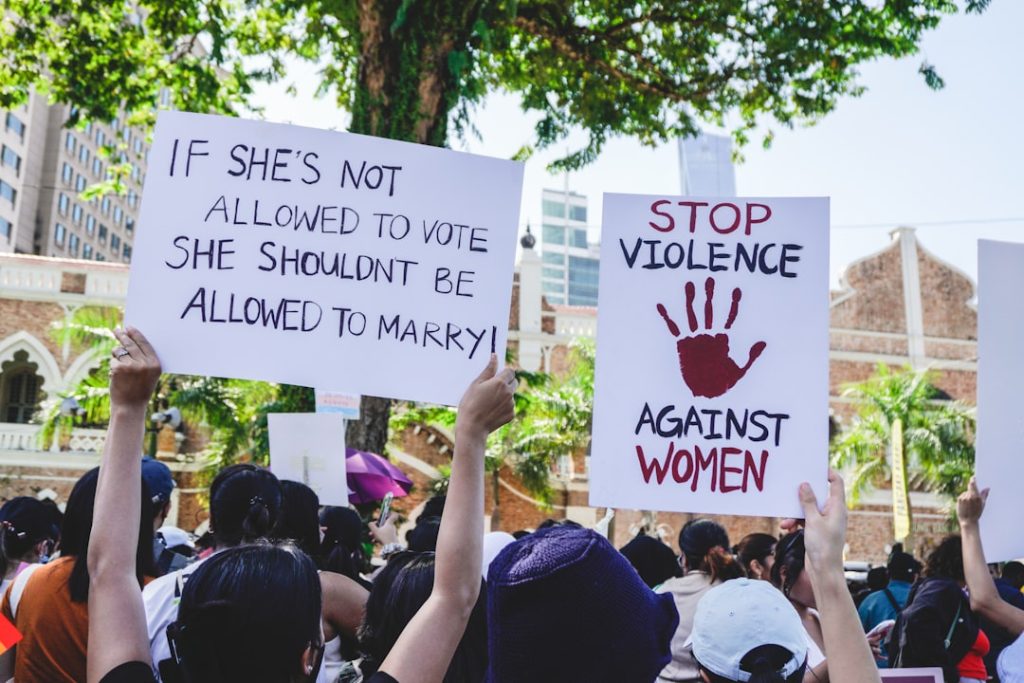
Photo by Michelle Ding on Unsplash
Relacionado
Discover more from Fyra - Dating App for Progressives
Subscribe to get the latest posts sent to your email.