
In a rare win for democracy in an era of escalating election sabotage, the Supreme Court has blocked former President Donald Trump’s latest attempt to interfere with the 2026 midterms. This time, the scheme targeted mail voting—one of the most widely used and trusted methods Americans rely on to cast their ballots.
The stakes could not be higher. We’re less than two months from Election Day, in a political environment where election denialism has gone from fringe to governing strategy. Trump and his allies have been telegraphing for years that they would try to manipulate the rules of voting itself. The Court’s decision doesn’t just resolve a technical legal dispute; it determines whether millions of people—especially working-class voters, people of color, disabled voters, and those living far from polling places—will have a real say in who represents them.
This ruling is a reminder of something progressives have long argued: attacks on voting procedures are never neutral. They are power plays, designed to choose the electorate rather than let the electorate choose its leaders. And this time, at least, that power play failed.
—
Background: What Trump Tried to Do—and Why
According to reporting from Mother Jones, Trump’s latest gambit revolved around mail-in ballots. After years of falsely smearing mail voting as “fraudulent” when it benefited Democrats—and quietly embracing it when it helped Republicans—Trump and his legal allies tried a new tactic: weaponizing federal courts to force states to adopt last-minute, untested vote-by-mail rules.
The scheme worked like this:
– Impose new requirements very late in the election cycle. Trump-backed lawyers pushed lawsuits and legal demands that would force states to change how they process and count mail ballots—things like new signature verification rules, tighter deadlines, or additional ID requirements.
– Make the changes impossible to implement in time. Elections officials, already underfunded and overwhelmed, would have to overhaul systems, retrain staff, redesign envelopes, update voter instructions, and reprogram tabulation software just weeks before ballots were mailed.
– Let chaos do the disenfranchising. The predictable result: ballots rejected on technicalities, voters confused by shifting rules, delays in counting, and widespread uncertainty. Even if some of the rules were eventually softened or reversed, many voters would already have been shut out.
This is a familiar playbook in voter suppression: don’t outright ban people from voting—just make it so complicated, confusing, and last-minute that large numbers of them fail to clear the hurdles.
Crucially, the plan was not subtle. Trump has spent years signaling that he sees the election system itself as an enemy to be conquered, not a civic institution to be protected. From his baseless claims of “massive fraud” in 2020 to his pressure campaigns on state officials and election workers, this latest effort fits a long pattern: discredit mail voting, then sabotage it.
The Supreme Court was asked to decide whether these eleventh-hour demands could be forced onto states in time for the 2026 midterms. In its ruling, the Court effectively said no: you cannot blow up election systems on the eve of voting and call it “reform.”
—
A Progressive Analysis: The Court, the Scheme, and the Power Behind It
From a progressive perspective, several key themes stand out in this decision.
1. The Court quietly acknowledged reality: last-minute changes disenfranchise voters
For years, voting-rights advocates have warned that late-breaking rule changes are inherently discriminatory. The people most harmed are those who have the fewest resources and least flexibility: workers with rigid schedules, people who rely on public transportation, people with disabilities, non-English speakers, and those living in rural or under-resourced urban communities.
By blocking Trump’s scheme, the Court implicitly recognized that you can’t pretend these changes are neutral. In election law, there’s a concept sometimes called the “Purcell principle”: courts shouldn’t order major changes close to an election because it confuses voters and administrators. This ruling aligns with that logic and effectively rejects using chaos as a political weapon.
2. This was about power, not “election integrity”
Trump and his allies framed their demands as “protecting integrity” and “preventing fraud.” But there is no credible evidence of widespread fraud through mail voting. State after state—including Republican-run states—have used mail ballots safely for years. In some places, like Colorado, Oregon, and Washington, mail voting is the default system and turnout is strong.
When a political movement continues to push for “reforms” that solve a non-existent problem but reliably reduce participation among disfavored constituencies, we should call it what it is: a power grab.
Progressives understand this as part of a broader project: minority rule. If your policies are unpopular, your best path to power is shrinking the electorate and undermining confidence in elections so that your base will accept almost any outcome.
3. The decision doesn’t mean the Court is suddenly a friend to voting rights
It’s important not to over-interpret this ruling. The Supreme Court’s conservative majority has a long record of weakening voting protections and empowering those who want to suppress votes:
– Shelby County v. Holder (2013) gutted key parts of the Voting Rights Act, allowing states with histories of discrimination to change voting rules without federal preclearance.
– Brnovich v. DNC (2021) made it harder to challenge discriminatory voting laws.
– Other decisions have greenlit partisan gerrymandering and limited the ability of federal courts to intervene.
So why did the Court intervene here? Likely because Trump’s scheme was too blatant, too late, and too destabilizing—threatening not just progressive voters but the basic functioning of elections themselves. Even justices who are hostile to robust voting rights may still want elections to be orderly enough to preserve institutional legitimacy.
For progressives, that means this ruling is a welcome reprieve, not a turning point. The structural threats to democracy remain.
—
Why This Matters for Social Justice and Progressive Values
Voting rights are not just a procedural issue; they are a core social justice issue. Who votes determines whose needs are considered, whose pain is ignored, and whose future is funded.
1. Communities most at risk are always the first targeted
Mail voting has become a lifeline for:
– Working-class voters who can’t afford to take hours off on a Tuesday.
– Black, Latino, Native, and immigrant communities who often face longer lines, fewer polling places, and more aggressive voter challenges.
– Disabled voters and those with chronic illness or caregiving responsibilities who may not be able to stand in line or travel easily.
– Rural voters who live far from polling locations or have limited transportation options.
Trump’s scheme would have disproportionately impacted these communities, compounding decades of voter suppression through purges, ID laws, polling place closures, and disinformation campaigns.
Protecting mail voting is therefore a racial justice issue, a disability rights issue, a workers’ rights issue, and a gender justice issue (given the disproportionate caregiving responsibilities shouldered by women).
2. Democracy is the gateway to every other progressive goal
Whether the issue is climate justice, reproductive rights, labor rights, housing, or healthcare, progressives cannot win durable change if the electorate is systematically narrowed and distorted. When conservative elites can cling to power with minority support, they have less incentive to respond to public demands for justice.
Trump’s mail ballot scheme was one more attempt to rig the system so that a shrinking, radicalized base could continue to dominate a more diverse and progressive majority. Blocking it doesn’t solve everything—but it keeps the door open for a more representative democracy.
3. Legitimacy matters
When people believe elections are rigged or inaccessible, they disengage. That disengagement is not neutral—it helps those already in power. By preventing a chaotic, last-minute upheaval in mail voting, the Court also helped preserve some measure of public trust in the process.
For progressives who want to build a multi-racial, multi-class coalition for justice, maintaining that trust is essential. Participation is power.
—
What You Can Do and How to Stay Informed
This ruling is a critical victory, but it’s not the end of the story. Trump and his allies will continue searching for ways to undermine fair elections—at the state level, in local election boards, and through ongoing disinformation campaigns. Here’s how you can respond:
1. Know your voting options—and share them
– Check your state’s rules on mail voting, early voting, and voter registration.
– Confirm deadlines for requesting and returning mail ballots.
– Share this information with friends, family, co-workers, and community members, especially those who may face barriers to in-person voting.
2. Support organizations on the front lines
Progressive and civil rights groups are doing the hard work of litigation, education, and advocacy. Consider supporting:
– Local voting rights coalitions in your state
– National groups focused on democracy and civil rights
– Grassroots organizations mobilizing young voters and communities of color
Money helps, but so does volunteering—especially as a poll worker or election observer.
3. Push for proactive reforms, not just defensive wins
We can’t just play defense against schemes like Trump’s. Progressives should keep pushing for:
– Automatic and same-day voter registration
– Universal access to mail voting and secure drop boxes
– Robust early voting periods
– Strong protections for election workers
– Restoration and expansion of the Voting Rights Act
Contact your state legislators and members of Congress. Make voting rights a non-negotiable priority.
4. Stay informed and amplify reliable reporting
Right-wing media will spin this ruling as a blow to “election integrity.” Counter that by sharing accurate information and investigative reporting.
Read and share outlets that dig into the details of election law and power politics, like Mother Jones, which broke down Trump’s mail ballot scheme in depth. You can read their full report here:
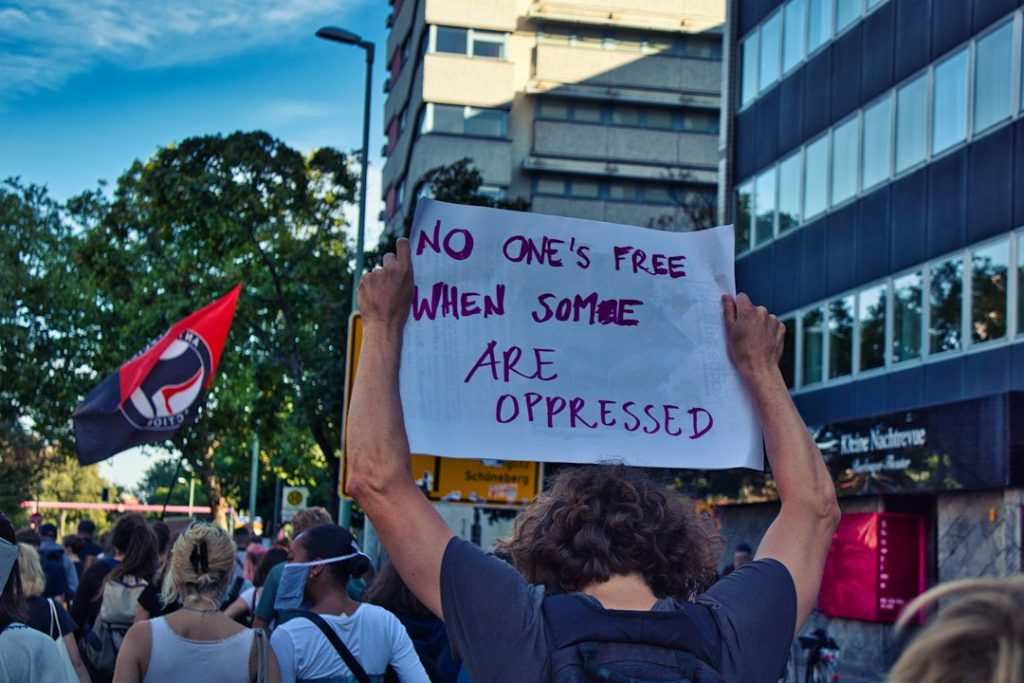
Photo by Moises Gonzalez on Unsplash
Relacionado
Discover more from Fyra - Dating App for Progressives
Subscribe to get the latest posts sent to your email.