If you’re progressive, dating in 2026 can feel…complicated. You care about justice, equity, consent, climate, bodily autonomy, queer and trans rights, racial justice, disability inclusion—and you’d really prefer not to have a three-hour debate over whether your date thinks basic human rights are “too political.”
The good news: you can absolutely date in a way that’s values-driven and romantic, idealistic and grounded. Here’s how to approach dating as a progressive, with practical tips for finding like-minded partners and building real, authentic connections.
—
1. Start with your core values (not just your politics)
“Progressive” is a big umbrella. Before you look for someone who shares your politics, get clear on what that actually means for you.
Ask yourself:
– What issues matter most to me? (e.g., racial justice, climate, labor rights, reproductive freedom, LGBTQ+ rights, disability justice)
– How do I try to live those values day-to-day? (e.g., where you shop, how you vote, how you treat service workers, how you talk about marginalized groups)
– What are my non‑negotiables in a relationship? (e.g., must support trans rights; must believe in bodily autonomy; must be anti-racist in practice, not just words)
Write down:
1. 3–5 core values (e.g., empathy, equity, consent, curiosity, accountability)
2. 3 non‑negotiables (e.g., no misogyny, no racism, no “I’m socially liberal but fiscally conservative” if that means ignoring harm)
These become your compass. They’ll guide who you swipe on, how you communicate, and when you walk away.
—
2. Signal your values early (without turning your profile into a manifesto)
Modern dating apps are a huge part of the landscape, and they can work in your favor.
In your profile
You don’t need a 500-word political essay, but you do want clear signals. For example:
– Bio examples:
– “Queer, anti-racist, union supporter, mutual aid enthusiast. Looking for someone who cares about people more than profit.”
– “Progressive nerd: climate marches, book clubs, and trying to be the friend who always brings snacks to the protest.”
– “If you think ‘woke’ is an insult, we probably won’t vibe.”
– Photos:
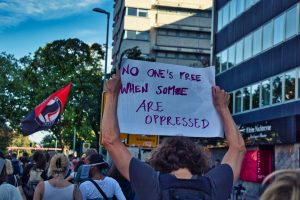
– A pic at a climate march, Pride, or a mutual aid event.
– A photo volunteering or at a community event.
– A bookshelf shot with visible titles (e.g., authors on race, gender, economics, disability, etc.).
– Prompts:
– “A cause I care deeply about…” → “Housing as a human right.”
– “My Sunday looks like…” → “Brunch, reading, and emailing my city council about that zoning issue.”
– “Unpopular opinion…” → “Treating people with dignity shouldn’t be controversial.”
These clues attract people who resonate and filter out those who don’t.
—
3. Where to meet like-minded people (beyond the apps)
If you’re tired of “So you’re a feminist, huh?” on Hinge, widen the playing field.
Try values-aligned spaces
– Local organizing: Join a tenants’ union, mutual aid group, climate collective, or racial justice organization. You’ll meet people who share your values and your willingness to act.
– Community events: Book talks, film screenings, teach-ins, town halls, union meetings, neighborhood assemblies.
– Social groups with a progressive bent:
– Queer sports leagues
– Cooperative housing communities
– Radical book clubs
– Worker co-op networks
– Online spaces: Discord servers, progressive subreddits, issue-specific communities. Many host in-person meetups.
Important: Don’t show up to organizing spaces just to date. Be there to contribute. If connections happen, great—but the work comes first.
—
4. Talk about politics and values…without turning every date into a debate
You don’t have to grill someone like a Senate hearing, but avoiding values talk entirely usually leads to confusion or disappointment later.
Early-stage questions that actually reveal values
Instead of “Who did you vote for?” try:
– “Are there any causes or issues you’re passionate about?”
– “Has anything in the news lately really stuck with you?”
– “What does ‘progressive’ mean to you personally?”
– “How do you try to live your values in everyday life?”
Listen for:
– Do they show empathy for marginalized groups?
– Do they acknowledge systemic issues, or reduce everything to individual blame?
– Do they get defensive when topics like race, gender, or queerness come up?
Red and green flags
Green flags:
– “I’m still learning, but I try to listen and adjust when I get something wrong.”
– “I don’t just post; I volunteer/donate/organize.”
– “I care about how our choices affect others, not just ourselves.”
Red flags:
– “I don’t get into politics; it’s all overblown.”
– “I’m fine with [X group] as long as they don’t shove it in my face.”
– “Cancel culture has gone too far; people are too sensitive.”
Those aren’t just “different opinions”; they’re indicators of how they see people and power.
—
5. Practice consent and communication as core progressive values
Progressive dating isn’t just about who you vote for; it’s how you treat people. Consent, boundaries, and emotional accountability are central.
Make consent explicit and normal
Examples:
– Before a first kiss: “Can I kiss you?”
– Before sex: “What are you comfortable with tonight?” / “Any boundaries I should know about?”
– During intimacy: “Is this okay?” / “Do you want to keep going?”
Respect a “no” or hesitation immediately, without sulking or pressure. That’s not only good dating—it’s aligned with progressive ethics.
Communicate clearly and kindly
– Be honest about your intentions: “I’m open to something serious, but I’d like to take it slow and see how we connect.”
– Share your emotional capacity: “I’m juggling work and organizing, so I may be slow to reply sometimes, but I do care about staying in touch.”
– Own your mistakes: “I realized that joke was insensitive. I’m sorry—thanks for pointing it out. I’ll do better.”
This builds trust and shows you’re serious about harm reduction in relationships, not just society.
—
6. Navigating differences—even with someone who’s mostly aligned
Even with fellow progressives, you’ll disagree. Maybe you’re more abolitionist and they’re reformist. Maybe you’re deeply involved in labor organizing and they’re focused on climate.
Use curiosity, not combat
Try:
– “Can you tell me more about how you came to that view?”
– “What experiences shaped how you see this?”
– “I see it differently—want to hear why?”
If you hit a value clash (e.g., they’re fine with “jokes” at marginalized groups’ expense), ask:
– “This feels important to me because…” and explain your perspective.
– “Is this something you’re willing to reflect on and maybe shift?”
If they’re defensive, mocking, or dismissive, that’s data. You don’t need to educate someone who’s showing you they don’t care.
—
7. Don’t confuse shared trauma or activism with compatibility
It’s easy to bond deeply over:
– Burnout from organizing
– Experiences of discrimination
– Rage at the state of the world
Those connections can be powerful—but they’re not the whole story.
Ask:
– Do we enjoy each other beyond political talk?
– Do we have compatible emotional styles and life goals?
– Can we rest and have fun together, not just rage and organize?
Healthy progressive relationships balance:
– Care for the world
– Care for each other
– Care for yourselves
—
8. Avoid “performative progressivism” in dating
Some people know the right words but don’t live them. And sometimes we fall into that, too.
Spotting performative vibes in others
– They talk big about justice, but are rude to servers or dismissive to service workers.
– They center themselves in conversations about marginalized groups they’re not part of.
– They use activism as clout: “I was at [protest]” as a flex, but don’t show up consistently.
Checking yourself
Ask:
– Am I treating partners with the same respect and care I say everyone deserves?
– Do I apologize and repair when I mess up?
– Am I willing to learn from my partner’s experiences, especially if they’re different from mine?
Progressive dating isn’t about being perfect; it’s about being accountable and willing to grow.
—
9. Practical steps for progressive dating in 2026
To make this concrete, here’s a mini action plan:
1. Clarify your values
Spend 20 minutes listing your core values and non‑negotiables.
2. Update your profiles
Add 2–3 clear value signals and one photo that reflects your engagement (protest, community event, etc.).
3. Choose 1–2 values-aligned spaces to plug into
Join a local group, book club, or mutual aid project—commit to showing up at least once a month.
4. Practice one new consent/communication script
Next time you’re on a date, explicitly ask for consent before physical contact or share your intentions clearly.
5. Set a boundary around values
Decide in advance: “If someone dismisses [X issue] or mocks [Y group], I will not pursue a second date.”
6. Build rest and joy into your dating life
Plan dates that reflect your values and your need for joy: a community garden, a local art show, a co-op café, a mutual aid packing party followed by a cozy movie night.
—
Dating as a progressive in 2026 isn’t about finding someone who agrees with you on every policy detail. It’s about finding someone who shares your commitment to empathy, justice, and growth—and who’s willing to build a relationship grounded in consent, accountability, and care.
You deserve a connection where your values aren’t “too much,” your compassion isn’t “dramatic,” and your politics aren’t a punchline. Start from that truth, and let your dating life reflect the world you’re trying to build.
Relacionado
Discover more from Fyra - Dating App for Progressives
Subscribe to get the latest posts sent to your email.