Love in the Time of Climate Crisis: Dating When the Planet Is on the Line
If you’ve ever been on a promising first date that suddenly swerved into a conversation about climate collapse, you’re not alone. More and more people are asking not just “What’s your favorite movie?” but “How do you feel about having kids in a warming world?” or “Do you care about climate justice?” Climate isn’t just a policy debate anymore; it’s shaping our sense of future, family, and what it means to build a life with someone.
On a progressive dating app, it’s especially clear: our politics and our romantic lives are intertwined. Climate justice isn’t just an abstract cause; it’s a lens on values, empathy, and how we show up for each other. The people we choose to love—and how we love them—can either reinforce the status quo or help us imagine something radically better.
From “Environment” to Climate Justice: How We Got Here
For decades, mainstream conversations framed the “environment” as something separate from people: a wilderness to protect, a landscape to preserve. Early environmental movements in the 1960s and 70s made crucial gains—clean air and water laws, protections for endangered species—but often sidelined the communities most impacted by pollution and climate risk: Black, Indigenous, low-income, and Global South communities.
By the 1980s and 90s, activists began naming this omission. They showed that toxic waste sites, refineries, and highways weren’t randomly placed—they were disproportionately sited near communities of color and working-class neighborhoods. The term “environmental racism” gained traction, and with it a broader understanding: you can’t separate ecological harm from systemic inequality.
Out of that insight grew what we now call climate justice. It’s not just about reducing emissions; it’s about:
- Who is most vulnerable to heat waves, floods, and storms
- Who gets access to clean air, clean water, and green space
- Who has the power to shape climate policy and who is ignored
- Who profits from extraction and who pays the price
In other words, climate justice insists that the story of the planet is also the story of power. And that has everything to do with how we date, who we trust, and what kind of future we dare to plan for.
Dating Amid Climate Anxiety: What We’re Carrying
Many of us are navigating a new emotional landscape: climate anxiety, grief for disappearing ecosystems, fear about future displacement or disaster. These feelings don’t stay neatly in a “politics” box. They show up when we talk about:
- Whether we want children—and if so, how many, and under what conditions
- Where we want to live, and how climate risk shapes that choice
- What kind of work we consider meaningful or ethical
- How we spend money, travel, and consume
On dating apps, this is increasingly explicit. Profiles mention climate marches, mutual aid projects, or careers in renewable energy. Some people list “no climate denialists” under their dealbreakers. Others are honest about their fear: “Looking for someone who wants to build a future, even if we’re not sure what the future looks like.”
The current state of climate politics is a paradox: we’re seeing record-breaking heat, intensifying storms, and widening inequality—but also unprecedented youth organizing, Indigenous leadership, and global movements pushing for a just transition. It’s a moment of both deep uncertainty and radical possibility.
In relationships, that means we’re often holding two truths at once:
- We don’t know exactly what the world will look like in 10, 20, or 40 years.
- We still want to love, build, and commit to each other in ways that matter.
That tension can be painful. But it can also be clarifying. It invites us to ask: What kind of love feels right in a time that demands courage?
Climate Justice as a Relationship Value
Climate justice isn’t just a political stance; it’s a relational practice. It asks us to notice who is affected, who is excluded, and whose well-being we prioritize. In a dating context, that can show up in subtle but powerful ways.
Consider how climate justice values might shape a relationship:
- Interdependence over individualism. Instead of imagining love as two people in a bubble, climate justice reminds us we’re part of larger communities and ecosystems. A relationship becomes not just “you and me” but “you, me, and the world we’re shaping together.”
- Care as a political act. Caring about your partner’s safety, mental health, and stability isn’t separate from caring about housing justice, healthcare access, or climate resilience. They’re deeply connected.
- Honesty about privilege. If one partner has more class, racial, or citizenship privilege, climate justice asks: How do we use that privilege to support others? How do we avoid building a future that’s only safe for “us” while others are left behind?
- Long-term thinking. Even if the future feels uncertain, choosing to think beyond the next few years—about communities, children (if you want them), or collective well-being—is an act of resistance against short-term, extractive logic.
On a practical level, this might look like:
- Talking early on about how your values show up in daily life—work, money, housing, family
- Choosing dates that reflect shared ethics: local mutual aid events, climate justice teach-ins, or community garden days alongside the usual drinks and dinner
- Being open about your fears and hopes regarding climate, instead of pretending everything is fine
- Supporting each other in activism or organizing, while also setting boundaries to prevent burnout
This isn’t about perfection. No one has a completely “ethical” or “sustainable” life under systems that profit from extraction and inequality. Climate justice in relationships is less about purity and more about alignment: Do our choices move us closer to the world we want, even in small ways?
Imagining a Future Together: From Doom to Possibility
It’s easy to get stuck in doom narratives: “The world is ending, so nothing matters.” But that story erases the reality that for many communities—especially Indigenous peoples, Black and brown communities, people in the Global South—climate catastrophe has been an ongoing process for generations. And still, they have loved, resisted, created, and imagined futures anyway.
Climate justice invites a different story: The future is not predetermined; it’s contested. The choices we make—individually, collectively, politically, romantically—help shape which futures become possible.
In the context of dating, that might mean:
- Allowing yourself to dream about a shared life that includes resilience: community networks, mutual aid, and solidarity, not just consumer comfort
- Reimagining “success” in a relationship: less about property or status, more about contribution, connection, and care
- Seeing your relationship as one small node in a larger web of people working toward a livable, more just world
Hope, in this sense, isn’t blind optimism. It’s a practice. It’s choosing, again and again, to act as if a better future is possible—even if we can’t see the full path yet. It’s recognizing that love and justice aren’t separate projects.
Where Do We Go From Here? An Invitation
You don’t have to be a full-time climate organizer or policy expert to make climate justice part of your dating life. You can start with honest reflection:
- What kind of future do I want—for myself, my partners, my community, and people I may never meet?
- How does climate anxiety show up in my relationships? Do I talk about it, or push it down?
- How can I align my dating choices with my values, even in small ways?
- What would it mean to build a relationship that’s not just about surviving, but about helping others survive and thrive too?
From there, consider one concrete step:
- Bring up climate and justice on your next date—not as a test, but as an invitation to deeper conversation.
- Join a local climate justice or mutual aid group, and be open to connections that emerge from shared work.
- Reflect with a current partner on how your shared life could support resilience—for you and for others.
We’re living in a time of overlapping crises, but also of profound possibility. Every profile you swipe on, every conversation you have, every relationship you nurture is a chance to practice the world you want to see: one where care is expansive, justice is non-negotiable, and love is big enough to include the planet—and all the people on it.
The question isn’t just: “Who do I want to date?” It’s also: “What kind of future do we want to build, together?”
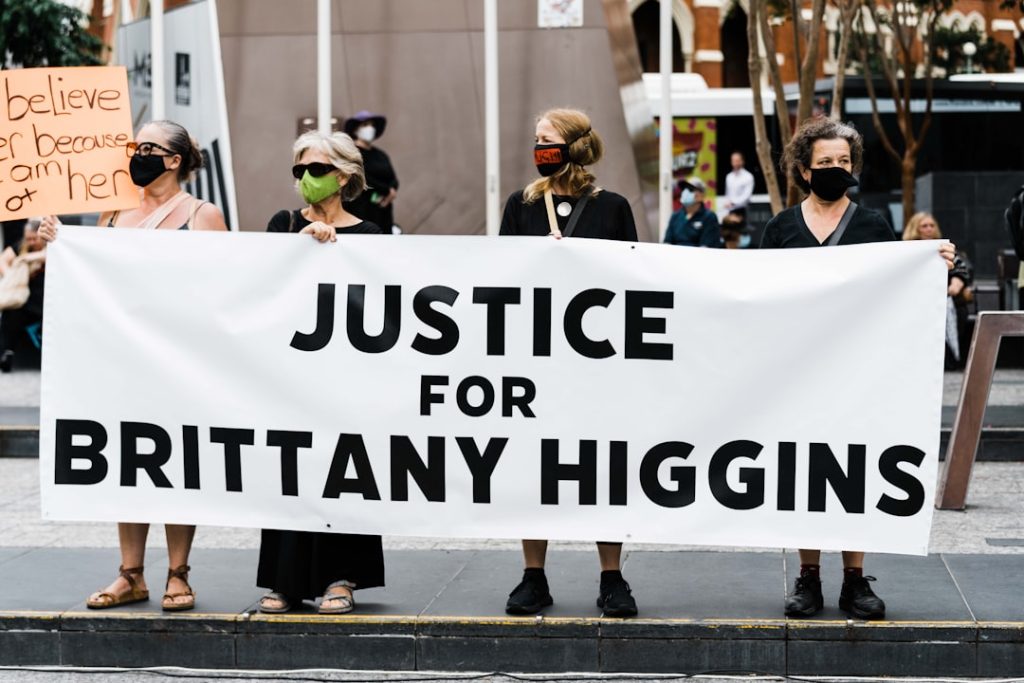
Photo by Stewart Munro on Unsplash
Stay Connected with Flamr
Don’t forget to follow Flamr on social media!
Relacionado
Discover more from Fyra - Dating App for Progressives
Subscribe to get the latest posts sent to your email.