When “Ceasefire” Is Just a Word: Why Language About War Matters in Our Love Lives Too
On a dating app, you’re mostly thinking about profiles, vibes, and whether someone will actually pick a place for the first date. But the world doesn’t pause just because you’re swiping. Wars continue, headlines scroll past, and the words we use to describe those wars quietly shape what we think is normal, acceptable, or inevitable.
The Intercept recently published a piece with a blunt, unsettling title: “Stop Calling It a Ceasefire.” It challenges the way mainstream media, U.S. officials, and allied governments talk about the ongoing conflict involving the United States, Israel, and Iran. The core claim: what’s being described as a “ceasefire” is, in practice, a continuing low-level war—just one that’s easier to ignore if you’re not directly in its path.
For anyone trying to date, build community, or imagine a future grounded in justice and care, this isn’t abstract foreign policy trivia. It’s about whether we normalize endless war as background noise—or insist on naming violence honestly, so we can resist it together.
Read the full article: Stop Calling It a Ceasefire (The Intercept)
What The Intercept Is Saying: This Isn’t a Real Ceasefire
The “Ceasefire” That Isn’t
The Intercept article argues that U.S. officials and major media outlets keep using the word “ceasefire” to describe the current state of affairs between the U.S., Israel, and Iran—even as all sides continue to carry out covert, proxy, and direct military actions. The piece asks a simple but powerful question: how many acts of war have to happen before we admit there is no ceasefire at all?
According to the article, the so‑called ceasefire is more like a rebranding exercise. Instead of acknowledging an ongoing, fragmented conflict, officials talk about “de-escalation,” “restraint,” and “limited responses.” But on the ground, that looks like:
- Israeli strikes on Iranian-linked targets in Syria, Lebanon, and elsewhere
- Iranian-backed militias firing rockets or drones at U.S. bases and regional allies
- U.S. “defensive” strikes that kill fighters and civilians alike
- Cyberattacks, assassinations, and sabotage operations that never officially “count” as war
The article points out that these are not isolated incidents—they’re part of a long pattern of “shadow war” that the U.S. and Israel have waged against Iran for years, spanning multiple administrations. What’s different now is the language: the public is told that there is a ceasefire, that tensions are “cooling,” and that leaders are working hard to avoid a wider war.
The Intercept calls this what it is: a disconnect between rhetoric and reality that hides the true scale of violence from the public.
Media Complicity Through Euphemism
The piece also criticizes mainstream U.S. media for repeating government talking points instead of challenging them. Headlines emphasize “ceasefire holding” or “fragile calm,” while the body of the article quietly notes a drone strike here, a missile attack there, or a “suspected Israeli operation” that kills people in another country.
This framing does three things:
- Downplays escalation: Each new attack is portrayed as a one‑off “response,” rather than part of a continuous conflict.
- Centers U.S. and Israeli narratives: Iranian actions are framed as provocations; U.S. and Israeli actions are framed as necessary, reluctant, or defensive.
- Obscures civilian harm: Civilian deaths become “collateral damage” or not mentioned at all, making it easier for audiences to emotionally disengage.
By insisting on the word “ceasefire,” the media helps maintain the illusion that the default state is peace, occasionally disrupted by “flare-ups”—instead of acknowledging that the region is living under the constant threat of violence, sanctions, and instability.
Trump, Continuity, and the Myth of “New” Wars
Although U.S. foreign policy shifts under different presidents, The Intercept article underlines a deeper continuity: Democrats and Republicans alike have normalized the idea that the U.S. can wage low-level, often undeclared war around the world indefinitely. The piece links the current situation back through the Trump years and beyond, showing that “ceasefire” moments are often just pauses or rebrandings in a much longer campaign of pressure against Iran.
The article argues that this is not a series of isolated crises, but an ongoing strategy: maintain maximum leverage over Iran through sanctions, military threats, and covert action, while avoiding the domestic political backlash of admitting we’re in yet another Middle East war.
Why Progressives Care: Language, Power, and the Politics of Denial
Words Don’t Just Describe Reality—They Shape It
Progressive movements have always understood that language is political. From “domestic violence” to “Black Lives Matter” to “marriage equality,” naming things clearly is a way of reclaiming power. The Intercept’s critique fits into this tradition: calling an ongoing war a “ceasefire” is not neutral—it’s a way of managing public perception.
When we accept euphemisms, we:
- Normalize ongoing violence as “peace with occasional incidents”
- Reduce pressure on policymakers to actually end conflicts
- Make it harder for antiwar movements to mobilize, because the urgency is obscured
For progressives, insisting on accurate language is not pedantic; it’s a form of resistance. If there are airstrikes, assassinations, and proxy battles, we should call that what it is: war.
Endless War as Background Noise
Most people reading this aren’t making foreign policy. You’re navigating work, relationships, mental health, and maybe the emotional rollercoaster of online dating. But endless war affects all of that, even when it doesn’t feel immediate.
Endless war means:
- Trillions of dollars poured into the Pentagon instead of healthcare, housing, climate action, and education
- A political culture where “national security” is used to justify surveillance, xenophobia, and crackdowns on dissent
- Communities—especially Muslim, Arab, and Iranian diasporas—living with constant fear for family abroad and suspicion at home
For a progressive dating app community, these aren’t abstract. They shape who feels safe, who gets targeted, and whose grief is visible or invisible. When media calls it a ceasefire, it makes it easier for the rest of us to look away.
Intersectionality: Foreign Policy Is a Feminist, Queer, and Racial Justice Issue
Progressive politics in 2026 are deeply intersectional, and foreign policy is part of that. The ongoing conflict with Iran and the region connects to:
- Feminist struggles: Women and gender-diverse people in conflict zones face heightened risk of displacement, sexual violence, and economic precarity.
- Queer and trans rights: LGBTQ+ people in the region are caught between repressive local regimes and foreign policies that weaponize “LGBTQ rights” as justification for intervention, without actually protecting queer lives.
- Racial justice: Islamophobia and anti-Iranian racism at home are fueled by narratives of perpetual threat, making Middle Eastern, North African, and Muslim communities into permanent suspects.
Calling this a “ceasefire” erases the lived experience of people on the receiving end of sanctions, drones, and proxy wars—and the communities in the diaspora who carry that trauma into their everyday lives, including their dating lives.
Different Angles: How People Are Seeing This “Ceasefire” Debate
The Establishment View: “Responsible Management of Tensions”
From the perspective of many officials and mainstream commentators, the language of “ceasefire” and “de-escalation” is strategic. They argue that:
- Publicly declaring a ceasefire creates diplomatic space and lowers the temperature.
- Low-level military actions are “contained” and preferable to full-scale war.
- Talking about “war” could embolden hardliners on all sides and make diplomacy harder.
In this view, the alternative to a messy, euphemistic “ceasefire” is a more open and dangerous conflict. So the language is seen as part of crisis management.
The Antiwar and Progressive View: “Managed War Is Still War”
Progressive and antiwar voices, including The Intercept, counter that this framing is deeply cynical. They argue:
- “Managing” a conflict through covert and proxy violence still kills people and destabilizes societies.
- Refusing to name war as war erodes democratic accountability—Congress and the public are sidelined.
- Long-term peace requires dismantling the machinery of endless war, not just rebranding it.
From this perspective, the insistence on “ceasefire” isn’t about peace—it’s about plausible deniability.
The Regional Perspective: Living Under the Shadow of Someone Else’s War
For people in Iran, Palestine, Israel, Lebanon, Syria, and across the region, the semantics of “ceasefire” versus “war” can feel surreal. Many live with:
- Economic devastation from sanctions that hit civilians hardest
- Fear of sudden airstrikes, assassinations, or militia violence
- Governments that use external threats to justify internal repression
From this vantage point, the debate in Western media about whether this is “really” a war can seem like a luxury. The Intercept’s piece gestures toward this disconnect: the language of ceasefire primarily serves audiences in the U.S. and allied countries, not the people most affected.
What This Means for Progressive Movements—and for Us
Reclaiming Honesty in How We Talk About Violence
One of the core progressive values is honesty about harm. Whether we’re talking about abusive relationships, police violence, or climate catastrophe, we push back against narratives that minimize or excuse harm.
Applied to foreign policy, that means:
- Refusing to call it a ceasefire when bombs are still dropping.
- Recognizing sanctions as a form of economic warfare that kills
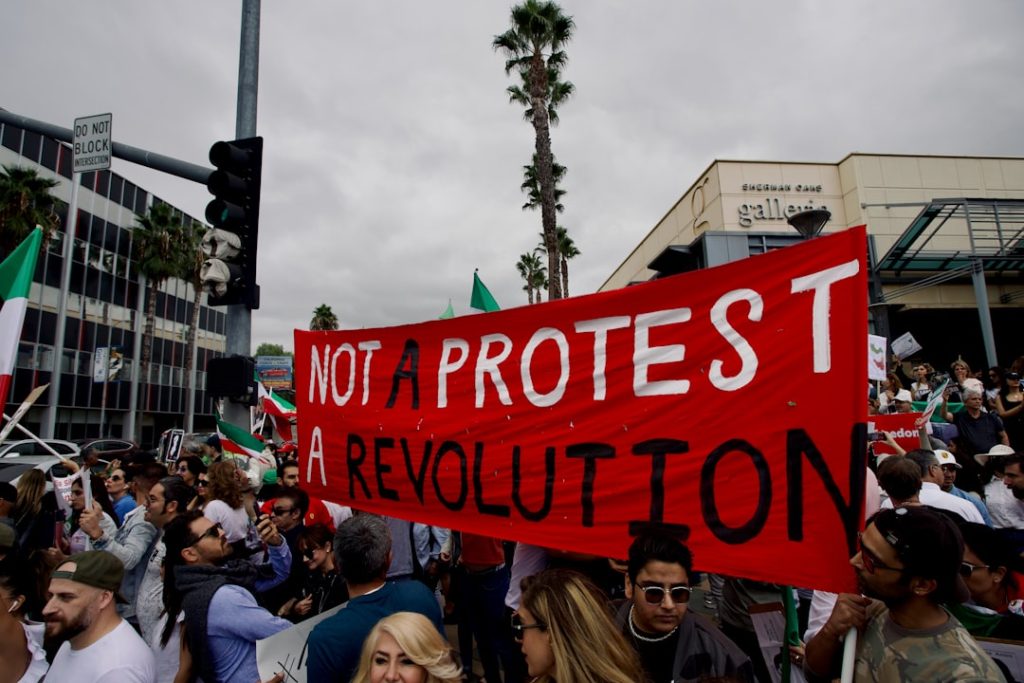
Photo by Craig Melville on Unsplash
Stay Connected with Flamr
Don’t forget to follow Flamr on social media!
Relacionado
Discover more from Fyra - Dating App for Progressives
Subscribe to get the latest posts sent to your email.