“Stop Calling It a Ceasefire”: Why Language About War Matters in Our Love Lives Too
Dating app profiles are full of people saying they’re “looking for something real,” “no games,” “radical honesty only.” We’re hungry for words that mean what they say. Yet when we look up from our phones to the headlines, we’re told that the United States, Israel, and Iran are in a “ceasefire” — even as bombs drop, covert operations unfold, and sanctions choke civilian life.
That disconnect is exactly what The Intercept’s piece, “Stop Calling It a Ceasefire”, calls out. It asks a simple but devastating question: how many acts of war have to happen before we admit that what we’re witnessing is not peace, not even a truce, but an ongoing war by other names?
For a progressive dating community that cares about consent, honesty, and mutual care, this isn’t just foreign policy trivia. It’s about how power uses language to gaslight us — and how we can resist that, together, in our politics and our relationships.
Read the full article: Stop Calling It a Ceasefire (The Intercept)
What The Intercept Is Arguing
The “Ceasefire” That Isn’t
The Intercept’s article challenges the mainstream media narrative that the U.S., Israel, and Iran are in a state of “ceasefire” or “de-escalation.” It points out that, despite official language suggesting calm, the reality on the ground looks and feels like war:
- Ongoing military strikes and covert operations continue between the U.S./Israel and Iranian-linked forces, including proxy groups across the region.
- Economic warfare in the form of harsh sanctions keeps crippling Iran’s economy and, by extension, everyday people’s access to medicine, food, and basic services.
- Cyberattacks and sabotage target infrastructure and nuclear facilities, escalating tensions and risking miscalculation.
Despite all this, politicians and major news outlets keep using words like “ceasefire,” “pause,” “cooling tensions,” or “return to calm.” The article argues that this language isn’t neutral — it’s a political choice that obscures responsibility and shields leaders from accountability for the violence they’re still authorizing.
Media Complicity and the Illusion of Peace
The Intercept highlights how U.S. media often adopts official language uncritically. When the White House or Pentagon announces “de-escalation,” headlines echo it, even if the facts on the ground contradict that framing. This creates a disorienting gap between the public story and lived reality in the region.
That gap matters. If people in the U.S. are told there’s a “ceasefire,” they’re less likely to question continued arms sales, covert actions, or sanctions. They’re more likely to see any new flare-up as a “surprise” rather than the predictable result of an ongoing, low-visibility war.
War by Other Means
The Intercept also emphasizes that war isn’t just bombs and boots on the ground. It’s also:
- Sanctions that function as collective punishment, disproportionately harming civilians, not political elites.
- Targeted assassinations and covert strikes that violate sovereignty and international law.
- Proxy warfare where regional militias and allied forces do the fighting while major powers pretend to be “restrained.”
By calling this a “ceasefire,” the article argues, the U.S. and its allies can maintain a veneer of restraint while continuing policies that, by any honest measure, are acts of war.
Read the full article: Stop Calling It a Ceasefire (The Intercept)
Why This Matters to Progressives — And to How We Date
Language as a Tool of Power (and Gaslighting)
Progressives talk a lot about gaslighting in relationships — when someone denies your reality, minimizes harm, or uses soft language to cover up serious violations. Calling an ongoing campaign of military, economic, and cyber aggression a “ceasefire” is gaslighting on a geopolitical scale.
It’s the political equivalent of someone saying, “We’re not fighting” while they’re still yelling, throwing things, and changing the locks. The violence doesn’t stop just because someone with power decides to use gentler words.
For those of us building relationships rooted in consent and honesty, this matters. If we’re learning to name harm clearly in our personal lives, we can’t accept euphemisms for harm in our political lives. The same skills — noticing discrepancies, refusing to be soothed by language that doesn’t match reality, insisting on clear definitions — apply in both spaces.
Who Pays the Price for Euphemisms?
When the U.S. government and its allies insist that there’s a “ceasefire,” who benefits and who suffers?
- Beneficiaries: Political leaders who want to look “presidential” or “responsible” while continuing aggressive policies. Defense contractors who profit from arms sales in the shadows of “de-escalation.” Media outlets that avoid conflict with powerful sources by repeating their framing.
- Those who suffer: Ordinary people in Iran, Palestine, Israel, Lebanon, and across the region whose lives are shaped by sanctions, strikes, and instability. Communities in the U.S. and globally who are told to relax because “things are calming down,” even as the conditions for future violence are being laid.
Progressive politics is about siding with those who bear the cost of elite decisions, not those who profit from them. That means refusing language that hides who is being harmed.
Intersectionality: War, Race, and Empire
This isn’t just a foreign policy story; it’s a racial justice story, a feminist story, and a queer story.
- Racial justice: The same media and political culture that downplays U.S. violence in the Middle East also criminalizes Black and Brown communities at home, calling police violence “officer-involved incidents” and mass incarceration “tough on crime.” It’s a continuum of dehumanization.
- Feminism: Women and children bear disproportionate burdens in war — from caring for families under sanctions, to surviving displacement and gender-based violence. When war is masked as “ceasefire,” that gendered suffering is erased.
- Queer and trans justice: LGBTQ+ people in conflict zones face intensified vulnerability, from lack of access to healthcare to targeted violence. Queer and trans communities also know what it’s like to have our realities denied or minimized with “neutral” language.
To be intersectional is to see these connections and to understand that resisting euphemisms about war is part of a broader struggle against all forms of structural violence.
Historical Echoes: We’ve Seen This Before
“Police Action,” “Surgical Strikes,” and “Collateral Damage”
The Intercept’s critique fits into a long history of states using soft language to describe hard violence:
- The Korean War was framed as a “police action,” not a war, to sidestep constitutional and political constraints.
- Drone campaigns have been marketed as “surgical strikes,” as if war were a clean, precise medical procedure instead of a messy, deadly practice.
- Civilian deaths are called “collateral damage,” a phrase that removes the human, emotional, and moral weight of killing people who had nothing to do with the conflict.
“Ceasefire” is becoming another one of these words — a way to signal calm to domestic audiences while maintaining pressure and violence abroad.
“Forever Wars” and the Normalization of Conflict
Since 2001, the U.S. has been in a series of “forever wars” — conflicts that don’t have clear declarations, victories, or endings. Instead, they drift on through drone strikes, special operations, and proxy battles. Calling parts of this ongoing system a “ceasefire” is part of how the forever war stays invisible.
Progressive movements have been pushing back on this for years: from the anti-Iraq war protests to campaigns against arms sales and for ending U.S. support for the war in Yemen. The Intercept’s article is another step in that pushback, focused on the U.S.-Israel-Iran triangle.
Different Perspectives — and Why They Matter
How Hawks Frame It
Foreign policy hawks often argue that:
- The U.S. and Israel are acting “defensively” against an aggressive Iran.
- Sanctions and covert actions are “non-military” tools and therefore compatible with “ceasefire” language.
- Publicly acknowledging ongoing conflict could “embolden enemies” or “undermine diplomacy.”
From this perspective, “ceasefire” is a strategic narrative tool: a way to keep domestic audiences calm while continuing pressure abroad.
Centrist and Mainstream Media Perspectives
Many mainstream outlets don’t necessarily intend to mislead; they often:
- Rely heavily on official sources, adopting their language without sufficient skepticism.
- Prefer “balanced” or “neutral” language, even when that neutrality obscures who is doing what to whom.
- Frame conflicts episodically (“flare-up,” “escalation,” “lull”) rather than structurally (ongoing occupation, sanctions, and proxy war).
This can create a narrative where violence appears as a series of disconnected incidents rather than part of a continuous, systemic war.
Progressive and Antiwar Perspectives
Progressive, antiwar, and grassroots voices — including those highlighted by The Intercept — argue that:
- We must name all forms of violence, including economic and cyber warfare, as part of the conflict.
- Language like “ceasefire” should be reserved for actual cessation of hostilities, not PR moments.
- Real de-escalation requires ending sanctions, arms sales, and covert operations, not just pausing visible bombing campaigns.
These voices are calling for a deeper shift: from managing conflict to dismantling the structures that make endless war possible.
What This Means for the
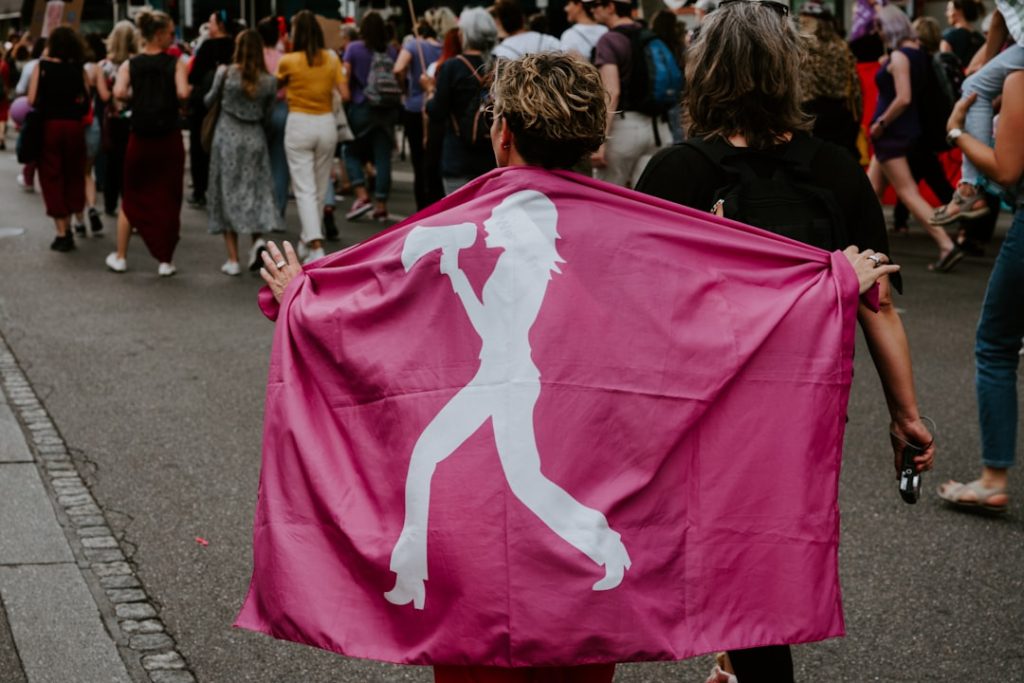
Photo by Claudio Schwarz on Unsplash
Stay Connected with Flamr
Don’t forget to follow Flamr on social media!
Relacionado
Discover more from Fyra - Dating App for Progressives
Subscribe to get the latest posts sent to your email.