Love, Liberation, and the Fight for Trans and Queer Futures
Dating apps aren’t just about matches and messages; they’re a mirror of what we believe about each other—and about whose lives we value. When we talk about LGBTQ+ rights, especially trans and nonbinary rights, we’re not talking about an abstract policy issue. We’re talking about who gets to show up as themselves on a first date without fear. Who gets to hold hands in public. Who gets to list their pronouns in a profile without wondering if it’s a safety risk.
In the last few decades, we’ve seen incredible progress: marriage equality in many countries, growing recognition of nonbinary identities, and more queer and trans people living openly than ever before. At the same time, there’s been a fierce backlash—especially targeting trans youth, gender-affirming care, and queer visibility in public life. It’s a reminder that progress is not a straight line; it’s more like a spiral, looping back on itself, but (hopefully) moving forward.
For anyone navigating dating today—queer, trans, questioning, or cis and straight—LGBTQ+ rights are not just “politics.” They’re about whether we can build relationships rooted in trust, safety, and dignity. They’re about whether love is something we can live, not just something we dream about.
How We Got Here: A Brief History of Queer Resistance
The modern LGBTQ+ rights movement is often traced back to the Stonewall uprising in 1969, when queer and trans people—many of them Black and Brown, many of them unhoused or criminalized—resisted police violence at a New York City bar. But resistance existed long before that: in underground communities, in coded language, in chosen families built for survival when legal systems and families of origin turned people away.
For most of the 20th century, queer love was criminalized, pathologized, or erased. Laws against same-sex relationships, bans on gender-nonconforming clothing, and medical “treatments” aimed at changing sexuality or gender identity were all tools of control. Yet even under intense repression, LGBTQ+ people created culture, art, and networks of care. Pride began as a protest, not a parade.
The HIV/AIDS crisis in the 1980s and 1990s was another turning point. Governments largely ignored a deadly epidemic until activists forced the world to pay attention. Groups like ACT UP and grassroots organizers globally demanded better healthcare, faster drug approvals, and an end to the stigma that cost so many lives. The movement wasn’t just about survival; it reshaped how we think about public health, consent, and community care.
In the 2000s and 2010s, marriage equality became a central focus in many countries. Legal recognition of same-sex marriage was a huge step, but it also revealed a tension: whose relationships get prioritized and whose needs get sidelined? While marriage rights were expanding, many trans and nonbinary people still struggled for basic recognition—like accurate IDs, safe bathrooms, and access to gender-affirming healthcare.
Today, we’re living in the legacy of all of this: decades of organizing, joy, grief, and resistance. LGBTQ+ rights are more visible than ever, but visibility alone doesn’t guarantee safety or equality.
Where We Are Now: Progress and Backlash, Side by Side
Right now, the picture is complicated. On one hand, we’ve seen:
- More countries and regions recognizing same-sex partnerships or marriage.
- Growing legal recognition of nonbinary genders and expanded options for markers on IDs in some places.
- Increased representation of queer and trans people in media, politics, and public life.
- Digital spaces—including dating apps—adding pronoun fields, orientation options, and safety features for LGBTQ+ users.
On the other hand, there’s a sharp rise in anti-trans and anti-queer legislation and rhetoric in many parts of the world. These attacks often focus on:
- Restricting gender-affirming care, particularly for trans youth.
- Limiting discussions of gender and sexuality in schools.
- Targeting drag performances and queer public events.
- Rolling back anti-discrimination protections in housing, employment, and healthcare.
This backlash doesn’t just exist in courtrooms or legislatures; it filters down into everyday life and dating culture. For many queer and trans people, “going on a date” can mean:
- Screening potential matches for signs of hostility or fetishization.
- Deciding whether to disclose their identity, and when.
- Calculating the risk of violence or harassment in public spaces.
- Navigating family or community rejection if a relationship becomes visible.
At the same time, there’s a parallel story: more people are coming out later in life; more cis and straight people are learning about pronouns, dysphoria, and chosen family; more couples are building explicitly queer, feminist, and anti-racist relationships. Dating apps have become a kind of laboratory for this future—a place where people experiment with labels, boundaries, and new ways of relating.
Love as a Site of Resistance and Reimagining
When we talk about LGBTQ+ rights, we’re also talking about our most intimate beliefs: Who deserves care? Whose body is “normal”? What does a “real” relationship look like? These questions show up in policy debates, but they also show up in chats, swipes, and first dates.
A progressive vision of dating doesn’t just add more identity options to a drop-down menu (though that matters). It asks us to rethink the defaults we’ve inherited:
- From secrecy to consented visibility: Moving from “passing” and hiding to choosing when and how to be seen, on our own terms.
- From rigid roles to fluid possibilities: Letting go of scripts about who pays, who leads, who proposes, and who stays home—and creating arrangements that actually fit our lives.
- From individualism to community: Understanding that our relationships exist within networks of friends, chosen family, and communities that support or constrain us.
- From tolerance to solidarity: Shifting from “I’m okay with you existing” to “Your liberation is tied to mine, and I’m willing to act on that.”
Queer and trans communities have been practicing this kind of reimagining for generations. Chosen family, polyamorous constellations, mutual aid networks, and community care aren’t new trends; they’re survival strategies that offer blueprints for more humane ways of relating. As more people explore nontraditional relationships and identities, LGBTQ+ wisdom about boundaries, communication, and consent becomes relevant to everyone.
Dating, in this sense, can be political—not in a performative way, but in a deeply personal one. Every time we affirm someone’s pronouns, refuse to laugh at a transphobic joke, or swipe left on bigotry, we’re making tiny choices about the kind of world we want to live in. They’re small actions, but they add up.
Imagining the Future: Queer and Trans Joy as a North Star
Looking ahead, the fight for LGBTQ+ rights is about more than defending against harmful laws. It’s about building conditions where queer and trans joy is ordinary—where safety, healthcare, and recognition are not luxuries, but givens. That future might look like:
- Universal access to gender-affirming care, mental health support, and reproductive healthcare, without shame or financial barriers.
- Education systems that teach accurate, inclusive information about gender and sexuality, so young people don’t have to unlearn years of stigma.
- Workplaces and housing policies that protect LGBTQ+ people from discrimination and harassment.
- Digital platforms that treat safety, privacy, and inclusion as core responsibilities, not marketing features.
- Communities where coming out (or not coming out) is not a crisis, but just one part of a person’s unfolding story.
This future isn’t guaranteed, and it won’t arrive on its own. It will come from organizing, voting, mutual aid, storytelling, and everyday acts of courage. It will come from trans kids who insist on being called by their names, from queer elders who have seen this cycle of backlash before and keep going anyway, and from allies who decide that “not being hateful” isn’t enough—they want to actively build a more just world.
Dating apps, while imperfect, can be part of this future. They can create spaces where:
- Users are encouraged to share pronouns and identities without fear of targeting.
- Harassment is taken seriously, with real consequences.
- Profiles and prompts invite people to reflect on values, not just aesthetics.
- Queer and trans love stories are centered, not sidelined.
The question is not whether technology will shape our relationships—it already does. The question is whether we’ll shape that technology in ways that align with liberation, equity, and care.
From Swipe to Solidarity: What You Can Do
If you’re reading this, you’re already part of this story. Whether you identify as LGBTQ+ or not, your choices in dating and in daily life can either reinforce the status quo or help shift it. Some places to start:
- Reflect on your filters: Are you excluding entire groups of people based on bias or stereotypes? What would it mean to be more curious and less rigid?
- Normalize sharing pronouns: In your profile, in messages, in real life. It signals that trans and nonbinary people belong.
- Challenge casual bigotry: If a match makes a transphobic or homophobic comment, name it. You don’t have to debate, but you can refuse to let it slide.
- Support LGBTQ+ organizing: Donate if you can, show up when you’re able, sign petitions, contact representatives, and amplify queer and trans voices.
- Learn continuously: Read queer and trans authors, listen to podcasts, follow activists and educators. Let your understanding evolve.
Ultimately, LGBTQ+ rights are about the freedom to live and love without fear. That’s not just a legal project; it’s a relational one. It asks each of us: How do we show up for the people we swipe on, date, befriend, and share community with? How do we make our corner of the world—online and offline—a place where queer and trans people can breathe easier?
As you move through your matches, your messages, and your everyday life, take a moment to reflect: What kind of future for queer and trans people are your choices helping to build? And what’s one small, concrete step you can take—today—to move us closer to a world where every kind of love can flourish in safety and in joy?
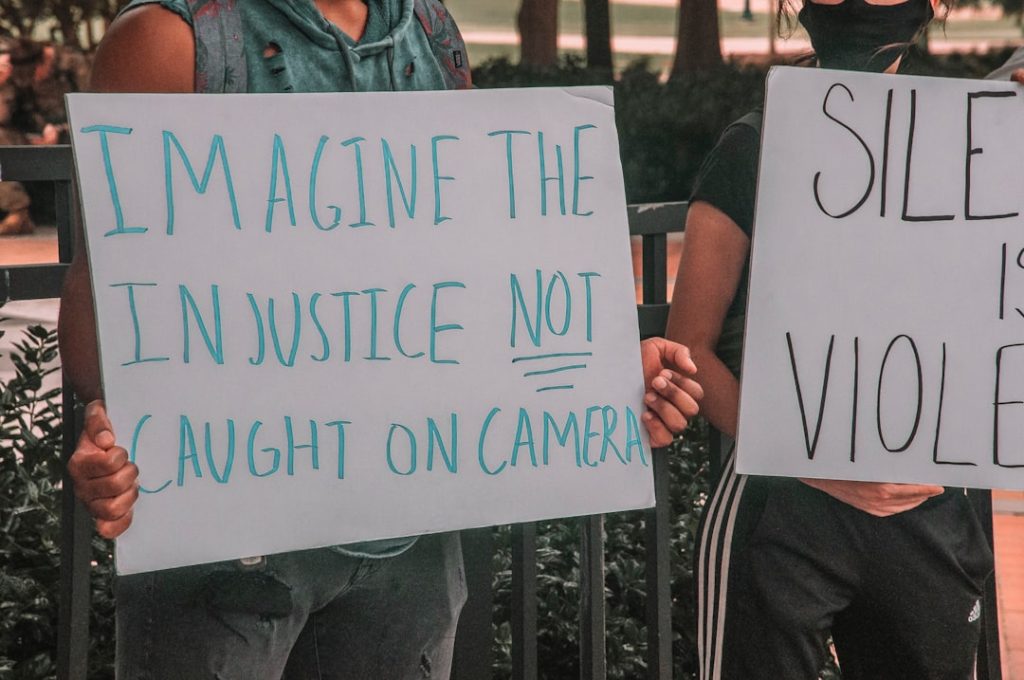
Photo by Maria Oswalt on Unsplash
Stay Connected with Flamr
Don’t forget to follow Flamr on social media!
Relacionado
Discover more from Fyra - Dating App for Progressives
Subscribe to get the latest posts sent to your email.