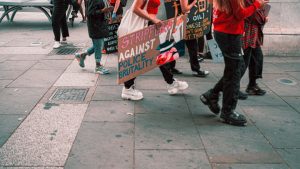

I used to think “progressive” just meant voting a certain way, reposting the right infographics, and showing up at a few marches when my schedule allowed. If I was “on the right side,” I figured I was doing my part.
But the last few years have forced a deeper reckoning. Between global crises, social movements, and very personal conversations that didn’t go the way I expected, I’ve realized that building a better world isn’t primarily about what we believe in public—it’s about how we show up in private. It’s about what we do with our privilege, how we hold discomfort, and whether we’re willing to change our lives, not just our opinions.
I want to explore that here: how we move from performative progressivism toward a quieter, sturdier solidarity—one rooted in intersectionality, humility, and everyday choices.
—
When “being progressive” stops at the caption
A few years ago, during a wave of protests, I posted a long, impassioned message about justice and equality. It was heartfelt; I meant every word. The likes rolled in. People commented things like “So well said” and “Thank you for using your platform.”
Later that week, a friend messaged me privately:
“Hey, I appreciate what you wrote. Can I ask—what are you actually doing about this in your day-to-day?”
I remember feeling defensive. Didn’t my post count? Didn’t my outrage matter?
But her question lingered. I realized my activism lived mostly online and inside conversations with people who already agreed with me. I wasn’t taking risks. I wasn’t changing how I spent my money, time, or attention. I was speaking loudly about injustice, but quietly preserving my comfort.
That realization hurt—but it was the beginning of something important.
—
Intersectionality: whose story is missing?
Intersectionality, a term coined by Kimberlé Crenshaw, is about how different forms of oppression overlap—race, gender, class, disability, sexuality, immigration status, and more. It’s not just a theory; it’s a lens that reveals whose experiences get erased when we only focus on one axis of identity.
I remember attending a panel on gender equality where every speaker was a cis, able-bodied, white woman with a corporate background. Their stories were real and valid, but something felt off. There was no mention of trans women, non-binary people, disabled women, women of color working low-wage jobs, or migrants navigating hostile systems.
Afterward, I caught myself thinking, “Well, they can’t represent everyone.” True—but they hadn’t even tried to name who was missing.
Intersectionality asks us to pause and ask:
– Whose voices are consistently centered here?
– Whose experiences are treated as “universal,” and whose are treated as “niche”?
– Where might my own perspective be limited by the identities I inhabit?
These questions can be uncomfortable, especially if we’re used to seeing our own experience reflected back as the default. But they’re essential. Without intersectionality, “progress” can quietly reproduce the same hierarchies it claims to challenge.
—
Privilege as a responsibility, not a guilt trap
Privilege is one of those words that makes people tense up. Many of us hear it as an accusation: “You didn’t earn what you have.” But privilege is more precise than that. It’s about unearned advantages in specific contexts—doors that open more easily for some than for others.
I grew up with a stable home, supportive parents, and access to education. I didn’t do anything to deserve those conditions; they were just there. For a long time, I treated that as the baseline of “normal life.” When I heard stories of people navigating homelessness, chronic illness, or systemic racism, I felt sympathy—but I didn’t see how my “normal” was actually a form of privilege.
The turning point came when a coworker told me, very calmly, “You know, you talk about ‘working hard’ as if that’s the only variable. For some of us, surviving is already hard work. The system isn’t neutral.”
I went home and sat with that sentence. It stung, but it also cracked something open. I started noticing how often I assumed everyone had the same starting line, the same safety nets, the same ability to “just push through.”
Here’s the shift that changed everything:
Privilege isn’t something to feel guilty about; it’s something to be accountable for.
Instead of thinking, “I’m a bad person for having advantages,” we can ask:
– How can I use what I’ve been given to make things fairer for those who weren’t?
– Where can I step back to let others lead?
– What am I willing to risk—social comfort, time, money—to stand with people who face barriers I don’t?
Privilege becomes less about shame and more about stewardship.
—
Allyship: less speech, more stamina
“Ally” has become a popular identity label, but allyship is not a status we earn once and keep forever. It’s a practice. It’s measured not by how loudly we speak when it’s trendy, but by how consistently we show up when it’s hard, boring, or inconvenient.
I’ve failed at this more than once.
There was a time when a colleague made a racist comment in a meeting. I felt a surge of anger—but I also felt fear. I worried about being “that person,” about derailing the agenda, about making things awkward. So I said nothing. Afterward, the person targeted by the comment looked tired in a way I didn’t know how to name.
Later, I tried to justify my silence: “I didn’t want to make it worse.” But if I’m honest, I didn’t want to make it worse for me.
Allyship asks us to choose discomfort over complicity.
It can look like:
– Gently but clearly challenging harmful language, even if it’s from someone we love.
– Declining opportunities that come at the expense of someone more marginalized, and advocating for their inclusion.
– Staying in the conversation when we’re called out, instead of rushing to defend ourselves or disappear.
One of the most humbling moments in my own journey was when a friend said, “I appreciate that you listen. But I need you to help carry this, not just understand it.”
That distinction—between empathy and shared responsibility—still guides me.
—
Questions for self-reflection
If you’re reading this and feeling a mix of resonance and discomfort, you’re not alone. Growth usually arrives with both.
Here are some questions I return to regularly:
1. Where do I have privilege, and how do I benefit from it—even unintentionally?
(Think about race, gender, class, citizenship, health, neurotype, age, language, etc.)
2. When was the last time I changed my behavior—not just my opinion—because I learned something about injustice?
What did that change cost me, if anything?
3. Whose voices do I tend to trust first? Whose stories do I dismiss as “too emotional,” “too angry,” or “too niche”?
4. When I’m called in or called out, how do I respond?
Do I center my feelings or the harm? Do I treat feedback as an attack or as a chance to grow?
5. What forms of activism feel “natural” to me, and which feel uncomfortable?
Is my comfort level shaped by my identity and privilege?
You don’t have to answer these perfectly. The point is to keep asking.
—
Paths forward: small, consistent acts of solidarity
Building a better world can feel overwhelming. No single person can fix systemic injustice. But each of us can choose to live in a way that either reinforces the status quo or gently, persistently pushes against it.
Here are some grounded starting points:
1. Practice “quiet redistribution.”
– Pay people fairly and on time.
– Tip generously when you can.
– Support mutual aid funds, community bail funds, and grassroots organizations instead of only large, well-known NGOs.
2. Shift your attention.
– Read books, essays, and newsletters by people whose identities and experiences differ significantly from yours.
– Follow organizers and advocates, not just commentators.
– When you share content, ask: “Whose voice am I amplifying?”
3. Audit your spaces.
– At work, in your community, in social groups: who is missing? Who is present but not heard?
– If you have influence, use it to change hiring practices, event lineups, accessibility standards, and decision-making processes.
4. Normalize uncomfortable conversations.
– Learn and practice phrases like, “That doesn’t sit right with me,” or “Can we talk about the impact of what was just said?”
– Have these conversations privately when appropriate, publicly when necessary.
5. Invest in your own unlearning.
– Take responsibility for educating yourself about histories of oppression and resistance.
– Treat mistakes as inevitable, but not inconsequential. Apologize, repair, and keep going.
—
The quiet work of becoming different
Progressive ideals—intersectionality, justice, solidarity—sound grand on paper. But in daily life, they look like a thousand small decisions that no one applauds.
They look like choosing to listen instead of dominate the conversation.
Like declining the joke that punches down.
Like staying at the table when the conversation turns to your own complicity.
Like recognizing that your comfort has often been purchased at someone else’s expense—and deciding that you’re willing to feel less comfortable if it means more people can breathe.
I don’t have this figured out. I still catch myself performing wokeness instead of practicing it. I still avoid certain conversations. I still discover new ways I’ve been benefiting from systems I claim to oppose.
But I’m beginning to see progress not as a destination, but as a posture: a willingness to be changed by what we learn, and to let that change ripple outward into how we live.
If you’re reading this, maybe you’re already somewhere on that path. Maybe you’re tired, or disillusioned, or unsure where to start. That’s okay.
The work of building a better world is collective, messy, and slow. But it starts, quietly, with a question:
Who do I want to become—and what am I willing to let go of so that more of us can live, not just survive?
Sit with that. Let it unsettle you a little. And then, choose one small thing—today—that moves you from belief into practice.
The world won’t change overnight. But you might. And that matters more than we often admit.
Photo by Rinald Rolle on Unsplash
Relacionado
Discover more from Fyra - Dating App for Progressives
Subscribe to get the latest posts sent to your email.