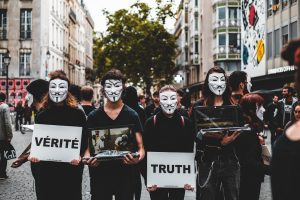

I used to think of “progress” as something happening out there—on the news, in elections, in movements led by people braver and louder than me. Lately, I’ve been realizing that progress is also deeply personal. It’s in the tiny, uncomfortable moments when we notice our own biases, feel the tug of defensiveness, and choose curiosity instead.
It’s August 23, 2026, and the world feels like it’s at a crossroads: climate anxiety, political polarization, widening inequality, new technologies changing how we live and work. It’s easy to feel small in the face of all that. But the question I keep returning to is this:
What does it mean, concretely, to build a better world from where I stand?
Not in grand slogans, but in the daily, often quiet practice of showing up for others—and for myself—with more honesty, more courage, and more care.
—
The moment I realized “good intentions” weren’t enough
A few years ago, I was in a conversation about workplace diversity. I remember saying something like, “I don’t see color; I treat everyone the same.” I meant it as a statement of fairness and equality. Someone I respected paused, looked at me gently, and said:
“Can I push back on that? When you say you don’t see color, it can feel like you don’t see what I actually go through.”
My first reaction was defensive. I wanted to explain myself, to insist that I was one of the “good ones.” But something in their tone made me pause. They weren’t attacking me; they were inviting me to see more.
We talked. I listened. I learned how “not seeing color” can erase people’s lived experiences—the extra scrutiny, the subtle exclusions, the feeling of being “the only one” in the room. I realized that my version of equality was based on my experience, not theirs.
That conversation changed me. It was the first time I truly understood that being “nice” or “well-intentioned” isn’t the same as being an ally. Allyship isn’t about how we see ourselves; it’s about how we show up for others.
Since then, I’ve been asking harder questions:
– Where does my comfort come at someone else’s expense?
– What truths do I avoid because they complicate the story I tell about myself?
– How can I listen in ways that make space, instead of filling it?
—
Intersectionality: Seeing the whole picture
The word “intersectionality” can sound academic, but the idea behind it is simple and human: none of us is just one thing.
We’re all made of overlapping identities—race, gender, class, disability, sexuality, age, immigration status, religion, body size, and more. These intersections shape how we move through the world, and how the world responds to us.
Think about someone who is:
– Black and queer and disabled
– A single mother and an immigrant and working class
– Trans and neurodivergent and living in a rural area
Their experiences of discrimination or exclusion aren’t just “racism” or “sexism” or “ableism” in isolation. They’re compounded, layered, sometimes invisible to people who don’t share those intersections.
I used to treat identities like separate boxes. I’d think about “women’s issues” or “racial justice” or “LGBTQ+ rights” as distinct causes. Intersectionality asks us to zoom out: Who falls through the cracks when we only focus on one axis of inequality at a time?
A practical example:
When we talk about “women in leadership,” who do we picture? Often, it’s able-bodied, straight, cisgender women from relatively privileged backgrounds. If we don’t intentionally widen that lens, we can build programs that technically “support women” but still leave many women—and nonbinary people—on the margins.
Intersectionality isn’t just a theory to nod at. It’s a practice of asking:
– Whose voice is missing from this conversation?
– Who pays the price when we oversimplify?
– Who is affected in ways we’re not seeing because we’re only looking through our own lens?
—
Privilege: Not a verdict, but a responsibility
Privilege is one of those words that can make people tense up. We often hear it as an accusation: “You’re privileged.” But privilege isn’t a moral judgment; it’s a description of how systems treat us.
If I’ve never worried about being stopped by the police because of my race, that’s privilege.
If I can marry the person I love without legal or social backlash, that’s privilege.
If buildings, websites, and policies are designed with my body and my brain in mind, that’s privilege.
Privilege doesn’t mean my life is easy. It means my hardships aren’t amplified by certain systemic barriers. That’s uncomfortable to sit with, especially when we’re struggling in other ways. But there’s a quiet power in acknowledging:
“I didn’t earn every advantage I have. Some of them were handed to me by a world that treats people like me better than others.”
The question then becomes:
What do I do with that?
I can deny it, feel guilty about it, or use it. Using privilege doesn’t mean speaking over people; it means leveraging the access, safety, and influence I have to open doors, shift norms, and challenge harm.
Some practical ways to use privilege:
– In conversations: When someone makes a harmful joke or comment, speak up—not to perform virtue, but to signal that exclusion isn’t acceptable here.
– In workplaces: Advocate for hiring practices, pay structures, and policies that support people who’ve historically been excluded or underpaid.
– In communities: Support local organizations led by those most affected by injustice; follow their leadership rather than assuming you know best.
– In relationships: Believe people when they describe experiences you haven’t had. Resist the urge to center your feelings; ask what support looks like to them.
—
Allyship as a verb, not a label
One of the most humbling lessons I’ve learned is that I don’t get to call myself an ally. That title, if it’s used at all, belongs to the people I’m trying to support. My job is to show up consistently, imperfectly, and be open to feedback.
Allyship means:
– Listening more than I speak
– Accepting correction without collapsing into shame
– Staying in the work even when it’s no longer trendy or comfortable
There was a time when I thought posting the right things on social media was “doing the work.” It’s not that public statements are meaningless—they can matter. But I had to confront the gap between what I said online and what I did offline.
Was I interrupting bias at my dinner table?
Was I learning from people whose experiences challenge my own worldview?
Was I changing how I spend money, time, and attention?
Sometimes the honest answer was no. And that was a painful but necessary realization.
A question that helps me recalibrate:
If I couldn’t talk about my values publicly, what would my actions quietly reveal about what I truly care about?
—
Building a better world from where we stand
The problems we face—climate crisis, systemic racism, economic inequality, attacks on bodily autonomy—are enormous. None of us can fix them alone. But each of us can choose how we show up in our circles of influence.
Here are some paths forward that have helped me, and might be useful for you too:
1. Start with self-honesty
– What identities give me unearned ease or safety?
– Where do I feel defensive when issues of privilege or injustice come up?
– What stories about myself am I most afraid to question?
Writing these down, without judgment, can be a powerful first step.
2. Learn from those at the margins
Seek out books, podcasts, articles, and voices from communities you’re not part of—especially people living at multiple intersections of marginalization. Pay attention to what they’re asking for. Let their perspectives complicate your assumptions.
Ask yourself:
– Whose voices do I instinctively trust?
– Whose voices do I overlook or doubt?
– How can I actively rebalance that?
3. Practice small, consistent acts of solidarity
Not every act of solidarity is dramatic. Some are quiet and steady:
– Correcting a colleague who misgenders someone, even when it feels awkward.
– Making sure events you organize are accessible—not just physically, but financially and emotionally.
– Sharing credit, opportunities, and information with people who are often left out of informal networks.
– Saying, “I don’t know enough about this yet, but I’m willing to learn.”
Ask:
What is one small thing I can do this week that makes my corner of the world more just, more welcoming, or more humane?
4. Stay in the discomfort
Growth is uncomfortable. It asks us to confront the ways we’ve benefited from or participated in harm, even unintentionally. It’s tempting to retreat into guilt or denial. But guilt is only useful if it moves us toward responsibility.
Try reframing:
– From “I’m a bad person” to “I did something harmful; what can I do differently next time?”
– From “This is too overwhelming” to “What is one piece of this that I can influence?”
—
A quiet, radical commitment
Maybe building a better world starts with a quiet, radical commitment:
I will keep learning, even when it hurts.
I will keep listening, even when it challenges me.
I will keep showing up, even when no one is watching.
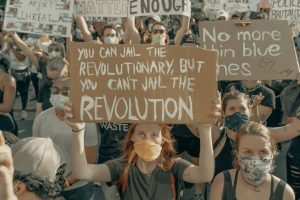
Progress isn’t just measured in policies and protests, as vital as those are. It’s also measured in the subtle shifts of how we see ourselves, how we treat each other, and how we respond to the call to do better.
As you step into the rest of this year, you might ask yourself:
– What kind of ancestor do I want to be to the people who come after me?
– If someone who’s struggling walked into my life today, what would they find?
– Where can I trade comfort for courage, and certainty for curiosity?
We won’t get it perfect. But perfection was never the goal. The goal is to move, steadily and honestly, toward a world where more people can live with dignity, safety, and joy—and to recognize that the path there runs right through our own hearts.
Photo by Jonathan Borba on Unsplash
Relacionado
Discover more from Fyra - Dating App for Progressives
Subscribe to get the latest posts sent to your email.