
Progressive Community Action in 2026: How to Get Involved, Build Power, and Find Your People
If the last few years have taught us anything, it’s that change doesn’t happen on its own. It’s pushed forward by people—neighbors, coworkers, students, parents, elders—who decide to show up for each other and for the future.
You don’t need to be a full-time organizer or have a huge social media following to make a difference. You just need a starting point, a sense of what matters to you, and a community to plug into.
This guide walks through practical, concrete ways to get involved in progressive community work—both online and offline, at low and high levels of commitment—plus how to find local groups and stay engaged for the long haul.
—
Step 1: Clarify What You Care About
You don’t have to pick just one cause, but it helps to know your priorities so you don’t burn out trying to do everything.
Common progressive focus areas include:
– Racial justice and anti-racism
– Climate justice and environmental protection
– Worker rights and economic justice
– LGBTQIA+ rights and gender justice
– Housing justice and tenants’ rights
– Immigrant and refugee support
– Disability justice and accessibility
– Public education and student organizing
– Mutual aid and food security
– Criminal legal reform and abolitionist organizing
Ask yourself:
– What issues make me feel both angry and hopeful?
– What skills do I already have (or want to build)?
– How much time and energy can I realistically commit right now?
Use your answers as a compass. You can always adjust as you learn more.
—
Step 2: Start Small – Low-Commitment Ways to Get Involved
If you’re new to activism or juggling a lot, start with actions that fit into your current life. Small steps still matter, especially when they’re consistent.
Online, Low-Commitment
1. Subscribe and follow
– Follow local progressive organizations, mutual aid groups, and community centers on:
– Instagram, TikTok, Facebook, X, Mastodon, Bluesky
– Sign up for email lists and newsletters from:
– Local ACLU chapters
– NAACP branches
– Democratic Socialists of America (DSA) chapters
– Sunrise Movement hubs
– Tenant unions
– These feeds and emails will surface upcoming events, petitions, and volunteer needs.
2. Stay informed with intention
– Choose 1–3 trusted sources (e.g., local independent media, progressive newsletters) instead of doomscrolling.
– Look for outlets that:
– Center marginalized voices
– Offer context, not just headlines
– Highlight solutions and community efforts
3. Digital micro-actions
– Sign petitions from credible organizations.
– Send pre-written letters to elected officials through tools from groups like:
– Color Of Change
– Common Cause
– Planned Parenthood
– Participate in online town halls, webinars, and teach-ins.
Offline, Low-Commitment
1. Show up to public meetings
– Attend:
– School board meetings
– City council or county board meetings
– Police oversight or civilian review meetings
– You don’t have to speak. Just being present, taking notes, and sharing what you learn with friends or online can shift the balance of power.
2. Drop-in community events
– Look for:
– Teach-ins and workshops
– Film screenings and panel discussions
– Community art builds (e.g., making protest signs, banners)
– These events are often free and designed for newcomers.
3. Support local progressive businesses and spaces
– Buy from worker co-ops, Black- and Brown-owned businesses, and ethical local shops when you can.
– Use community spaces (bookstores, cultural centers, union halls) for meetings and events to help keep them alive.
—
Step 3: Level Up – Medium to High Commitment Involvement
Once you’ve dipped your toes in, you might feel ready to take on more sustained roles.
Join or Build a Local Group
1. Progressive organizations with local chapters
– Democratic Socialists of America (DSA) – Focus on economic justice, worker power, housing, and more.
– Sunrise Movement – Youth-led climate justice and Green New Deal organizing.
– Black Lives Matter chapters and Black-led grassroots orgs – Racial justice and abolitionist work.
– Indivisible – Local groups focused on democratic reforms and resisting authoritarianism.
– Planned Parenthood Action, NARAL, abortion funds – Reproductive justice and access to care.
– Tenants’ unions / housing justice orgs – Fighting evictions, rent hikes, and unsafe conditions.
– Immigrant rights groups – Supporting undocumented and refugee communities.
Most of these organizations list local chapters on their websites. Search “[organization name] + [your city or region]” or use their “Find a Chapter” tools.
2. Mutual aid networks
– Mutual aid is about neighbors supporting neighbors, outside of charity or top-down structures.
– Typical projects:
– Free food distribution
– Rent and bill support
– Ride shares to appointments or protests
– Community fridges and free stores
– Look for:
– “Mutual aid [your city]” on Google, Instagram, or Facebook
– Flyers in laundromats, libraries, and community boards
– Mutual aid often has flexible roles—from packing groceries to doing data entry.
3. Union and workplace organizing
– If you’re a worker, your workplace can be a site of powerful organizing:
– Join an existing union or organizing committee.
– Talk to coworkers about shared issues (pay, safety, discrimination).
– Reach out to unions like SEIU, AFSCME, AFT, UE, or worker centers in your area.
– Even if a full union drive feels far off, building relationships and sharing information is a meaningful start.
Take On a Regular Role
1. Volunteer roles that build skills
– Phonebanking or textbanking
– Event planning and logistics
– Social media, graphic design, or website support
– Childcare during meetings
– Interpretation/translation
– Legal observation or court support (with training)
– Research and policy analysis
2. Leadership and organizing
– Facilitate meetings or reading groups.
– Coordinate a campaign (e.g., for rent control, police budget cuts, school board reform).
– Join an organizing committee or steering committee.
– Start a campus or workplace chapter of an existing organization.
Leadership doesn’t have to mean being the loudest person in the room. It can mean being reliable, thoughtful, and consistent.
—
Step 4: Different Causes, Different Paths
Here are concrete examples of how involvement can look across issues:
Climate and Environmental Justice
– Join or start:
– A local climate justice coalition
– A neighborhood tree-planting or community garden project
– A campaign targeting a polluting facility in your area
– Actions:
– Attend public hearings on pipelines, refineries, or zoning.
– Support Indigenous-led land and water defense.
– Push for public transit, bike lanes, and green infrastructure in your city.
Racial and Gender Justice
– Connect with:
– Black-led, Indigenous-led, and POC-led organizations
– LGBTQIA+ centers and trans-led groups
– Feminist and reproductive justice organizations
– Actions:
– Support bail funds and legal defense funds.
– Show up for court support and community safety patrols.
– Help organize know-your-rights trainings or bystander intervention workshops.
Housing and Economic Justice
– Join:
– A tenants’ union or tenants’ rights hotline
– Campaigns for rent control, anti-eviction protections, or public/social housing
– Actions:
– Door-knock your building to connect neighbors.
– Support rent strikes or collective bargaining with landlords (with guidance).
– Attend planning and zoning hearings to oppose displacement.
Education and Youth Organizing
– Connect with:
– Student unions and campus organizations
– Parent-teacher groups with a justice focus
– Youth-led groups organizing around curriculum, policing in schools, or funding
– Actions:
– Organize teach-ins and study groups.
– Push for inclusive curricula and safe, supportive learning environments.
– Support book bans resistance and library defense.
—
Step 5: How to Actually Find Local Groups
If you’re not already plugged in, it can feel like there’s a secret door you don’t know how to open. Here are practical ways to find that door:
1. Search smart
– Try combinations like:
– “[your city] + mutual aid”
– “[your city] + tenants union”
– “[your city] + abolitionist collective”
– “[your state] + reproductive justice organization”
– Add “Instagram” or “Facebook” to the search if websites are out of date.
2. Check these places
– Local independent bookstores and cafes (flyers, bulletin boards)
– Community centers, YMCAs, and libraries
– Campus centers (multicultural, LGBTQIA+, women’s centers)
– Faith communities with progressive reputations
3. Ask people directly
– If you attend a protest, workshop, or town hall, ask:
– “Are there any ongoing groups or meetings I can join?”
– “Is there a Signal or WhatsApp group for folks organizing around this?”
– Many groups communicate via:
– Signal, WhatsApp, Telegram
– Slack or Discord
– Email listservs
4. Use national directories
– Some organizations list local allies or partners:
– ACLU state affiliates
– National Lawyers Guild chapters
– National Network of Abortion Funds
– Food Not Bombs and similar networks
—
Step 6: Take Care of Yourself and Each Other
Sustainable activism is not about doing everything; it’s about staying in the work long enough to see change.
– Set realistic commitments. It’s okay to say, “I can help two hours a week,” or “I can only do short-term projects.”
– Share the load. Healthy groups distribute tasks and avoid relying on one or two people.
– Build relationships, not just campaigns. Potlucks, social events, and check-ins matter.
– Make room for rest. Rest is not a reward; it’s part of the work. Burnout helps no one.
—
Step 7: Remember Why Collective Action Matters
Individual actions (voting, recycling, donating) are not useless, but they’re not enough on their own. Systems are designed to resist change—unless people organize together.
Community-based, collective work can:
– Shift local policy (budgets, ordinances, school rules).
– Build power for marginalized communities.
– Create networks of care that outlast any single campaign.
– Inspire others to join and carry the work forward.
You’re not alone in wanting a more just, caring world. There are people in your city, school, workplace, and online who want the same—and they’re looking for you, too.
—
Your Next Step (Choose One)
If you want to act today, pick one:
– Search for “mutual aid [your city]” and follow at least one group.
– Mark your calendar for the next city council or school board meeting.
– Sign up for a newsletter from a progressive organization in your area.
– Text a friend: “I want to get involved in local activism. Want to look for a group with me?”
– Commit one evening this week to attending a meeting, webinar, or training.
Change grows from small, consistent actions taken together. Start where you are, with what you have, alongside others—and keep going.
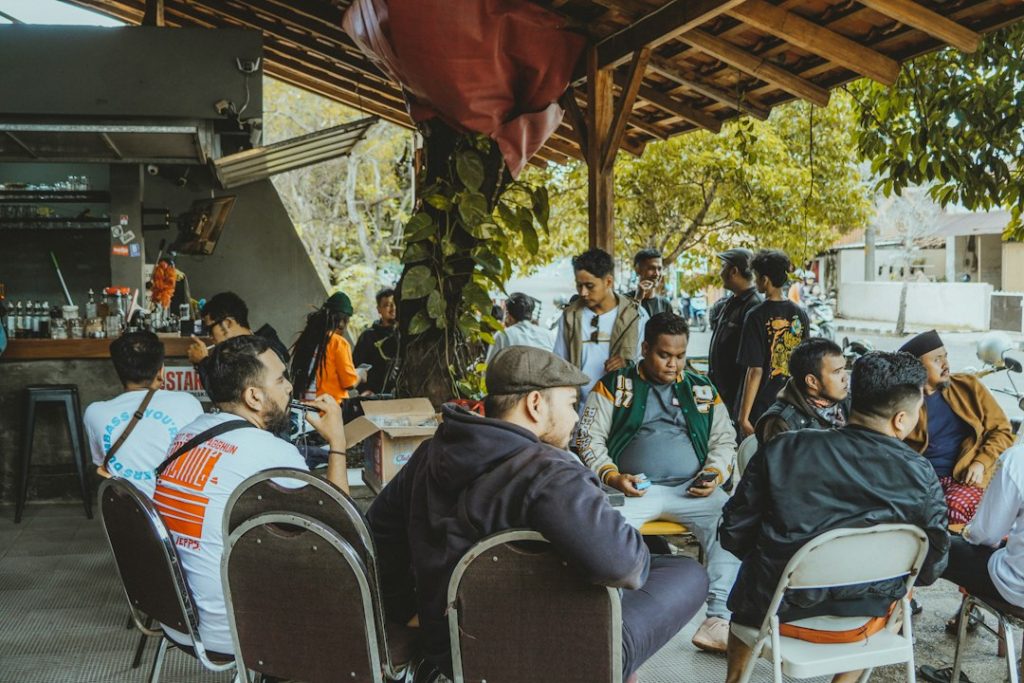
Photo by setengah limasore on Unsplash
Relacionado
Discover more from Fyra - Dating App for Progressives
Subscribe to get the latest posts sent to your email.