Love, Borders, and What We Choose to Destroy
Some news stories feel like they’re about policy or politics “over there.” This one is about what we value at the deepest level—what we’re willing to bulldoze, literally, to protect a worldview built on fear instead of connection.
According to a recent investigation by The Intercept, the Trump administration’s push for an expanded border wall has led to the bulldozing of a 1,000-year-old archaeological site in Arizona, located on a wildlife refuge near the U.S.–Mexico border. This wasn’t an accident or a tragic misunderstanding. Federal agencies had reportedly been in discussions about how to protect the site. And then the bulldozers came anyway.
On a dating app blog, this might sound like an odd story to spotlight—but it’s directly connected to the kind of world we’re trying to build together. A world where people can move, love, and live freely. A world where we honor the histories that came before us and the communities that exist now. A world where our desire for safety doesn’t turn into a justification for erasing entire cultures and ecosystems.
What happened in Arizona is about borders—but it’s also about belonging, memory, and what we choose to protect when we say we care about each other.
Read the full article: Trump Bulldozed a 1,000-Year-Old Archeological Site to Make Room for a Second Border Wall (The Intercept)
What Happened at the Border: The Story in Focus
The destruction of a 1,000-year-old site
The Intercept’s reporting centers on an ancient archaeological site on a wildlife refuge in Arizona, near the U.S.–Mexico border. The site, estimated to be around 1,000 years old, was part of a rich cultural landscape: remnants of past Indigenous communities, their homes, their tools, their stories. These weren’t just “old rocks”—they were part of a living archive of human history in the region.
Local archaeologists and refuge staff were aware of the site’s importance. The Department of Homeland Security (DHS) was reportedly in talks with the refuge to ensure that this ancient site would be protected amid ongoing border infrastructure plans. That’s crucial: it means the federal government knew what was at stake.
Despite that, construction crews moved in with heavy machinery and bulldozed the area to make room for a second border wall. In doing so, they didn’t just clear land—they erased a piece of history that cannot be rebuilt or replaced.
“National security” vs. cultural survival
The justification is familiar: national security, border enforcement, the supposed need for more physical barriers. But the details of this case highlight deeper issues:
- Ignored warnings: Archaeologists and local experts had flagged the site’s significance. DHS was aware. The destruction wasn’t a surprise; it was a choice.
- Wildlife refuge under siege: The site was on a protected wildlife refuge, which is supposed to be a sanctuary for ecosystems and, often, historic and cultural sites. Turning these spaces into staging grounds for walls and surveillance fundamentally changes their purpose.
- A “second wall”: This wasn’t even the first barrier. It was an expansion—an intensification of a militarized border landscape that’s already reshaped the region.
What’s been lost is more than artifacts. It’s a physical link to the people who were here long before modern borders—people whose descendants are still here and still fighting to be seen, heard, and respected.
Why This Matters: Progressive Values at the Border
Colonial logic in real time
For progressives, this story isn’t just about Trump or one bad decision. It’s a snapshot of a much older pattern—a colonial logic that treats land as an empty canvas and Indigenous history as expendable.
Border walls in the U.S. have repeatedly cut through:
- Sacred Indigenous sites and burial grounds
- Wildlife refuges, national monuments, and fragile ecosystems
- Communities that existed long before there was a “border”
Bulldozing a 1,000-year-old site fits into a long history of erasing Indigenous presence to make way for “security,” “development,” or “progress.” It’s the same story that underlies the theft of Native land, the breaking of treaties, and the destruction of sacred places for pipelines, mining, and highways.
Progressive movements have increasingly recognized that you can’t talk about justice without talking about land and history. This incident is a stark reminder that the struggle against border militarization is also a struggle against ongoing colonization.
Security that destroys what it claims to protect
There’s another paradox here: the idea that we must destroy irreplaceable heritage in the name of protecting “our way of life.” But what is “our way of life” if it includes erasing the very histories that make this place what it is?
When we talk about safety in progressive spaces, we’re usually talking about:
- Safety from violence and discrimination
- Safety to move freely, love freely, and live authentically
- Safety for future generations to inherit a livable planet and rich cultural heritage
Border walls, especially when they bulldoze ancient sites and ecosystems, offer a different kind of “safety”—a narrow, exclusionary one that prioritizes fear of outsiders over care for people and place. It’s a safety that comes at the cost of memory, environment, and human dignity.
Borders, Belonging, and the Politics of Love
What this has to do with dating, relationships, and community
On a dating app, we spend a lot of time thinking about connection: how to meet across differences, how to build trust, how to be honest about who we are. Border walls are the physical opposite of that. They’re about separation, suspicion, and control.
But they don’t just separate nations; they separate:
- Families split by arbitrary lines on a map
- Indigenous communities whose ancestral lands span both sides of the border
- People from their own histories, as sites like this one are destroyed
When a government is willing to bulldoze a 1,000-year-old site for a second wall, it’s saying: “We value this line in the sand more than we value the people and cultures who have lived here for centuries.” That message seeps into how we think about each other, who belongs, and whose stories matter.
Progressive dating spaces try to do the opposite. We try to cultivate a culture where:
- Everyone’s story is valid and worth listening to
- Differences are not threats but invitations to learn
- Borders—of gender, sexuality, race, nationality—are questioned, not blindly accepted
In that sense, this story is a reminder that the politics of intimacy and the politics of the border are deeply connected. How we treat strangers at the border is an extension of how we treat each other in everyday life.
Love as a counter to militarization
Progressive movements have long argued that love is political—not in a cheesy slogan way, but in a concrete sense. Love asks us to expand our circle of care, to see strangers as potential neighbors, partners, friends. Border militarization does the opposite: it narrows our circle of care to “us” versus “them.”
When we build walls, we’re choosing fear over relationship. When we destroy ancient sites, we’re choosing amnesia over memory. When we accept these choices as normal, we’re shrinking the emotional and moral universe we live in.
Choosing love, in this context, means:
- Refusing to see people as “illegal” or disposable
- Honoring Indigenous sovereignty and history
- Protecting the land and ecosystems that sustain all of us
Different Angles: How People See This Story
Indigenous perspectives
For Indigenous communities in the borderlands, this isn’t just about one site. It’s about a pattern. Sacred sites, burial grounds, and historic villages have repeatedly been damaged or destroyed by border infrastructure. Each loss is a blow to cultural continuity, spiritual practice, and community memory.
From this perspective, the bulldozing is part of an ongoing violation of sovereignty and treaty rights. It’s not just “heritage” in an abstract sense; it’s a living relationship to land that’s being violently interrupted.
Environmental and scientific perspectives
Archaeologists, historians, and conservationists see this as a devastating loss of knowledge. Sites like this help us understand migration, trade, agriculture, and daily life in the region centuries ago. Once destroyed, that knowledge is gone.
Environmental advocates also point out that border walls fragment habitats, disrupt wildlife migration, and alter water flows. When a wall cuts through a wildlife refuge, it turns what should be a sanctuary into a militarized zone.
Conservative and “security-first” perspectives
Some defenders of the wall argue that national security must come first, even at the cost of historic sites. They may frame the destruction as unfortunate but necessary, or downplay the site’s significance compared to the perceived threat of migration.
But even within security circles, there’s debate. Many experts argue that walls are a blunt, ineffective tool in an era where migration is driven by climate change, economic inequality, and violence—issues a wall can’t solve. From that angle, destroying irreplaceable heritage for a symbolic, politically motivated project looks less like security and more like vandalism with a flag on it.
What This Means for the Progressive Movement
Intersectionality isn’t optional
This story touches immigration, Indigenous rights, environmental justice, and cultural preservation. It’s a textbook example of why progressive movements emphasize intersectionality: you can’t fight for one kind of justice while ignoring the others.
To respond meaningfully, progressives need to:
- Center Indigenous leadership in border and land-use debates
- Connect migrant justice work with climate and environmental advocacy
- Insist that cultural heritage is not a luxury, but a core part of community well-being
From outrage to organizing
Outrage is understandable—and justified. But the next step is channeling that emotion into action. This incident can become a catalyst for:
- Policy change: Strengthening legal protections for cultural
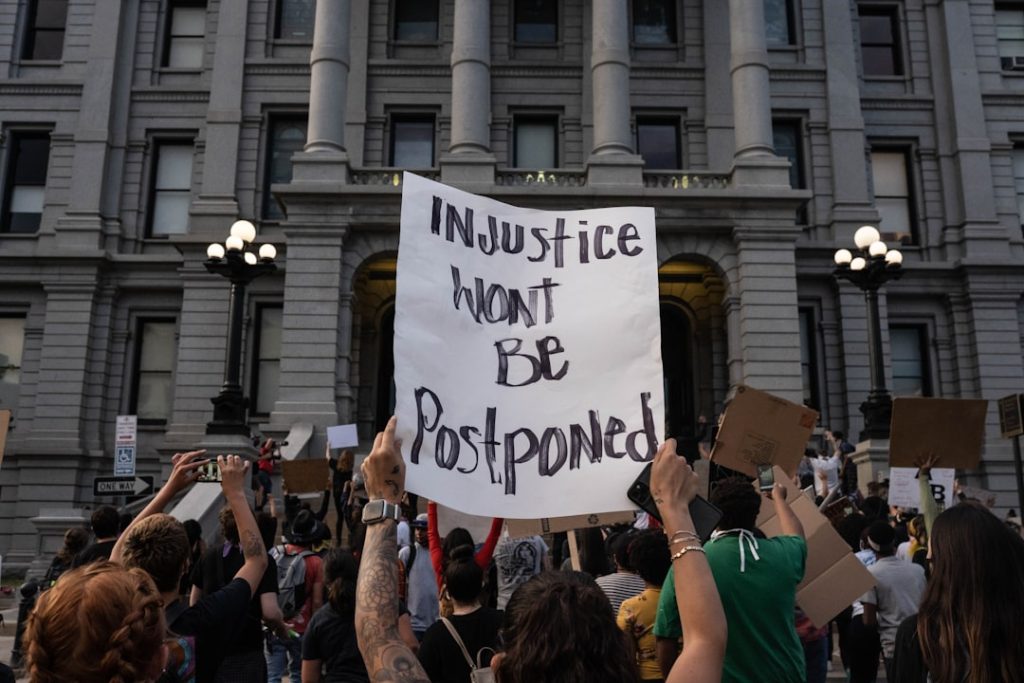
Photo by Taylor Turtle on Unsplash
Stay Connected with Flamr
Don’t forget to follow Flamr on social media!
Relacionado
Discover more from Fyra - Dating App for Progressives
Subscribe to get the latest posts sent to your email.