Why a Hardline Iranian Politician Matters for Your Love Life
If you’re on a progressive dating app, you probably care about more than just cute selfies and clever bios. You care about values: justice, consent, equality, liberation. But what does any of that have to do with an aging Iranian politician and the geopolitics of Israel, the U.S., and Iran?
More than you might think.
The Intercept recently published a bombshell report arguing that Mahmoud Ahmadinejad — the former Iranian president infamous for Holocaust denial, brutal crackdowns, and nuclear brinkmanship — is still bad for Iranians, but still very convenient for Israel’s leadership and for U.S. hawks. The story exposes how, for years, powerful governments have claimed to care about “freeing the Iranian people” while actually benefiting from Iran’s hardliners staying in charge.
On the surface, this might sound like distant foreign policy drama. But underneath, it’s about something deeply intimate: whose lives are valued, whose freedoms are negotiable, and how power structures manipulate fear and identity — including the identities we bring into our relationships.
Read the full article: Ahmadinejad Is Still Bad for Iranians — and Still Great for Israel (The Intercept)
What the Report Reveals
Ahmadinejad’s Return to Relevance
The Intercept’s piece traces how Mahmoud Ahmadinejad, long seen as a political has-been, continues to play a role in Iran’s internal politics and in the narratives of foreign powers. Even if he’s not formally in charge, his brand of authoritarian populism and ultra-conservative ideology still shapes the political landscape — and the lives of everyday Iranians.
The report details how:
- Ahmadinejad’s camp remains influential in Iran’s political factions, especially among hardline conservatives and elements of the security apparatus.
- His legacy continues to justify repression: authorities invoke “national security” and “foreign threats” to crack down on dissent, including women’s rights activists, queer people, students, and journalists.
- His rhetoric — anti-Israel, anti-U.S., hyper-nationalist — still resonates with some segments of Iranian society, especially those disillusioned with corruption and economic hardship.
Why He’s “Great” for Israel’s Leadership and U.S. Hawks
The core argument of the article is blunt: leaders in Israel and the U.S. have long found Ahmadinejad-style hardliners politically useful. Not because they support his ideology, but because he’s the perfect villain.
The Intercept highlights how:
- Israeli governments, especially those led by right-wing coalitions, have used the threat of Iran’s hardliners to justify militarization, settlement expansion, and harsh policies toward Palestinians and neighboring states.
- U.S. hawks across both major parties have invoked Iran’s hardline leadership to argue against diplomacy, justify sanctions that hurt civilians, and maintain a permanent “enemy” to rally domestic support.
- Moments of reform or moderation in Iran were often ignored or undermined by outside actors who preferred a clear, scary adversary over a complicated, evolving reality.
The result: a vicious cycle where Iranian hardliners and foreign hardliners feed off each other’s existence, while ordinary people in Iran — especially women, youth, queer communities, and ethnic minorities — pay the price.
The Progressive Take: When “Liberation” Is a Brand, Not a Goal
Weaponizing Women and Queer Rights
One of the most pointed aspects of The Intercept’s analysis is how Western governments selectively invoke human rights — especially women’s and LGBTQ+ rights — to justify their foreign policy, without actually centering the people they claim to defend.
Iran’s regime has a brutal record on gender and sexuality: enforced hijab laws, violent crackdowns on protests, persecution of queer people, and systemic legal inequality. Progressive movements worldwide have rightly stood in solidarity with Iranian women and LGBTQ+ communities, especially during mass protests and campaigns like “Women, Life, Freedom.”
But the report shows how U.S. and Israeli leaders often use these struggles as talking points rather than as mandates for real solidarity. They:
- Highlight Iranian women’s oppression to frame Iran as uniquely barbaric, while ignoring or enabling patriarchal violence at home and among allies.
- Invoke queer rights when convenient, while supporting regimes elsewhere that criminalize LGBTQ+ people or repress them in other ways.
- Use the language of liberation to sell sanctions, military threats, or covert operations that rarely translate into greater safety or freedom for people on the ground.
In other words, “freeing the Iranian people” becomes a slogan — a branding exercise for foreign policy — rather than a genuine commitment to people’s autonomy and dignity.
Sanctions, Suffering, and Selective Outrage
The article also underscores how broad economic sanctions, framed as tools to pressure Iran’s leadership, have devastated ordinary people instead. Progressives have long criticized sanctions as a form of collective punishment, and The Intercept’s reporting reinforces that critique:
- Sanctions drive up the cost of living, limit access to medicine, and deepen poverty, disproportionately affecting women, children, and marginalized communities.
- Economic hardship can actually strengthen hardliners, who exploit crisis conditions to consolidate power, blame foreign enemies, and crack down on dissent.
- Meanwhile, foreign leaders can claim moral high ground — “we’re standing up to tyranny” — while sidestepping their own complicity in regional instability and human rights abuses.
For progressives, this is a familiar pattern: powerful states using human rights rhetoric to justify policies that harm the very people they claim to defend.
Why This Matters on a Dating App
Values Are Part of Attraction
On a progressive dating app, politics isn’t just a “topic to avoid.” It’s often a filter, a compatibility marker, a love language. You’re not just swiping on faces; you’re swiping on worldviews. Stories like this one matter because they challenge us to think more critically about what we mean when we say we’re “pro-human rights” or “pro-democracy.”
This report invites us to ask:
- Do we support policies that actually empower people on the ground, or just ones that sound good in a tweet?
- Are we consistent in our solidarity, or do we only care when our own governments tell us to?
- Do we recognize the humanity of people in places like Iran beyond their role as victims or villains?
These questions aren’t abstract. They shape how we talk to partners and friends, how we navigate political differences in relationships, and how we show up for communities we’re not part of.
Intersectionality Isn’t Optional
Progressive dating culture is increasingly intersectional: people care about race, gender, class, disability, queerness, and global justice as interconnected struggles. Iran is a powerful case study in intersectionality:
- Gender oppression is enforced by both state law and economic hardship.
- Ethnic minorities (like Kurds, Baluchis, and Arabs) face layered discrimination.
- Queer Iranians live under constant threat from both the state and social stigma.
- Global sanctions and militarization amplify local repression and inequality.
When we swipe, match, and build relationships, we bring these intersecting realities with us. Understanding stories like Ahmadinejad’s political afterlife helps us recognize how power operates — and how our solidarity can be more than performative.
Different Perspectives, Same People at the Center
The “Security First” Argument
To be fair, not everyone sees this the same way. Some argue that:
- Iran’s leadership poses a real threat to regional stability and to Israel’s security.
- Hardline figures like Ahmadinejad justify strong deterrence, including sanctions and military preparedness.
- Diplomacy has limits when dealing with regimes that repress their own people and support armed groups abroad.
From this perspective, foreign leaders might claim they have no choice but to prioritize security, even if that means cozying up to their own hardliners or sidelining grassroots movements in Iran.
The Grassroots and Diaspora Perspective
But many Iranian activists, both inside the country and in the diaspora, offer a different lens:
- They argue that foreign military threats and broad sanctions strengthen the regime’s narrative and weaken civil society.
- They call for targeted measures against officials and institutions, not blanket policies that punish civilians.
- They emphasize the need for international solidarity that centers their voices, rather than using them as props for someone else’s geopolitical agenda.
Progressive movements globally have increasingly aligned with this grassroots perspective, insisting that any policy framed as “helping Iranians” must be accountable to Iranians themselves — especially women, queer people, workers, and marginalized communities.
Lessons for the Progressive Movement
Beware of Convenient Villains
One of the biggest takeaways from The Intercept’s reporting is how convenient villains like Ahmadinejad can be. When a leader is openly misogynistic, homophobic, and authoritarian, it’s easy to rally opposition. But it’s also easy for other governments to:
- Use that villain to distract from their own abuses.
- Justify endless militarization and surveillance.
- Claim moral superiority without doing the hard work of real solidarity.
Progressives are called to resist this simplification. We can oppose Iran’s hardliners without endorsing policies that harm ordinary Iranians. We can criticize Israel’s government without erasing the trauma of Israelis or Jews. We can challenge U.S. imperialism without romanticizing any other state.
Center People, Not States
The heart of a progressive response is simple but radical: center people, not states. That means:
- Listening to Iranian feminists, labor organizers, queer activists, and student movements about what solidarity they want.
- Challenging our own governments when they use human rights language to advance militarized or punitive policies.
- Recognizing that liberation struggles are connected — from Tehran to Gaza to Minneapolis — without collapsing their differences.
For a dating app community, this might look like amplifying diaspora voices, supporting mutual aid campaigns, or simply refusing to treat international politics as a distant, optional concern.
What You Can Do From Your Phone
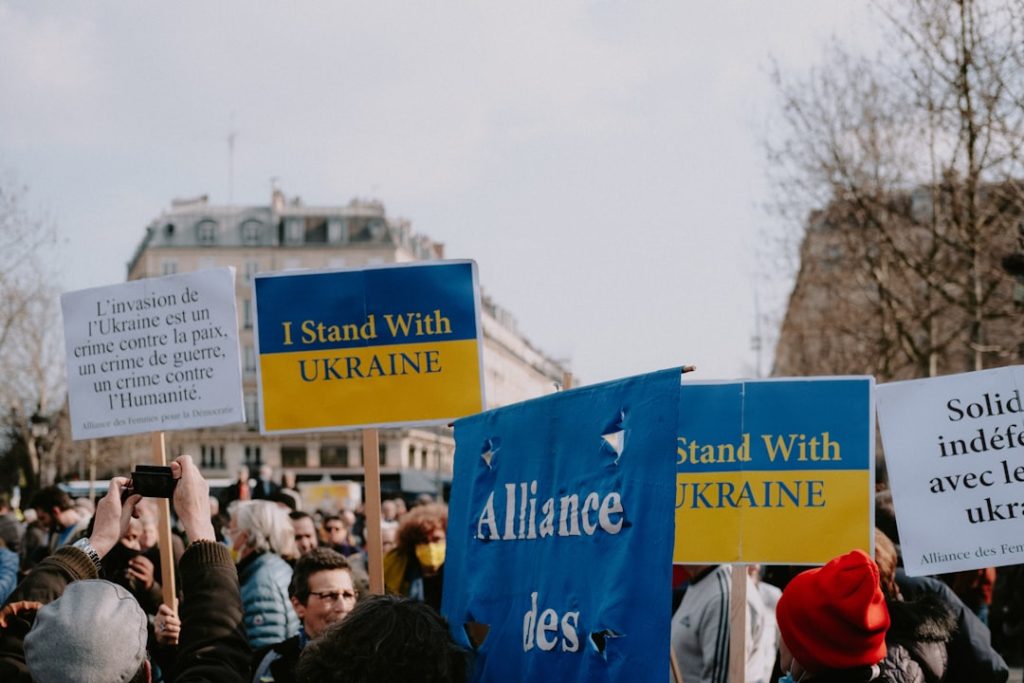
Photo by Mathias Reding on Unsplash
Stay Connected with Flamr
Don’t forget to follow Flamr on social media!
Relacionado
Discover more from Fyra - Dating App for Progressives
Subscribe to get the latest posts sent to your email.