
When Smear Campaigns Hit the Streets: What a Miami Beach Lawsuit Reveals About Power, Protest, and Love of Justice
Imagine walking down a sunny Miami Beach street with someone you’re dating or hoping to impress—and suddenly a truck drives by with a giant digital billboard calling you a “Jew hater.” Not because you’re spreading hate, but because you joined a peaceful protest calling for a ceasefire and human rights in Gaza.
That’s not a dystopian thought experiment. According to a new lawsuit, it’s exactly what happened to several Jewish and non-Jewish activists in Miami Beach, including members of Jewish Voice for Peace (JVP), one of the largest Jewish-led organizations advocating for Palestinian rights.
The case centers on allegations that Miami Beach City Commissioner David Suarez hired mobile billboard trucks to publicly smear pro-Palestine activists as “Jew haters,” “terrorist sympathizers,” and worse—singling out individuals by name and photograph. The lawsuit claims this wasn’t just ugly political rhetoric; it was targeted harassment and defamation, carried out by a public official using his power and platform to punish dissent.
On a progressive dating app blog, this might feel like heavy material. But stories like this are deeply connected to what many of us look for in relationships: shared values around justice, safety, consent, boundaries, and how we treat people we disagree with. How we respond to public smear campaigns says a lot about the kind of communities—and partnerships—we’re trying to build.
Read the full article: Miami Beach Official Hired Billboard Truck to Call Pro-Palestine Activists “Jew Hater,” Lawsuit Alleges (The Intercept)
What the Lawsuit Alleges: Trucks, Targeted Smears, and a Climate of Fear
The core of the story
According to reporting by The Intercept, Miami Beach City Commissioner David Suarez is being sued by several activists who say he orchestrated a mobile smear campaign aimed at silencing and punishing pro-Palestine voices. The lawsuit alleges that Suarez:
- Hired or coordinated with a mobile billboard truck company to drive through Miami Beach displaying digital ads targeting specific activists.
- Featured photos, names, and accusations against members of Jewish Voice for Peace and other pro-Palestine organizers.
- Used language like “Jew hater” and “terrorist supporter,” equating criticism of the Israeli government and solidarity with Palestinians with antisemitism and support for violence.
- Did this in response to peaceful activism, including marches, rallies, and public criticism of city officials’ stance on Israel and Gaza.
The plaintiffs say this campaign wasn’t just offensive—it was dangerous. The trucks allegedly drove near activists’ homes, workplaces, and community spaces. Some activists report receiving threats and harassment online and offline after being publicly labeled in this way.
Who is being targeted?
A key part of the story is that many of the people targeted by the trucks are Jewish activists. Jewish Voice for Peace is a Jewish-led organization explicitly grounded in Jewish ethical and spiritual traditions, opposing antisemitism and all forms of racism and bigotry. They are outspoken critics of Israeli government policies toward Palestinians and have been central to the current wave of ceasefire and divestment organizing.
So when a city official allegedly calls Jewish anti-occupation activists “Jew haters,” it’s not just inaccurate—it’s a deliberate twisting of identity and trauma. It weaponizes real fears about antisemitism to silence Jewish people who dissent from a particular political line.
What the lawsuit claims legally
The plaintiffs’ legal arguments reportedly include:
- Defamation: The claim that the statements on the billboards were false, harmful to their reputations, and presented as facts, not opinions.
- Harassment and intimidation: The idea that repeatedly targeting individuals by name and image in public spaces was meant to scare them into silence.
- Abuse of power by a public official: The allegation that Suarez used his position and influence as a city commissioner to coordinate and amplify this campaign.
Suarez has denied wrongdoing and has framed his actions as political speech and advocacy against what he describes as antisemitism and support for terrorism. The lawsuit will likely test the boundaries between protected political expression and targeted harassment, especially when the alleged actor is an elected official.
Why This Matters Beyond Miami Beach
Protest, power, and punishment
At its core, this story is about what happens when people in power decide that some political views are not just wrong, but illegitimate—and that those who hold them deserve to be publicly shamed, endangered, or driven out of public life.
We’re living in a time when protests for Palestinian rights, ceasefire, and an end to occupation have exploded across the U.S. and around the world. Students, faith communities, labor unions, and everyday people are taking risks to speak out. In response, many have faced:
- Doxxing campaigns that expose personal information.
- Job loss or blacklisting in certain industries.
- Smear campaigns that conflate their activism with antisemitism or support for terrorism.
- Police repression, surveillance, and arrests.
The Miami Beach truck campaign is a particularly vivid, physical manifestation of that dynamic—turning the city’s streets into a moving billboard of public shaming. It’s a reminder that censorship doesn’t always look like a ban. Sometimes it looks like making the cost of speaking out so high that people self-censor.
The weaponization of antisemitism
There is real, rising antisemitism globally and in the U.S.—from synagogue shootings to online hate to conspiracy theories. Fighting antisemitism is a core progressive value, and it’s non-negotiable.
But conflating antisemitism with criticism of a government’s policies—or with solidarity with Palestinians—doesn’t make Jewish people safer. It does the opposite. It:
- Blurs the line between actual antisemitic hate and legitimate political critique, making it harder to identify and confront real threats.
- Erases Jewish diversity, especially the many Jews who oppose occupation, apartheid, and war crimes in their own names.
- Turns “antisemitism” into a political weapon instead of a serious charge about real bigotry and violence.
When a Jewish-led group like Jewish Voice for Peace is publicly labeled “Jew haters,” it’s not just absurd; it’s an attack on Jewish autonomy and conscience. It sends a message: “You’re only a ‘good Jew’ if you support this specific political line.” That is itself a form of antisemitic stereotyping—reducing Jewish identity to a single nationalist position.
Connecting This to Progressive Values—and Dating Culture
Consent, boundaries, and public shaming
On a dating app, we talk a lot about consent, boundaries, and respect. Those aren’t just bedroom concepts; they’re political ones. What does it mean when a public official decides he has the right to plaster your face and name on a truck and drive it around town with false accusations?
It’s a violation of boundaries on a massive scale. It says: “Your body, your face, your safety, your relationships—those are all fair game if I don’t like your politics.”
Many activists targeted by campaigns like this report that it affects their dating lives and relationships:
- They may fear going on dates in certain neighborhoods or public spaces.
- They may worry about putting partners at risk by association.
- They may feel pressure to hide or downplay their activism on dating profiles.
For a progressive dating community, this story is a reminder that the freedom to be outspoken, to care deeply, and to act on our values is part of what makes us attractive to each other. When that freedom shrinks, our capacity for authentic connection shrinks too.
Solidarity as a love language
Progressive movements often talk about solidarity, mutual aid, and community care. These aren’t abstract slogans; they’re forms of love—love for people we may never meet, love for justice, love for future generations.
Standing with people who are being smeared and targeted for their activism is one way we practice that love. It means:
- Refusing to accept lazy labels like “Jew hater” or “terrorist supporter” at face value, especially when they’re used against people whose track record shows commitment to human rights.
- Checking in on friends and matches who are visible in movements and asking what support they need.
- Recognizing that being outspoken about Palestine—or any justice issue—can come at a personal cost, and honoring that courage instead of treating it as a liability.
In a relationship, one of the most powerful things we can say is: “I believe you. I’ve got your back.” In politics, it’s not so different.
Different Angles: Free Speech, Safety, and the Role of Officials
What about free speech?
Some will argue that Suarez’s alleged billboard campaign is just an exercise of free speech. Legally, the case will turn on whether the statements were defamatory and whether a public official crossed certain lines.
From a progressive perspective, we can hold two ideas at once:
- Political speech—even harsh, critical speech—deserves robust protection.
- Targeted, personalized campaigns that misrepresent people’s beliefs and expose them to harm are not healthy for democracy and can cross into harassment.
There’s a difference between saying, “I strongly oppose this group’s politics; here’s why,” and driving a truck past someone’s home with their face and the words “Jew hater” on it. One is debate; the other is intimidation.
The special responsibility of public officials
When a private citizen runs a nasty ad, it’s bad. When an elected official allegedly does it, it’s worse. Public officials have:
- Access to media, donors, and institutional power that ordinary people don’t.
- A duty to uphold the rights of all constituents, including those who disagree with them.
- An obligation not to use their office to punish or chill political participation.
If the allegations are true, Suarez’s actions send a chilling message: “If you protest my policies, I might come after you personally.” That’s incompatible with any healthy democracy—and especially with the kind of inclusive, pluralistic society progressives are trying to build.
What This Means for the Progressive Movement
We need clear
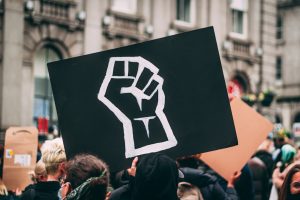
Photo by Artin Bakhan on Unsplash
Stay Connected with Flamr
Don’t forget to follow Flamr on social media!
Relacionado
Discover more from Fyra - Dating App for Progressives
Subscribe to get the latest posts sent to your email.