“Free Salah Sarsour”: What a Milwaukee ICE Case Reveals About Love, Community, and Resistance
On a progressive dating app blog, it might seem unexpected to dive into a story about immigration detention, Israeli military courts, and free speech crackdowns. But the case of Salah Sarsour — a beloved mosque leader, grandfather, and longtime green card holder detained by ICE — sits at the intersection of everything that shapes our relationships and our capacity to love: safety, dignity, community, and the right to exist as our full political selves.
Who we date, how we build families, and what kind of future we imagine together are all deeply shaped by the political conditions around us. When a government targets a community leader like Sarsour, it doesn’t just threaten one man’s freedom — it sends a message about whose love, whose families, and whose communities are considered expendable.
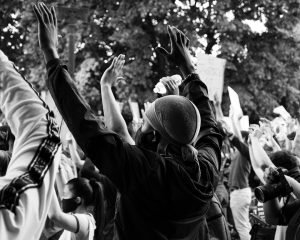
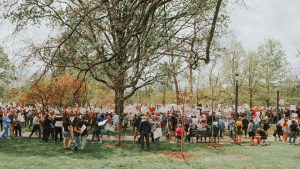
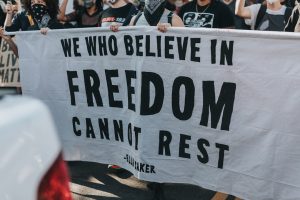
In Milwaukee, Muslims and Jews are standing shoulder to shoulder demanding his release. Their coalition offers a glimpse of the kind of world progressives are trying to build: one where people refuse to be divided, where we defend each other’s rights to speak, organize, and love freely.
Read the full article: Free Salah Sarsour: Muslim & Jewish Communities Demand ICE Release Milwaukee Mosque Leader (Democracy Now!)
Who Is Salah Sarsour — And Why Is He in ICE Detention?
A Community Pillar Behind Bars
Salah Sarsour is a Palestinian immigrant and lawful permanent resident of the United States. He’s not just any community member — he’s the president of the Islamic Society of Milwaukee, Wisconsin’s largest mosque. He’s a grandfather, a father, and, in the words of his son, “a community pillar.”
In late March, ICE agents suddenly detained him. His family didn’t even know where he was at first; his son Kareem describes the federal agents as “kidnappers” because of the secrecy and fear surrounding the arrest. While incarcerated, Sarsour missed the birth of his ninth grandchild — a milestone his family had expected to celebrate together.
The Pretext: A Teenager in an Israeli Military Court
The government’s justification for detaining Sarsour and threatening him with deportation centers on a conviction by Israeli military authorities when he was a teenager living under occupation in the West Bank. According to Sarsour, he never understood the charges because they were presented in Hebrew, a language he did not speak. He also says he was tortured in Israeli custody.
Now, decades later, the U.S. government is arguing that he failed to disclose this conviction when applying for his green card. That alleged omission is being used as a pretext to strip him of his status and potentially deport him.
His legal team, including attorney Munjed Ahmad, argues that this is not only unjust, but also part of a broader crackdown on pro-Palestinian speech and activism. Ahmad calls Sarsour’s case “a litmus test,” asking whether the administration will be allowed “to gut those rights and to strip people from their free speech.”
A Cross-Community Movement for His Freedom
In response, a broad coalition has formed demanding Sarsour’s release. Muslim organizations, Palestinian rights groups, and Jewish allies — including anti-occupation and progressive Jewish organizations — are calling on ICE to free him and drop deportation proceedings.
They see his detention as an escalation of the administration’s ongoing targeting of Palestinian, Muslim, and Arab communities, especially those outspoken about Palestinian rights. At the same time, they see in his story a chance to build stronger interfaith solidarity and to push back against fear-based policies that tear families apart.
Read the full article: Free Salah Sarsour: Muslim & Jewish Communities Demand ICE Release Milwaukee Mosque Leader (Democracy Now!)
Why This Case Matters for Progressive Values
1. Free Speech and the Criminalization of Pro-Palestinian Voices
Sarsour’s supporters argue that his detention is not really about a decades-old, opaque military conviction; it’s about silencing a prominent pro-Palestinian voice in the U.S.
For years, the U.S. has used immigration law, terrorism designations, and surveillance to target Arab, Muslim, and Palestinian communities. From the “material support” prosecutions of charities in the early 2000s to the blacklisting of campus activists, there’s a long history of treating Palestinian advocacy as inherently suspicious. Sarsour’s case fits that pattern.
Progressive values demand that political speech — especially speech that challenges state violence and occupation — be protected, not criminalized. If the government can retroactively weaponize an Israeli military court conviction against Sarsour, it sets a chilling precedent:
- Immigrants may fear speaking out on Palestine or other contentious issues.
- Community leaders could be targeted for their political views under the guise of technical immigration violations.
- State power is reinforced at the expense of marginalized communities’ ability to organize.
For progressives, free speech isn’t abstract. It’s the oxygen that movements need to grow, organize, and build the world we want — including the world where our relationships and families can thrive.
2. The Violence of Deportation as Family Separation
When we talk about deportation, it’s easy to focus on legal categories and forget the human reality. Sarsour’s detention isn’t just a bureaucratic process; it’s an act of family separation.
He missed the birth of his ninth grandchild. His children and grandchildren are living with the anxiety of not knowing if he’ll be ripped away from them forever. His community has lost a leader who has helped build interfaith bridges, provide social services, and foster a sense of belonging.
This is exactly what harsh immigration policies do: they destabilize families, create trauma, and undermine the social fabric. For a progressive dating app community that cares about building healthy relationships and mutual care, this matters deeply.
Love doesn’t exist in a vacuum. It’s shaped by whether your partner might be detained on their way to work, whether your father will be there when your child is born, whether your family can gather without fear. Deportation is not a “neutral” policy; it’s a tool that fractures the most intimate bonds in people’s lives.
3. Interfaith Solidarity as a Model for Progressive Organizing
One of the most powerful aspects of Sarsour’s case is the response from both Muslim and Jewish communities. In a moment when political forces try to pit these communities against each other, seeing them unite around a shared demand for justice is profound.
Progressive Jewish organizations have increasingly taken public stands against occupation, collective punishment, and Islamophobia. Many see defending Sarsour as part of a broader commitment to “never again” — not just for Jews, but for anyone targeted by state violence.
This kind of solidarity matters because:
- It counters narratives that equate Jewish safety with unconditional support for militarized policies.
- It shows that Muslim and Jewish communities can be allies in fighting racism, antisemitism, and Islamophobia together.
- It models the kind of coalition-building that can actually shift policy and culture.
For people navigating identity, politics, and relationships, this interfaith alliance offers a hopeful vision: we can build connections across difference, rooted in shared values, not shared enemies.
The Broader Context: Immigration, Occupation, and Historical Patterns
Militarized Courts and “Imported” Injustice
One of the most disturbing elements of Sarsour’s case is the U.S. government’s reliance on a conviction from an Israeli military court — a system widely criticized by human rights organizations for its lack of due process, use of torture, and near-automatic convictions of Palestinians.
Using such a conviction to justify deportation effectively “imports” the injustices of occupation into the U.S. immigration system. It signals that Palestinian lives and rights are subject to a double standard: first under occupation, then in diaspora.
From a progressive standpoint, this raises major concerns:
- Should U.S. immigration law rely on the outcomes of foreign military courts with poor human rights records?
- What does it mean when torture-tainted “confessions” or convictions are used to destroy someone’s life decades later?
- How does this intersect with broader patterns of racialized criminalization, where Black, Brown, and immigrant communities are punished repeatedly for past contact with unjust systems?
A Long History of Targeting Political Dissent
Sarsour’s case echoes earlier eras when the U.S. used immigration and criminal law to suppress dissent:
- Early 20th century: Anarchists, socialists, and labor organizers deported or jailed for their political beliefs.
- McCarthy era: Artists, academics, and activists blacklisted or prosecuted for alleged “subversive” affiliations.
- Post-9/11: Muslim charities shut down, community leaders surveilled, and entire communities treated as suspect.
Each time, the state framed its actions as necessary for “security.” Each time, it was really about controlling which ideas and which people were allowed to flourish.
Progressives today inherit the lessons of those struggles: we know that when one group’s rights are stripped in the name of “safety,” it rarely stops there. Defending Sarsour is part of defending a broader principle: no one should lose their freedom or their right to stay with their family because they dared to speak up for justice.
Different Perspectives and Tensions Within the Debate
Security Narratives vs. Civil Liberties
Supporters of harsh immigration enforcement often argue that strict vetting and deportation policies are necessary to protect national security. In cases like Sarsour’s, they may point to any past “security-related” conviction — even from a foreign military court — as justification.
But progressives push back on this framing for several reasons:
- Security does not require unquestioning acceptance of foreign military court outcomes, especially in contexts of occupation.
- Real safety comes from strong communities, not tearing community leaders away from their families.
- There’s a long track record of “security” being used to mask political repression.
Even among people who worry about safety, there’s room to question whether targeting a grandfather and mosque president over a decades-old, contested conviction actually makes anyone safer.
Diverse Voices Within Jewish and Muslim Communities
Neither Jewish nor Muslim communities are monolithic. Within Jewish communities, there are
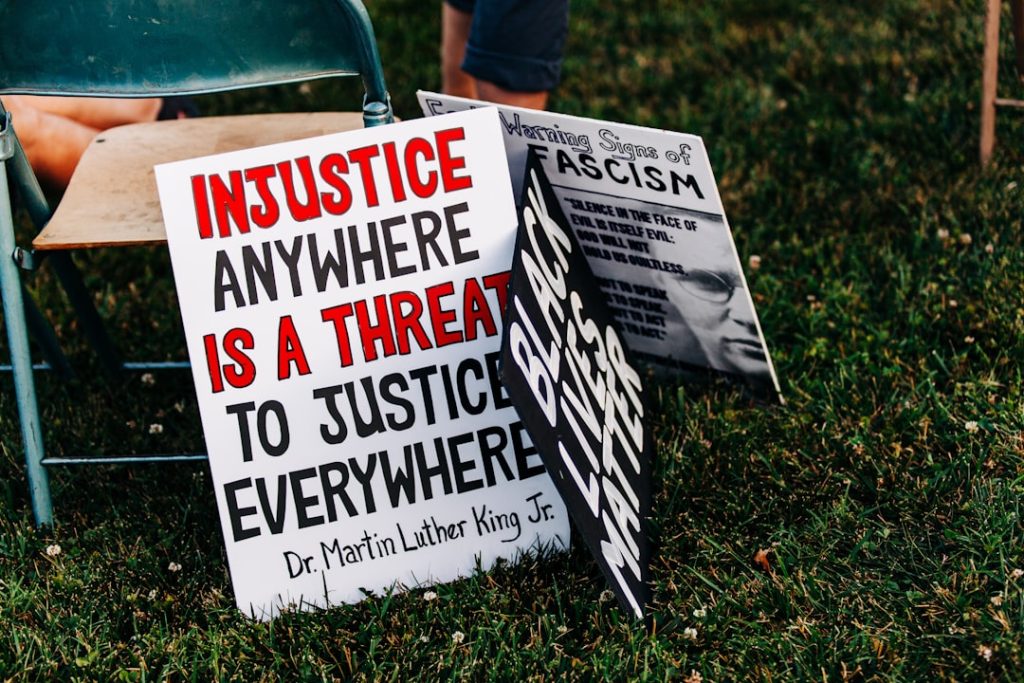
Photo by Heather Mount on Unsplash
Stay Connected with Flamr
Don’t forget to follow Flamr on social media!
Relacionado
Discover more from Fyra - Dating App for Progressives
Subscribe to get the latest posts sent to your email.